
Photographing dishes and worktops
You want to capture a whole pasta dish or the preparation process, and are happy to use different crops.


For whole dishes and worktops, a mirrorless camera with a standard zoom is a useful starting point. For tiny dough textures, the magnification of the individual lens matters most. So check exactly which lens comes with a kit, and how much room there is in front of the lens for your subject and lighting.
You want to capture a whole pasta dish or the preparation process, and are happy to use different crops.
You want to capture small shapes and dough textures in close-up. Pay attention to the lens’s magnification and the space between the lens and your subject.
You take photos repeatedly in the same small studio and want to carefully adjust the camera angle, lighting and crop.
A good fit if: you want to start by taking simple photos of complete dishes and aren’t yet sure whether you need interchangeable lenses.
The trade-off: you won’t need to buy a camera straight away; wanting to switch between lenses and settings is a reason to consider a mirrorless camera.
A good fit if: you mainly photograph whole dishes and set-ups from above or at an angle, and want to vary the framing.
The trade-off: check the magnification of the included lens. A standard zoom isn’t automatically suitable for very small details.
A good fit if: tiny dough textures and pasta shapes are your main subjects.
The trade-off: a separate macro lens doesn’t automatically come with a standard kit, and focusing up close can limit the space available for lighting.
| What to consider | What should you check? | Who should pay extra attention? |
|---|---|---|
| Framing the whole dish and worktop | Check the focal lengths of the included lens and make sure you can fit the worktop into the frame from the height available. | If I want to show both the dish and the set-up, framing matters to me. Around 29% of consumers put overview shots first. |
| Small shapes and dough textures | Compare the maximum magnification of the exact lens and consider the working space in front of it. | If I want to capture small pasta shapes clearly, I look at both magnification and space for lighting. Around 29% of consumers prioritise close-up shots. |
| Repeating your camera angle and lighting | Check that a tripod will fit securely and that you can operate the camera settings from that position. | With a fixed studio set-up, I want to adjust the lighting and composition without losing my camera angle. This is the main priority for around 21% of consumers. |
| Putting together a complete set | Check whether you’re buying a body or a kit, and look at the lens mount, lens and charging equipment separately. | If I want to get started straight away with a usable set, I check what’s actually included. Around 21% of consumers put having a complete purchase first. |
The percentages reflect different first purchase priorities for cameras used to photograph fresh pasta in a Dutch home studio. Canon Netherlands Store describes some of the needs behind these choices.
The Canon and Nikon kits reviewed include a zoom lens; the macro lenses discussed are sold separately.
Before choosing a set for pasta close-ups, check the full kit name and the maximum magnification of the exact lens included.
A macro lens may need to be bought separately.
The minimum focus distance of the Fujifilm XF30mm Macro is measured from the sensor plane. According to Fujifilm, when shooting close up, your subject can be very close to the front of the lens.
Check that your camera, pasta and lighting can all fit in place at the same time in your studio.
A body, a kit with a zoom lens and a separate macro lens are different combinations. Nikon says that a charger isn’t included with the Nikon Z50II kit reviewed.
Check the contents of the exact offer, then work out which components you need for your set-up.
The EOS R50 was reviewed as a kit with the RF-S 18-45mm; the RF 35mm F1.8 Macro is a separate lens.
The Z50II with the DX 16-50mm is a standard zoom kit; the NIKKOR Z MC 50mm f/2.8 is a separate macro lens.
The X-S20 was reviewed as a body only; the XF30mmF2.8 Macro is a separate lens.
Camera options for photographing pasta, with a range of zoom and camera features. Check whether each model suits your shooting distance and studio set-up.
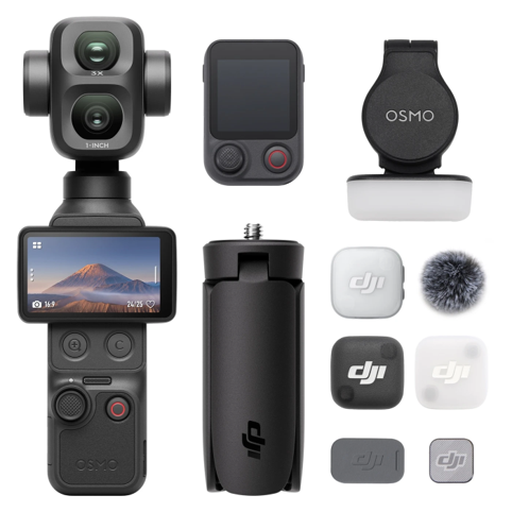 No image available
The wide-angle lens listed is worth considering if you want to compare wider framing options.
The description lists a 1-inch CMOS sensor and a 20 mm f/2.0 wide-angle lens.
 No image available
The stated optical zoom is useful if you want to switch between different crops; consider whether its range suits your working distance.
The product title lists 12× optical zoom, 4K video, 64MP and Wi-Fi.
 No image available
The listed zoom and focus options are worth comparing with the distances and crops in your studio.
The title lists 8× optical zoom, 5K, 64MP and two lenses; the description mentions autofocus and manual focus.
 No image available
The kit includes a zoom lens. Check whether its focal lengths suit the framing you want when shooting from above or beside the worktop.
The description lists a 24.2 MP APS-C sensor and a vari-angle touchscreen. An adapter or charger and a memory card aren’t included.
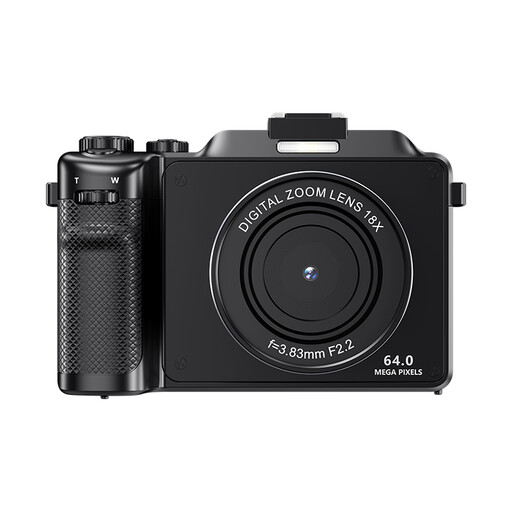 No image available
When assessing the zoom, check the difference between digital and optical zoom, especially if small details matter.
The product information lists autofocus, a built-in flash and 18× digital zoom. The description warns that digital zoom can reduce image quality.
Not necessarily. A standard zoom kit may work well for photos of complete dishes; consider a macro lens if tiny details are your main subject. Compare the magnification of the exact lens included in the kit.
A tripod can help you keep your chosen camera angle while you adjust the set-up. Check that it fits securely above or beside your worktop.
For a consumer purchase in the Netherlands, the seller is responsible under the legal guarantee for providing an appropriate solution free of charge if the product doesn’t meet what you could reasonably expect. ACM ConsuWijzer explains that this legal guarantee doesn’t have a fixed term of exactly two years.
According to ACM ConsuWijzer, online consumer purchases generally come with a statutory cooling-off period of up to 14 days after delivery. Check the terms and any exceptions that apply to your specific purchase beforehand.