
Creator of dark food photography
You want light-coloured pasta to stand out against a dark-looking background. Nikon Netherlands describes using black foam board to absorb light, so controlling the exposure is an important consideration.


For a full plate or work surface, a mirrorless camera with a kit zoom is a sensible starting point. For close-ups of dough edges and strands of pasta, the magnification of the lens you choose is what matters most. Direct soft light onto the pasta and check the exposure: a different camera body won’t automatically give you a well-exposed dark background.
You want light-coloured pasta to stand out against a dark-looking background. Nikon Netherlands describes using black foam board to absorb light, so controlling the exposure is an important consideration.
You photograph flour, dough edges or individual strands up close. Pay attention to the magnification of the lens and make sure its mount is compatible with your camera.
You switch between a plate, the work surface and smaller details. First, see what framing the supplied zoom lens offers, then decide whether you need a dedicated close-up lens.
Choose this option if: you mainly want to frame the whole dish or the preparation process, and experiment with different angles of view.
Bear in mind: a standard zoom isn’t automatically suitable for very small pasta details.
Choose this option if: close-ups of flour, dough edges or individual pasta strands make up a significant part of your photos.
Bear in mind: you’ll need to choose the lens separately and check its mount and magnification specification.
Choose this option if: your current camera and lens already give you the framing and focus you want, but the pasta gets lost against the background.
Bear in mind: better lighting won’t solve a lens that can’t focus as closely as you need.
| What to consider | What to check before buying | Who is this relevant to? |
|---|---|---|
| Lighting and a dark background | Check whether you can adjust the exposure, and where you can position soft side lighting and a dark backdrop. | I want the pasta to remain clearly visible without brightening the background. Around 36% of consumers put lighting and atmosphere at the top of their buying priorities. |
| Small pasta details | Compare the maximum magnification of the exact lens and check that its mount is compatible with the camera. | If I want to fill the frame with flour, dough edges or individual strands, my lens choice matters a lot. Around 29% of consumers put close-ups first. |
| Different compositions | Check what’s included in the kit, the zoom range and the focusing capabilities of the supplied lens. | I want to switch between a plate, work surface and preparation shots without constantly changing lenses. Around 21% of consumers prioritise flexible framing. |
| Combining photos and video | Decide whether video is a key use, and check the screen and the exact lens included in the kit. | If I want to make preparation videos as well as pasta photos, I look at the camera and lens as a combination. Around 14% of consumers make both photos and video their top priority. |
How light falls on the dish and the background helps determine the look of the shot. A camera body’s specifications don’t prove that the pasta will remain visible against a dark background.
First, plan where to place the dish, light source and background. Direct the light onto the pasta and check the exposure before comparing camera features.
Maximum magnification varies from lens to lens. Nikon lists a maximum of 0.67× for the Z DX MC 35mm f/1.7; Canon specifies a maximum of 1:2 for the RF 35mm F1.8 MACRO IS STM, and FUJIFILM specifies 1:1 for the XF30mmF2.8 Macro.
Check the maximum magnification, exact model name and mount of the lens you actually intend to use.
A kit may include a zoom lens, while a macro lens is sold separately. Comparing camera bodies alone won’t give you a complete picture of the setup you need.
For each option, check which lens is included and what else you’ll need for the plate shots or close-ups you want.
The EOS R50 kit combines a camera with an RF-S 18–45mm zoom lens. An RF macro lens is a separate option for close-ups.
The Z50II kit includes a Z DX 16–50mm zoom; the Z DX MC 35mm f/1.7 is a separate close-up option.
The X-M5 has an X mount; the XF30mmF2.8 Macro is a separate lens for macro photography.
The ZV-E10 II is an E-mount camera; the E 30mm F3.5 Macro is a separate close-up option.
These product picks range from compact cameras for photography to a mirrorless camera with a zoom lens. For close-ups, check that the lens and minimum focusing distance suit the details you want to capture.
 No image available
The product title mentions photography; check that the camera and minimum focusing distance suit your fixed shooting setup.
The title lists a 1″ CMOS sensor, 2× lossless zoom, 107GB of built-in storage, a 2″ rotating screen, 4K/240fps and 3-axis stabilisation.
 No image available
The product title mentions photography and video; before buying, check that the camera suits the framing and minimum focusing distance you need for pasta.
The title lists 4K, 44MP and 16× zoom.
 No image available
The supplied zoom may suit anyone who wants to switch between plate and work-surface shots; check whether the lens is also suitable for the close-ups you want.
The product name lists a 16–50mm zoom.
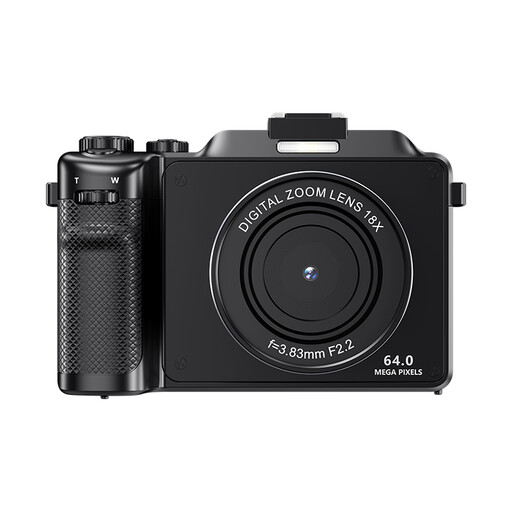 No image available
The product title mentions photography and autofocus; check whether the minimum focusing distance suits the details of fresh pasta.
The title lists 4K, 64MP, a flash and 18× digital zoom. The product description warns that image quality decreases at 18× digital zoom.
No, not if you mainly photograph a whole plate or work surface. For small details, the magnification of the lens you choose matters: Canon lists a maximum of 1:2 for the RF 35mm F1.8 MACRO IS STM, Nikon lists a maximum of 0.67× for the Z DX MC 35mm f/1.7, and FUJIFILM lists 1:1 for the XF30mmF2.8 Macro. These are specifications for separate lenses.
Direct soft light onto the pasta and let less light fall on the background. Nikon Netherlands describes using a softbox with a grid and black foam board to create a dark still-life look. Check for yourself that the pasta remains clearly visible.
Yes, it can help if you want to repeat the same framing or focus precisely on a small detail. Nikon Netherlands describes how a food photographer uses a tripod to prevent camera shake and position the plane of focus accurately.
Check which lens is actually included with the camera kit and whether it suits the framing you want. ACM ConsuWijzer confirms that your statutory guarantee applies alongside any guarantee offered by the retailer or manufacturer.