
New online seller with an existing phone
You want to start by taking clear overview shots of pasta products and see whether good lighting and a fixed setup are enough. Shopify explains how to take product photos with a smartphone and natural light.


Start with soft light, a fixed setup and a test series using your current phone or camera; you don’t automatically need a new camera for a simple product gallery. A mirrorless camera may be a good fit if you want to recreate the same compositions regularly, edit RAW files or use a different lens for close-up details. If so, check which lens is included in the kit and whether its focusing distance suits your photos.
You want to start by taking clear overview shots of pasta products and see whether good lighting and a fixed setup are enough. Shopify explains how to take product photos with a smartphone and natural light.
You regularly photograph new variants and want to make it easier to repeat your framing, lighting and editing. Shopify discusses using a fixed setup, while Canon explains cameras and lenses for food photography.
You want to capture small shapes or textures close up, so you need to assess the lens and the level of sharpness you can achieve. Canon explains the difference between close-ups and macro photography.
Start with a test setup and the type of photo you want to take; only buy another camera if your current device isn’t up to the job.
A good fit if: you mainly take overview shots and can get the framing you want with soft light and a fixed holder.
The trade-off: you avoid buying a new camera, but test shots will show whether the details and crops are good enough.
A good fit if: you regularly photograph several products from fixed angles and, for example, want RAW files or more choice of lenses.
The trade-off: the camera body won’t solve inconsistent lighting; assess the complete kit and what you need for a stable setup.
A good fit if: you need to show small shapes or details up close, and a test shot with the standard lens isn’t good enough.
The trade-off: you may need an extra lens; check the mount, magnification, working distance and depth of field you want.
For this choice, the main consideration is your top priority for an online shop setup; other requirements may also play a part.
| Concern | What to look for when buying | Who considers this important? |
|---|---|---|
| Consistent lighting and colour | Take a test series in your own shooting conditions and look at the colour, shadows and consistency. | When I show several pasta products, I want the lighting and colour to stay the same in every photo. Around 40% of consumers prioritise this consistency. |
| Showing small shapes and textures clearly | Test the smallest pasta shape at your intended distance; check the sharpness and which lens is included in the kit. | For close-ups, I want to show small shapes and textures, not just an overview. Detail is the top priority for around 30% of consumers. |
| Taking repeatable overhead shots | Check whether you can see the screen from your shooting angle and whether the setup stays stable. | If you always shoot from the same angle, you’ll want to be able to recreate the framing easily. This is the main concern for around 20% of consumers. |
| Keeping initial costs down | Compare a test series with your current device against the cost of a complete setup; check what’s included with a camera kit. | If I’m still testing whether online shop photography works for me, I want to make use of the equipment I already own and keep start-up costs down. Around 10% of consumers put these costs first. |
The lens affects shooting distance and magnification; inconsistent lighting or camera movement can also make your photos less consistent.
Assess the complete kit and take test shots from the angle you’ll actually use.
You may also need a compatible lens, a stable holder or lighting.
Resolution can give you more room to crop a photo, but it doesn’t determine on its own how the lighting, background and lens will turn out.
Decide how much you want to crop and check the lighting and sharpness of the details you want to show.
Ondernemersplein distinguishes between selling to consumers and selling to businesses; for a business purchase, you can’t automatically rely on consumer rules.
Check whether you’re buying as a consumer or a business, and review the terms that apply to your purchase.
The statutory cooling-off period for consumers doesn’t automatically apply to a business purchase.
Canon features the EOS R50 in its own food photography advice. It’s an option if you’re looking for an interchangeable RF or RF-S lens and an adjustable screen.
The Sony ZV-E10 is an APS-C option with an E-mount; the α7 IV is a separate full-frame model. Don’t choose based on megapixel count alone.
The Nikon Z50II may suit a workflow where you want to use both a viewfinder and an adjustable touchscreen.
These Joybuy options range from compact digital cameras to a Sony ZV-E10 kit with a 16–50 mm zoom lens. For each model, check whether the listed specifications suit your shooting distance and preferred workflow.
 No image available
A compact camera for a first test setup; see whether the smallest pasta details come out clearly enough with your lighting and shooting distance.
The product title lists 4K Ultra HD, 64 MP, 18x digital zoom, autofocus and a 32 GB memory card.
 No image available
A point-and-shoot camera for anyone wanting to try a compact setup; use your own test shots to check whether the framing works for your product photos.
The product title lists 5K, 80 MP and 18x zoom.
 No image available
A compact camera for anyone wanting to try zoom framing; test whether the pasta details you want to show stay sharp at your chosen shooting distance.
The product title lists 12x optical zoom, 4K, 64 MP and Wi-Fi.
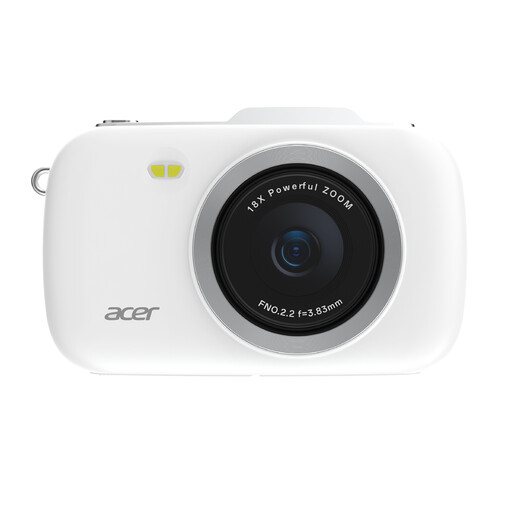 No image available
A point-and-shoot camera for a simple test setup; take a test photo to see whether the level of detail suits your pasta products.
The product title lists 4K, 80 MP and 18x zoom.
 No image available
According to the product title, this kit includes a Sony ZV-E10 with a 16–50 mm zoom lens; use test shots to check whether the shooting distance works for your overview and detail photos.
The lens kit is an important difference compared with a version that doesn’t include a lens.
No. Start with a test series using your current phone, soft light and a fixed setup. Then assess whether the details, colour and crops are right for your online shop.
Keep the background, lighting and camera angle as consistent as possible. Shopify explains that changing light from a window can make a product gallery look inconsistent; a fixed, soft light source can help keep your setup more consistent.
Not before you’ve taken a test shot. Check whether your current lens gives you enough magnification and sharpness at the distance you want; a macro lens is worth considering if those close-ups aren’t good enough.
This depends in part on whether you’re buying as a consumer or a business. According to Ondernemersplein, sales to businesses aren’t covered by consumer law, so don’t automatically assume the statutory consumer cooling-off period applies to a business purchase. The Dutch government states that the Netherlands has no fixed statutory warranty period; check the terms that apply to your purchase.
Photos in which people are identifiable contain personal data. The Dutch Data Protection Authority states that the GDPR applies when people are identifiable, so assess these images individually before publishing them.