
Living alone and buying fresh food
You mainly want to chill grapes and other fresh produce, and don’t necessarily need a freezer. The Netherlands Nutrition Centre recommends keeping opened grapes in the fridge for 1–2 weeks.


Fresh grapes need chilled storage, but not necessarily a freezer compartment: the Netherlands Nutrition Centre recommends keeping opened grapes in the fridge for 1–2 weeks. Choose a fridge-freezer if you also regularly store frozen food. Compare the separate fridge and freezer capacities, the external dimensions, the energy rating and the stated noise level of the models you’re considering.
You mainly want to chill grapes and other fresh produce, and don’t necessarily need a freezer. The Netherlands Nutrition Centre recommends keeping opened grapes in the fridge for 1–2 weeks.
You’re short on space, so before buying, weigh up the external dimensions, fridge capacity and door clearance against any freezer space you might need. The Consumers’ Association of the Netherlands highlights the choice between a fridge without a freezer compartment and a fridge-freezer.
You want to chill fresh grapes while also keeping space for frozen food. So compare the separate fridge and freezer capacities of the models you’re looking at.
First, decide whether you really need freezer space. Then measure the available space and compare the capacity and usage information for specific models.
| What to consider | What should you look for? | Who should pay particular attention? |
|---|---|---|
| Keeping grapes properly chilled | Check that the bunch or packaging fits in the fridge compartment and that you can check the temperature. The Netherlands Nutrition Centre recommends a general fridge temperature of 4 °C. | If I mainly chill fresh food, I want enough easily accessible space without crushing the grapes. Around 36% of consumers prioritise being able to chill fresh food properly. |
| Size and positioning | Measure the space, as well as the clearance needed for the open door and drawers. Compare fridge and freezer capacities separately, not just the total volume. | In a small kitchen, I want to know that the appliance will fit and the door will open properly before choosing a layout. Limited kitchen space is the most important buying consideration for around 29% of consumers. |
| Energy use and noise | Compare the annual energy use in kWh and the stated noise level in dB(A) for the exact models. The energy rating alone doesn’t tell you how much energy a particular model uses. | If the fridge is close to my living area, I want to weigh up both its stated noise level and annual energy use. Around 21% of consumers give energy use and noise their highest priority. |
| With or without freezer space | Decide what you actually want to freeze and check the separate freezer capacity and defrosting function. Less frost build-up doesn’t automatically mean you won’t need to defrost it. | If I regularly store frozen food as well as fresh produce, I want enough freezer space without giving up more fridge capacity than necessary. Around 14% of consumers prioritise freezer space. |
Storing fresh grapes and freezing food are two different needs. You don’t need a freezer compartment to keep grapes chilled.
First, decide whether you actually freeze food as well as storing grapes. Then check how much fridge and freezer space you need.
A larger freezer compartment can take up space you’d rather use for fresh food.
Fridge and freezer capacities are separate specifications. Doors and drawers may also need more clearance in a small kitchen than the external dimensions alone suggest.
Measure the space and door clearance, and note the fridge and freezer capacities separately.
An awkwardly placed door can make everyday use more difficult.
For the ETNA and Liebherr models mentioned, the manufacturer describes reduced frost build-up; Bosch specifies Total NoFrost for the model mentioned. These are different, model-specific descriptions.
Check the exact defrosting function of the model you’re considering.
Even a model that promises less frost build-up may still need defrosting, which can take time.
The features mentioned apply to the specific product ranges and models below; they’re not a general guarantee for every appliance from each brand.
The freestanding KDV156ZWA combines separate fridge and freezer compartments in a compact design.
The CUele 2331 is a freestanding fridge-freezer measuring 137,2 cm high and 55 cm wide.
The KGN33NLEB is a freestanding fridge-freezer with a larger freezer compartment than the compact models mentioned.
Beko offers tabletop fridges and fridge-freezers; when comparing a compact appliance, check the separate fridge and freezer capacities.
Below are tabletop fridges with a freezer compartment and fridge-freezers for anyone who wants to chill fresh food and may also need freezer space.
 No image available
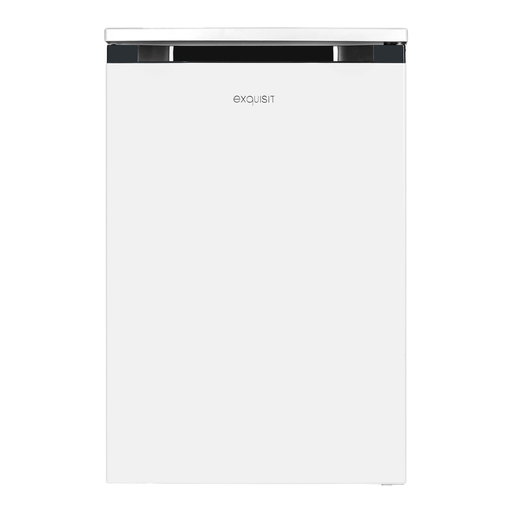
A tabletop model with a separate freezer compartment, for chilling fresh food in a compact space.
109 litres total capacity: 95 litres of fridge space and 14 litres of freezer space. Dimensions: 85 × 55 × 58 cm. Energy rating C. The limited freezer capacity offers little space for regular freezing.
Adjustable shelves and a reversible door.
 No image available
A tabletop model with 107 litres of fridge space for fresh food and a separate freezer compartment for occasional freezing.
Dimensions: 84,50 × 54,90 × 55,70 cm. Energy rating C. The freezer compartment holds 13 litres. Low Frost reduces ice build-up, but the model isn’t described as No Frost.
The temperature is adjustable and the model has a rapid-cooling function.
 No image available
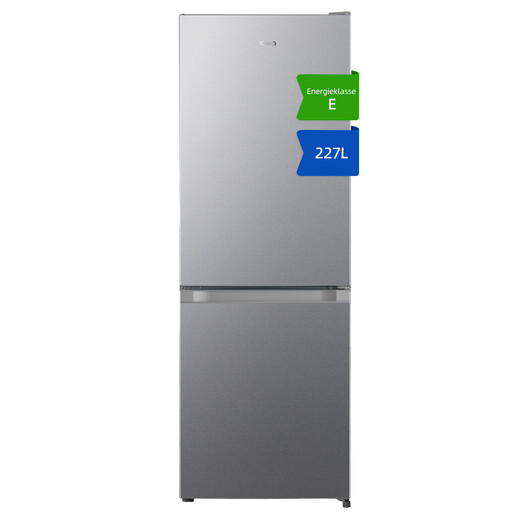
A fridge-freezer for anyone who wants a separate freezer compartment as well as fridge space.
227 litres total capacity: 153 litres of fridge space and 74 litres of freezer space. Width and depth: 54 and 55 cm. Energy rating E. Low Frost reduces ice build-up; the model isn’t described as No Frost.
The door is reversible and the shelves are adjustable.
 No image available
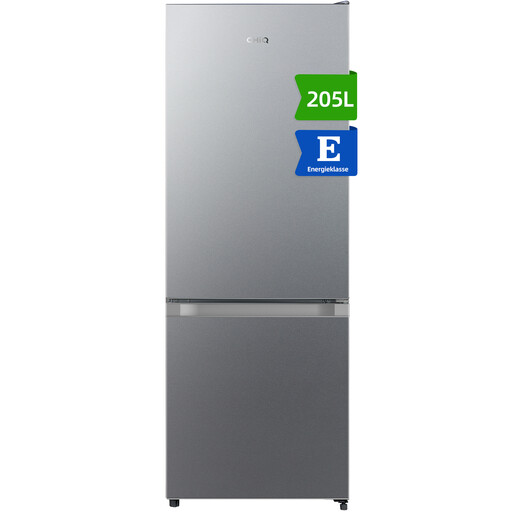
A compact fridge-freezer with plenty of fridge space for fresh food.
205 litres total capacity: 153 litres of fridge space and 52 litres of freezer space. Dimensions: 54 × 55 × 144 cm. Energy rating E. Low Frost reduces ice build-up and the need to defrost, but the model isn’t described as No Frost.
The door is reversible and the feet are adjustable.
 No image available
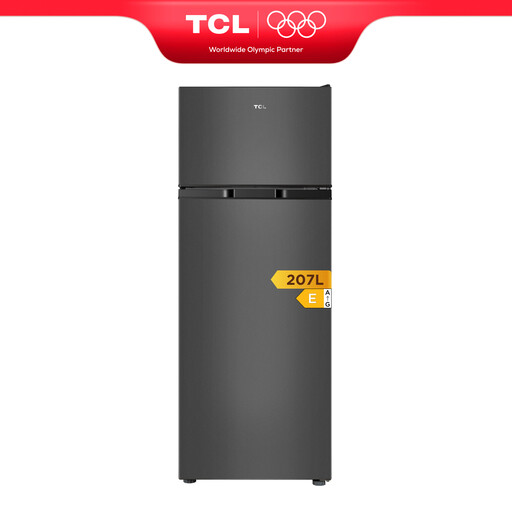
A fridge-freezer with a separate fridge compartment for grapes and other fresh food.
207 litres total capacity: 167 litres of fridge space and 40 litres of freezer space. Energy rating E. The stated width is 55 cm.
The product description lists a salad drawer, adjustable shelves and adjustable feet.
No, you don’t need to freeze grapes to keep them chilled. The Netherlands Nutrition Centre recommends keeping opened grapes in the fridge for 1–2 weeks; freezing is a separate option. Remove any pips before freezing and use an airtight container or freezer bag.
Keep grapes dry and store them on the vine, for example in their packaging, in a paper bag or on a plate. The Netherlands Nutrition Centre recommends a general fridge temperature of 4 °C.
Compare the annual energy use in kWh on the energy label of the exact models. Milieu Centraal gives around 130 kWh per year for a new fridge-freezer with a B rating and 250 kWh for a model with an E rating as examples. These are illustrative figures, not values for every appliance with that rating.
In the Netherlands, if your appliance has a fault, you can hold the seller to your right to a product that works properly. The Dutch government states that there is no fixed statutory two-year guarantee period; a manufacturer’s guarantee doesn’t replace your statutory rights.
When you buy a new, similar appliance, the seller must take your old one away free of charge under the Dutch ‘old for new’ scheme, including for online purchases. Arrange in advance how the handover will work when your new appliance is delivered.