
Cook with an existing freezer
You freeze a few portions of stock and want to check whether your current freezer has enough room before adding another appliance.


If your current freezer has enough room for sealed portions of cooled vegetable stock, use it first rather than buying an extra appliance for a single lunch. If you need more space, choose between an under-counter model with drawers for easier access to individual portions and a chest freezer if you also store larger quantities. Compare each model’s annual energy consumption, freezing capacity and maintenance requirements. Milieu Centraal recommends choosing a suitable size, while the Netherlands Nutrition Centre advises cooling leftovers quickly and storing them in sealed containers.
You freeze a few portions of stock and want to check whether your current freezer has enough room before adding another appliance.
You need extra freezer space, but have to consider where the appliance will go, how its door or lid will open and how easy it is to reach individual portions.
You freeze stock and other prepared foods regularly, and want to find portions easily without taking up more freezer space than necessary.
First, check how many sealed portions will fit in your current freezer. If you need extra space, measure the available area, then compare the layout, annual energy consumption and maintenance requirements of suitable models.
Choose this if: there is enough free space for the sealed portions and your appliance is working properly.
Bear in mind: how much space is actually free. The total capacity on the rating plate doesn’t tell you how much room is available right now.
Choose this if: you regularly want to take out individual portions and have room for the appliance, including the clearance specified for installation.
Bear in mind: models vary in freezing capacity, annual energy consumption and whether they need manual defrosting.
Choose this if: you want to store larger or awkwardly shaped items as well as stock, and have enough floor space and room to open the lid.
Bear in mind: smaller portions may be less accessible than in drawers. Compare the energy consumption of specific models.
| What to consider | What to look for when buying | Who is this important for? |
|---|---|---|
| Do you need another appliance? | Check how much free space you have in your current freezer before comparing models. | For a few portions for one lunch, I want to know first whether my freezer is already full; around 29% of consumers prioritise avoiding an unnecessary extra appliance. |
| Available space | Measure the space, the clearance needed to open the appliance and the access route for delivery. Check the installation instructions for the exact model. | If I need extra space but my kitchen is small, the appliance needs to fit and be practical to use. Around 23% of consumers give available space top priority. |
| Layout for portions | Check that the layout suits your sealed containers and look at the freezing capacity if you freeze a lot at once. | I want to find individual portions of stock and defrost only what I need; around 18% of consumers place particular importance on the layout and accessibility. |
| Annual energy consumption | Compare kWh/year and freezer volume in litres on the energy label for the exact models. | As an extra freezer uses electricity all year round, I compare its energy consumption as well as its capacity; around 18% of consumers prioritise annual energy consumption. |
| Defrosting and maintenance | Check whether the exact model has NoFrost; SmartFrost is not the same as NoFrost. | If I freeze food in batches regularly, I want to spend less time defrosting; around 12% of consumers say ease of maintenance is their deciding factor. |
For a few portions for one lunch, an extra appliance could take up more space and use more electricity than you need for storage.
First, check how many sealed portions will fit in your current freezer.
An extra appliance comes with an upfront cost and ongoing electricity use.
The energy label also shows annual energy consumption and volume, while the layout affects how easily you can find your portions. Milieu Centraal recommends choosing a suitable size.
For models that fit the space you have in mind, compare annual energy consumption, usable freezer volume and layout.
Liebherr describes SmartFrost as a technology that reduces frost build-up. The manufacturer lists NoFrost for the Liebherr FNe 1404 and says it doesn’t need to be defrosted manually. These features apply to those specific models.
Check the technology used in the exact model before deciding how much maintenance you’re happy to do.
A model without NoFrost may need to be defrosted manually.
The Inventum VR550B is an under-counter model with three drawers, designed for keeping individual portions neatly organised.
The Bosch GTV15NWEB is an under-counter model with drawers and a Super Freezing function.
The Liebherr FNe 1404 Pure is an under-counter model to consider if you want to avoid manual defrosting.
The Beko FNE1074N is an under-counter model with NoFrost for those looking for a compact freezer.
This selection includes under-counter models, larger freestanding freezers and a fridge freezer. Compare their capacity and layout with your portions and the space available. You don’t necessarily need a larger freezer for a few portions of stock.
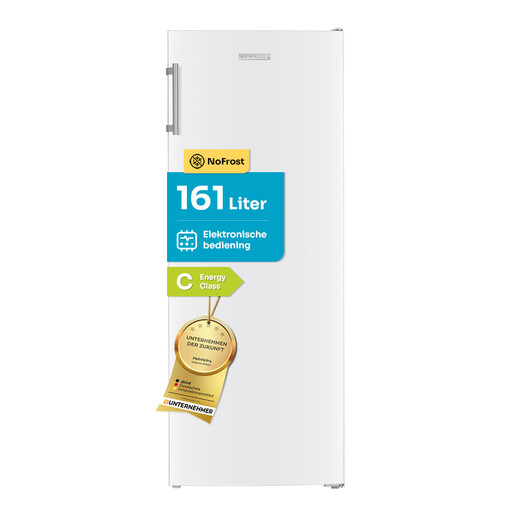 No image available
The three freezer drawers can help you keep individual portions organised.
161 l capacity, No-Frost, C energy rating and three freezer drawers.
Specified freezing capacity: 4,5 kg/24 hours.
 No image available
An under-counter model to compare if you’re looking for extra freezer space and No-Frost; the description lists one freezer compartment.
87 l capacity, D energy rating and No-Frost.
Specified freezing capacity: 5 kg/24 hours; specified annual energy consumption: 145 kWh.
Dimensions: 84,5 × 55 × 59,5 cm.
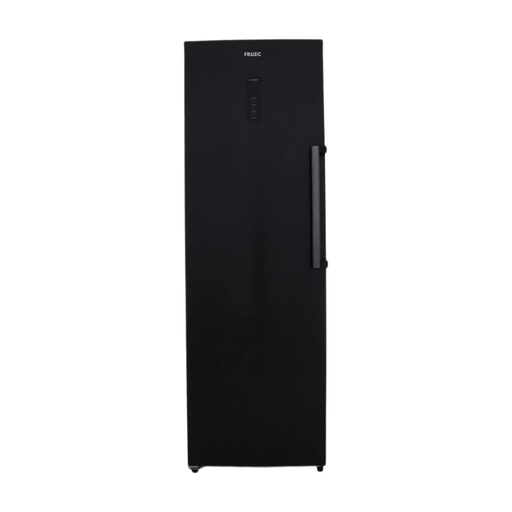 No image available
With a capacity of 274 l, this model is designed for larger stocks than a few portions for one lunch.
274 l capacity, No-Frost and C energy rating.
The description specifies 5–10 cm of ventilation space around the appliance. Check the installation instructions for your chosen location.
 No image available
A fridge freezer to compare if you need a fridge as well as freezer space.
The freezer compartment has a specified capacity of 98 l, with two freezer drawers and a tray.
Specified freezing capacity: 4,5 kg/24 hours; specified annual energy consumption: 248 kWh.
The product name and description list different energy ratings; check the energy label for the exact version.
 No image available
The three transparent drawers can help you organise individual portions.
87 l capacity, B energy rating and three freezer drawers.
Specified freezing capacity: 4,4 kg/24 hours; specified annual energy consumption: 84 kWh.
This model doesn’t have No-Frost; the description says it needs to be defrosted manually when a thick layer of frost forms.
There’s no specific minimum time you need to allow before a weekend lunch. Cool homemade stock quickly and store it in sealed portions. The Netherlands Nutrition Centre recommends keeping stock in the freezer for up to three months for best quality.
According to the Netherlands Nutrition Centre, defrost a portion in the fridge or microwave, heat it thoroughly and eat it straight away. Don’t defrost stock on the worktop, and it’s best not to refreeze leftovers that have already been defrosted and reheated.
Yes. According to the European Commission, energy labelling rules apply to domestic freezers. The label uses a scale from A to G and shows details including annual energy consumption in kWh, volume and noise level. This doesn’t mean that you have to buy a freezer with a particular energy rating.
In the Netherlands, a product must meet what you can reasonably expect from it; the Dutch government states that there is no fixed statutory warranty period of two years. If a private individual buys a similar new appliance, the seller must take back the old appliance free of charge under the ‘old for new’ scheme, including for online purchases.