
If you freeze soup in portions
You want to store cooled vegetable soup regularly and need enough suitable space for the portions you usually make.


If your existing freezer compartment has a four-star rating, is set to −18 °C and has enough room for your soup portions, you may not need an extra freezer. The Consumentenbond says a four-star freezer compartment is needed for fresh food, while the Voedingscentrum recommends a freezer temperature of −18 °C. If your current space is too small, compare compact models by usable capacity, freezing capacity, external dimensions and annual energy consumption.
You want to store cooled vegetable soup regularly and need enough suitable space for the portions you usually make.
You want extra freezer space, but the available floor space, doorway and access to your portions will determine what size is practical.
You’re weighing up the extra storage space against the energy consumption and maintenance of another appliance.
A good fit if: you can store cooled portions in your existing compartment and don’t need to freeze too much at once.
Bear in mind: space and freezing capacity may be limited; check the specifications of your own appliance.
A good fit if: you regularly want to store extra soup portions but have little room for a larger freezer.
Bear in mind: measure the available space and doorway, and allow for ventilation; an extra appliance uses electricity.
A good fit if: you regularly freeze larger quantities of other meals or groceries as well as soup, and have enough room.
Bear in mind: drawers make items easier to reach, while a chest freezer can accommodate larger or unusually shaped items.
For freshly prepared food, the Consumentenbond says a four-star freezer compartment is suitable; the Voedingscentrum recommends −18 °C. Then check whether your containers will fit, how much you freeze at once and how much electricity an extra appliance will use.
| Point to consider | What should you check? | Who is this important for? |
|---|---|---|
| Suitable freezer space | Check that it has a four-star rating and can be set to −18 °C. Also check that your usual containers will fit in the available space. | If I want to store cooled soup in individual portions, I need both a suitable freezer setting and enough space. Around 36% of consumers prioritise having enough freezer space for their needs. |
| Size and positioning | Measure the available space and doorway; check the external dimensions, door swing and required ventilation clearance. | With limited kitchen space, I want to know in advance whether the freezer will fit where I plan to put it and remain easy to access. Around 29% of consumers say positioning is their main consideration. |
| Energy consumption | Compare the annual consumption in kWh on the energy label of the models you’re considering. | If I’m considering a second appliance, I want to factor in its annual energy consumption before buying extra freezer space. Around 21% of consumers focus mainly on the energy consumption of an additional freezer. |
| Freezing capacity and maintenance | Compare the stated capacity in kg per 24 hours with the amount you usually cook, and check whether each model needs manual defrosting. | When I make several portions at once, I want to know how much the freezer is rated to freeze in 24 hours and what maintenance it needs. Around 14% of consumers pay most attention to these points. |
The European Commission explains that the energy label provides information including annual energy consumption and storage volume. So compare specific models, and assess the available space using your own containers and other frozen food too.
A freezer compartment with fewer than four stars is not necessarily suitable for freezing freshly prepared food. The Consumentenbond recommends four stars for this purpose, while the Voedingscentrum recommends −18 °C.
Before buying, check the star rating and the temperature settings of your existing compartment or the new appliance.
If your current freezer space is suitable and has enough room, you may not need a separate appliance just for these portions.
Count your usual portions and check how much space is actually left in your current freezer before comparing models.
The capacity in litres doesn’t tell you whether your soup containers will fit in the drawers or how much room the freezer will take up where you plan to put it.
Measure your containers and the available space; also check the drawer layout, external dimensions and doorway.
The stated freezing capacity is per 24 hours. Inventum warns that the temperature may rise if you exceed the stated capacity.
Compare the exact model’s capacity in kg per 24 hours with the amount you cook, and divide the soup into smaller portions.
The VR550 is a compact under-counter model to consider if you want to store soup portions in separate drawers.
The GTV15NWEB is a compact model to compare if external dimensions and storing individual portions are important to you.
The Fd 1404 Pure and FNe 1404 Pure offer a comparison between SmartFrost and NoFrost.
The freestanding FSE1174N is a model to compare if the available external dimensions are important.
This selection features compact freestanding freezers for extra portion storage. For each model, check whether its freezer setting is suitable for freshly prepared food and can be set to −18 °C.
 No image available
The stated capacity and freezing performance can help you decide whether this model will suit your portions.
Listed specifications: four stars, 87 litres, 5 kg per 24 hours, 145 kWh per year and energy rating D. The dimensions are 84.5 × 55 × 59.5 cm. The description states that it has No Frost. Use the freezer setting in line with the stated four-star rating and recommended temperature of −18 °C.
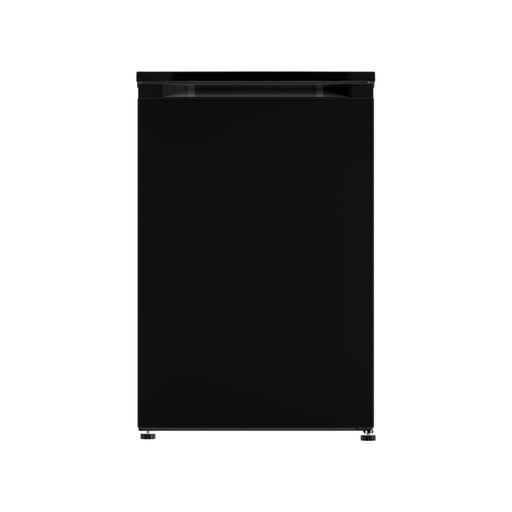 No image available
The three transparent drawers can help you keep portions separate.
Listed specifications: 85 litres, three drawers and a freezing capacity of 4.5 kg per 24 hours. It has energy rating C, with stated consumption of 105 kWh per year. The dimensions are 84.5 × 54.9 × 55.7 cm. According to the description, it needs to be defrosted manually. Before using it for fresh soup, check that the freezer compartment has a four-star rating and can be set to −18 °C.
 No image available
The stated drawer layout and freezing capacity are useful to know if you freeze soup in individual portions.
Listed specifications: four stars, 87 litres and a freezing capacity of 4.4 kg per 24 hours. It has energy rating B, with stated consumption of 84 kWh per year. The dimensions are 550 × 850 × 580 mm. According to the description, it needs to be defrosted manually.
 No image available
The stated capacity and three drawers are worth considering if you’re looking for a smaller cabinet for your portions.
Listed specifications: four stars, 60 litres and a freezing capacity of 6 kg per 24 hours. It has energy rating F, with stated consumption of 195 kWh per year. The temperature can be set from −20 to −12 °C. The freezer has three drawers and measures 472 × 446 × 845 mm.
 No image available
The compact capacity may suit a small amount of food; compare it with how much soup you want to store at once.
Listed specifications: four stars, 31 litres and a freezing capacity of 2 kg per 24 hours. It has energy rating E, with stated consumption of 147 kWh per year. The door hinges are reversible. Check whether this model can be set to −18 °C.
No, not every freezer compartment is suitable for freezing home-cooked food. Check that it has a four-star rating and set the freezer to −18 °C; also bear in mind how much the appliance is rated to freeze at once.
Cool the soup quickly, divide it into small portions in airtight containers, and put leftovers in the fridge or freezer within two hours. The Voedingscentrum recommends defrosting frozen leftovers in the fridge where possible; you can also defrost them in the microwave.
The Voedingscentrum says thickened vegetable soup keeps for three months in the freezer; after that, its quality may deteriorate. For soup made with different ingredients, check the relevant storage advice.
Compare the annual consumption in kWh on the EU energy label, then multiply it by your own electricity tariff for a personal cost estimate. According to the Dutch government, when you buy a product in the Netherlands, you have a legal right to a product that works properly; if there’s a fault, you can contact the seller.
According to the Dutch government, when you buy a new, similar appliance for private use, the old-for-new scheme applies. The seller must take the old appliance away free of charge. The scheme also applies to online purchases, with specific arrangements if the delivery service doesn’t take it away straight away.