
Home cook short on freezer space
You make enough soup for several days and want to know whether the portions will fit in your existing freezer compartment, or whether a compact table-top freezer would be a better fit.


A separate table-top freezer is most worthwhile if you regularly freeze several portions of soup and your existing freezer space is running out. First, check whether your freezer compartment can be set to −18 °C and whether your sealed portion containers will fit. Then compare models by their dimensions, drawer layout and annual energy consumption. Choose NoFrost only if avoiding manual defrosting matters more to you than the other differences between models.
You make enough soup for several days and want to know whether the portions will fit in your existing freezer compartment, or whether a compact table-top freezer would be a better fit.
You need extra freezer space, but you’ll need to check the appliance’s external dimensions, door opening and operating temperature against the space available and its specifications.
You want to keep your soup portions neatly organised and are weighing up manual defrosting against a compact NoFrost model.
A good fit if: the freezer compartment can be set to −18 °C and has enough room for your sealed portions.
Trade-off: according to Voedingscentrum, one- or two-star freezer compartments do not reach this temperature.
A good fit if: you regularly freeze several portions alongside other food and have room for an extra appliance.
Trade-off: it takes up space and uses electricity; models without NoFrost may need to be defrosted manually.
A good fit if: you need separate freezer space and want to avoid manual defrosting.
Trade-off: compare the exact model’s dimensions and stated energy consumption; NoFrost does not automatically make a model more energy-efficient.
| Consideration | What to look for | Who it matters to |
|---|---|---|
| Freezer space | Measure your filled portion containers and compare them with the usable space and drawer layout. | If I want to store several individual portions at once, I need to know whether they’ll really fit. Consumers who want enough space, but not more than they need, account for around 40% of consumers in this use case. |
| Where it will go | Measure the height, width, depth and door opening; also check the exact model’s permitted ambient temperature. | If space is limited or I want to put the freezer in a cool room, both the appliance and its surroundings need to be suitable. Consumers whose main concern is where to put it account for around 20% of consumers in this use case. |
| Energy consumption | Compare the stated annual consumption in kWh of models with a suitable capacity. | If the extra freezer will be on all the time, I want to weigh up its energy use alongside the space it offers. Consumers who are mainly concerned about energy consumption account for around 30% of consumers in this use case. |
| Defrosting and layout | Check whether the model has NoFrost, LowFrost or no anti-frost feature, and how many drawers it has. | If I want to store small portions neatly and minimise manual defrosting, these features matter. Consumers whose main concern is maintenance account for around 10% of consumers in this use case. |
Voedingscentrum recommends setting a freezer to −18 °C; a one- or two-star freezer compartment cannot reach that temperature.
Check the star rating and adjustable temperature of your existing freezer compartment before deciding whether you need extra freezer space.
A model may have enough capacity but still not fit where you want to put it, or suit the space your portions will take up.
Measure your containers and the available space, then compare the stated annual energy consumption of models with a suitable capacity.
LowFrost does not mean a model never needs manual defrosting; the AEG model reviewed specifies manual defrosting.
Check the defrosting method for the exact model and read the manual to find out what maintenance is required.
The VR550 reviewed is a compact table-top freezer with three drawers.
The VV856WIT and VV956WIT reviewed offer a model-by-model comparison of table-top freezers.
The FNe 1404 is a compact model for anyone who prioritises NoFrost.
The GTV15NWEB is a table-top freezer whose stated capacity, freezing capacity and energy consumption are worth comparing.
The ATB48E1AW is a compact table-top freezer with LowFrost.
This selection features freestanding table-top freezers for extra freezer space, with a range of capacities, drawer layouts and defrosting features.
 No image available
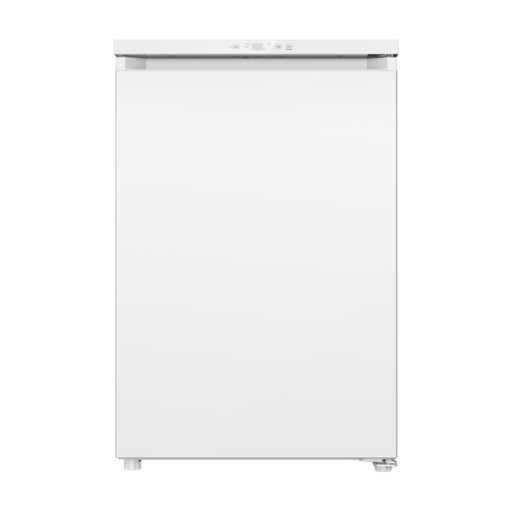
A good choice if you’re looking for separate freezer space with NoFrost.
87 litres; freezing capacity 5 kg per 24 hours; four-star setting; automatic defrosting; stated ambient temperature range 10–43 °C.
 No image available
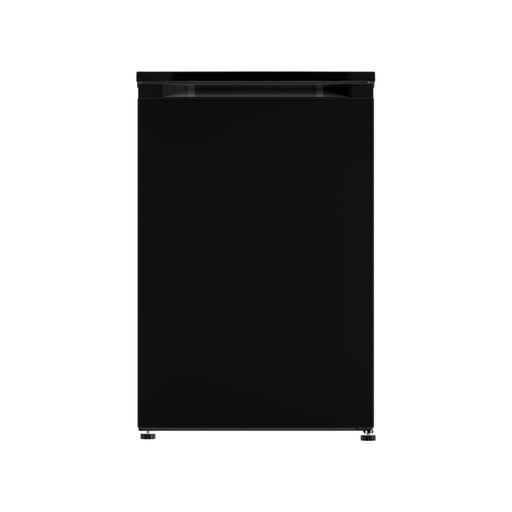
An option if you’re looking for separate freezer space with several drawers.
85 litres; three transparent drawers; energy rating C; 105 kWh per year; freezing capacity 4.5 kg per 24 hours. Manual defrosting.
 No image available
A good option to compare if you’re looking for a table-top freezer with three drawers and stated energy consumption.
87 litres; three transparent drawers; energy rating B; 84 kWh per year; freezing capacity 4.4 kg per 24 hours; dimensions 55 × 85 × 58 cm. No NoFrost; manual defrosting is needed when enough frost has built up.
 No image available
An option if you’re looking for separate freezer space with a smaller stated capacity.
60 litres; three drawers; energy rating F; temperature range −12 to −20 °C; freezing capacity 6 kg per 24 hours; dimensions 845 × 472 × 446 mm. No NoFrost.
 No image available
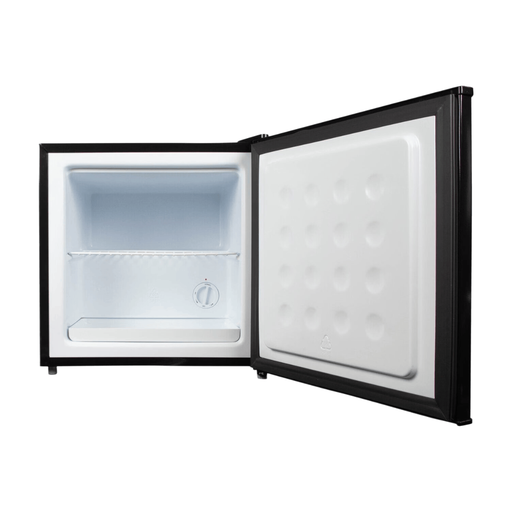
Worth comparing if you only need a little extra freezer space.
31 litres; two compartments; freezing capacity 2 kg per 24 hours; dimensions 49.2 × 47.2 × 45 cm.
Cool the soup quickly, within two hours at the latest. For example, place the pan in cold water and stir. Divide it into sealable, dated, individual portion containers and freeze in small portions at −18 °C or colder; don’t put a hot pan in the freezer. Voedingscentrum recommends cooling leftovers quickly in this way.
Voedingscentrum recommends keeping cooked leftovers in the freezer for up to three months. Defrost a portion in the fridge or using your microwave’s defrost setting, then heat it thoroughly until piping hot. Don’t reheat leftovers for a third time.
It depends on the model. According to Consumentenbond, a freezer with NoFrost does not need defrosting because of ice build-up. For other models, check the manual and defrost or clean the appliance when needed.
When comparing freezers, look at the current A–G energy rating and stated energy consumption. According to the Dutch government, there is no fixed term for the statutory warranty in the Netherlands: if a product is faulty, the retailer is your point of contact, and your statutory rights apply alongside any manufacturer’s warranty.
Yes. According to the Dutch government, when you buy a new, similar appliance, the retailer must take back your old household appliance free of charge. This also applies to online purchases; arrange how it will be dropped off or collected with the retailer.