
Cooking for a large group
You’re making a lot of soup in one day. Compare the weight of your portions with the stated freezing capacity per 24 hours, and also allow for the space you’ll need to store them.


For a single celebration meal, an extra freezer isn’t necessarily needed. First check that your current freezer is set to at least −18 °C and has enough room for your sealed portions. If you regularly need more space, match both the capacity and the freezing capacity in kg per 24 hours to the amount of soup you’ll add on your busiest cooking day. A table-top freezer generally takes up less floor space, an upright freezer offers drawer storage, and a chest freezer may suit larger or unusually shaped containers.
You’re making a lot of soup in one day. Compare the weight of your portions with the stated freezing capacity per 24 hours, and also allow for the space you’ll need to store them.
You want to store soup for a celebration without buying an unnecessarily large appliance. First measure the spare space in your current freezer, then decide whether there’s room for a table-top model.
You want to store soup alongside other food and find your portions easily later. Compare the layout and annual energy consumption of appliances with enough space for your needs.
Start with the amount you want to freeze and store in one day. Then check whether the space and layout will work in your kitchen and suit the rest of your frozen food.
Suitable when: the sealed portions fit alongside your existing food and your freezer can be set to at least −18 °C.
Trade-off: you won’t need another appliance, but don’t add more fresh soup at once than your freezer can handle.
Suitable when: you regularly freeze extra portions and have limited space for an appliance.
Trade-off: if you’re cooking a large batch, check both the drawer dimensions and the freezing capacity. The total volume alone won’t tell you how much you can freeze in a day.
Suitable when: you regularly store other frozen food as well as soup for celebrations and want to organise portions by drawer.
Trade-off: a tall freezer needs enough floor space and headroom. Compare the external dimensions and annual energy consumption of models with a suitable capacity.
Suitable when: you also store larger or irregularly shaped containers and have room for the freezer and its opening lid.
Trade-off: small soup containers need a clear system so you can find them again. Consumentenbond doesn’t test chest freezers, so its upright-freezer tests don’t provide a test verdict on this option.
| Consideration | What to look for | Most important for |
|---|---|---|
| Room for all your portions | Measure your sealed containers and check the freezer capacity and layout. The number of litres alone won’t tell you whether your containers will fit in a drawer. | If I want to store soup for a celebration alongside my usual frozen food, I need to know whether all the containers will actually fit. Around 36% of consumers say storage space is their main consideration. |
| Freezing capacity on cooking day | Weigh how much cooled soup you’ll add at once and compare it with the stated capacity in kg per 24 hours. Voedingscentrum recommends cooling food quickly and storing it in small portions. | If I make a large pan of soup in one day, I need to know whether I can freeze all the portions at once. Around 29% of consumers focus mainly on how much the appliance can freeze per day. |
| Location and access | Measure the width, depth and height, and allow room for a door or lid to open. Check the layout of the exact model. | If the freezer needs to go in a tight space, I want to know it will fit and that I can reach the containers easily. Around 21% of consumers prioritise where the appliance can be placed and how easy it is to access. |
| Energy use and maintenance | For appliances with enough capacity, compare the energy labels and stated annual consumption in kWh. Also check whether the model needs manual defrosting; Milieu Centraal highlights the annual consumption shown on the energy label. | If I leave the freezer plugged in after the celebration, I also want to take energy use and maintenance into account. Around 14% of consumers put these ongoing considerations first. |
Freezer capacity tells you how much food you can store; freezing capacity in kg per 24 hours tells you how much fresh food the appliance can freeze during that time. These figures answer different questions.
Check how much soup you’ll add in one day and how many portions you’ll need to keep stored afterwards.
Your existing freezer may be enough if the portions fit and it can reach the required temperature.
First check the space available in your current freezer and its temperature setting. Consider extra capacity mainly if you’ll also need it for other frozen food.
A chest freezer may fit larger containers, but small tubs need their own place so you can find them later.
Measure the space for the freezer and its lid, and check how many baskets the exact model has before choosing how to organise it.
The VR550 is a table-top model, while the VK980W is a chest freezer. These models illustrate different sizes.
The GSN54DWDV is an example of a large freestanding upright freezer for a substantial, regularly replenished supply of frozen food.
The B5RFNE294W is an example of an upright freezer which, according to Beko, has a capacity of 260 litres.
The FNd 525i Prime is an example of an upright freezer with organised storage and additional controls.
This selection of Joybuy products includes table-top freezers, upright freezers and a chest freezer. Compare the freezing capacity with the amount of soup you’ll make on your busiest cooking day, and check the dimensions and layout of the model that suits your space.
 Image unavailable
A table-top model for anyone looking for extra freezer space who can fit the external dimensions of 84,5 × 55 × 59,5 cm into the available space.
The product listing gives a capacity of 87 litres and a freezing capacity of 5 kg per 24 hours. According to the listing, the recommended temperature in freezer mode is −18 °C. The appliance can switch between freezer mode and fridge/cellar mode; freezing requires freezer mode.
The listing mentions Fast Freeze and automatic defrosting.
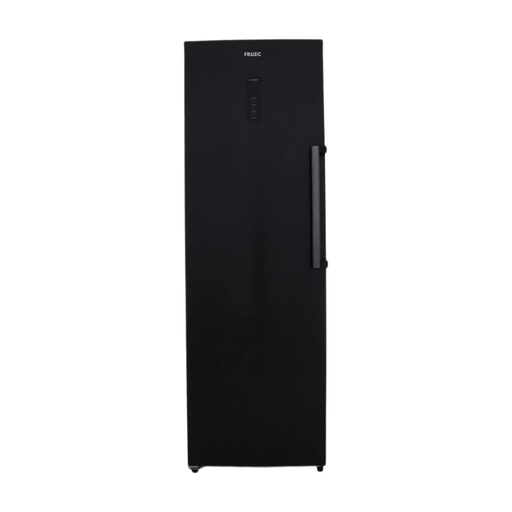 Image unavailable
An upright freezer for anyone looking for room for several portions and a higher freezing capacity in a single day.
The product listing gives a capacity of 274 litres and a freezing capacity of 17 kg per 24 hours. It also lists No Frost, digital temperature control and energy label C.
 Image unavailable
A chest freezer for anyone who also stores larger or unusually shaped containers and can keep small soup portions organised separately.
The title lists a capacity of 140 litres, a storage basket, a counterbalanced lid, an adjustable temperature control and energy label E.
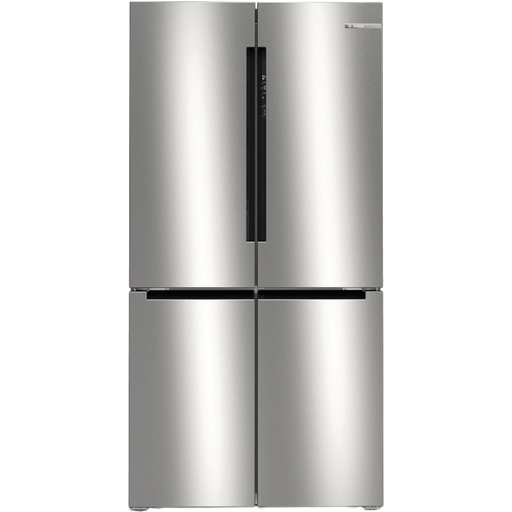 Image unavailable
An upright freezer for anyone looking for a freestanding model. Check the external dimensions carefully before deciding where to put it.
The product listing mentions NoFrost and annual energy consumption of 333 kWh. The stated external dimensions are 183 × 91 × 73,10 cm.
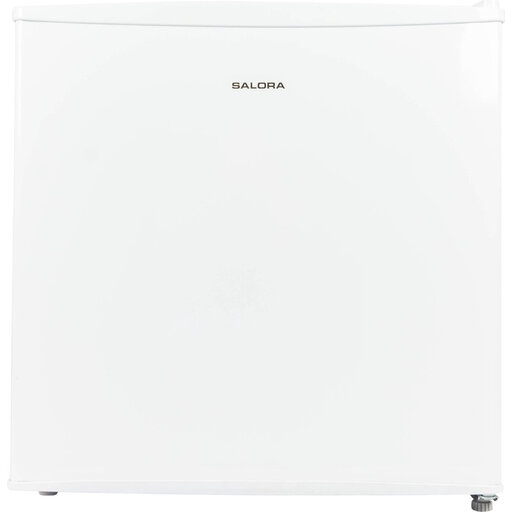 Image unavailable
A compact table-top model for anyone looking for a little extra freezer space, with a limited capacity matched to the amount of soup they need to store.
The product listing gives a capacity of 31 litres, two compartments and a freezing capacity of 2 kg per 24 hours. The external dimensions are 49,2 × 47,2 × 45 cm.
Cool freshly made soup quickly, divide it into small portions and place them in sealed containers in the fridge or freezer within 2 hours of cooking. Set your freezer to at least −18 °C and don’t add too much at once. This is the storage advice from Voedingscentrum.
Voedingscentrum recommends defrosting meals in the fridge overnight; small portions can also be defrosted in the microwave. Then heat the food until piping hot, and don’t leave the soup to defrost outside the fridge all day.
The EU energy label for household freezers runs from A to G and includes information such as annual energy consumption in kWh. Compare the consumption of models that both offer enough space; your actual electricity costs also depend on your tariff and how you use the appliance.
According to the Dutch government, you’re entitled to a product that works as it should, but there’s no fixed statutory warranty period. If a product is faulty, the retailer is your point of contact. A manufacturer’s guarantee is in addition to your legal rights and doesn’t replace them.
Yes. According to the European Commission, EU energy-labelling rules apply to household refrigeration and freezing appliances. Check the energy label for the exact model you’re considering.