
Shopper with limited freezer space
You buy sliced bread at the market and want to store it in portions without having to buy a larger appliance straight away. The Netherlands Nutrition Centre recommends freezing bread in portions after purchase.


You don’t need a separate freezer if your existing freezer space is suitable for freezing fresh bread and has enough room for your portions. Under the EU definition, a four-star freezer compartment has a target temperature of −18 °C and must meet requirements for freezing capacity. If you need more space, compare the dimensions and layout first, then check the capacity and annual energy consumption in kWh.
You buy sliced bread at the market and want to store it in portions without having to buy a larger appliance straight away. The Netherlands Nutrition Centre recommends freezing bread in portions after purchase.
You buy several loaves or store other frozen foods too. A well-organised layout makes it easier to find what you need, while drawers keep products easy to reach individually.
You’re considering extra freezer space, but want to compare annual energy use with the capacity you actually need. Milieu Centraal recommends checking the annual consumption in kWh on the energy label.
Choose this if: your bread portions fit in the freezer compartment and you can reach them without having to move other products out of the way.
The trade-off: you won’t need another appliance, but limited space may restrict how much you can buy at the market.
Choose this if: you want to store a small extra supply in separate, easy-to-reach drawers and the external dimensions fit the space you have in mind.
The trade-off: a tabletop model offers less storage space than a tall freezer. Compare the annual energy consumption of the specific model.
Choose this if: you regularly store other frozen foods as well as bread and want to organise everything by drawer.
The trade-off: a larger appliance needs more space. Milieu Centraal recommends comparing annual consumption in kWh, not just the energy class.
Consider this if: you also want to store large or awkwardly shaped products.
The trade-off: according to the Consumers’ Association, products are easier to reach in an upright freezer with drawers than in a chest freezer, especially when you’re taking out small portions.
Measure the space and check that bags of bread portions will fit in the available drawers. The Netherlands Nutrition Centre recommends freezing bread in portions after purchase and taking out only what you need.
| What to consider | What should you check? | Who is this most relevant to? |
|---|---|---|
| Space and accessibility | Measure the available space and check the external dimensions; make sure the portions will fit in the drawers. | If space is limited and I take out individual slices every day, I want to store the bread bags so they fit and are easy to reach. Around 39% of consumers put a suitable size and accessible portions at the top of their list when buying. |
| Energy consumption | Compare the stated annual consumption in kWh of models with enough capacity. | I want extra freezer space without unnecessarily high ongoing energy use. For around 23% of consumers, limiting extra energy consumption is the top priority. |
| Capacity and freezing capacity | Estimate how much bread and how many other products you want to store at once; if you’re buying a large amount of fresh food, check the capacity in kg per 24 hours. | Sometimes I buy several loaves at the market and want room for other supplies too. Around 23% of consumers prioritise space for a larger stock of food. |
| Defrosting and maintenance | Check whether the model has NoFrost, LowFrost or neither, and read the maintenance instructions. | I want to know how much maintenance a freezer needs before choosing a model. For around 15% of consumers, reducing the need to defrost is the top priority. |
A suitable existing compartment may have enough space to freeze bread in portions, while an extra appliance will continue to use electricity.
First check whether your existing compartment is suitable for freezing fresh bread and whether the portions will fit.
The energy label shows the energy class, annual consumption and capacity. Milieu Centraal recommends taking annual consumption in kWh into account. The energy class alone doesn’t tell you how much electricity your chosen model will use each year.
Compare the stated annual consumption of models with enough capacity for your supplies.
AEG describes LowFrost on the ATB48E1AW as a way to limit the build-up of frost and ice and make defrosting easier. It isn’t the same as NoFrost and doesn’t mean you’ll never need to defrost the freezer.
Check the exact technology and maintenance instructions for the model you’re considering.
The VR600 is a 98-litre tabletop model with three drawers, for anyone looking for extra freezer space with separate storage.
The GTV15NWEB is an 83-litre tabletop model whose specifications can be considered individually.
The VV856WIT is a freestanding 85-litre tabletop model with three transparent drawers.
The FNe 1404 is a 92-litre tabletop model with NoFrost.
The ATB48E1AW is a freestanding tabletop model with LowFrost.
This selection includes freestanding freezers for anyone looking for extra space to freeze fresh bread and store portions or other supplies. Compare each model’s capacity, freezing capacity, layout and energy consumption.
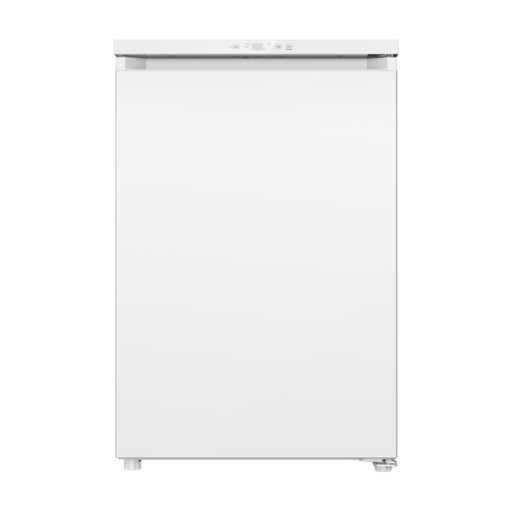 Image unavailable
A good choice if you’re looking for a tabletop model with drawers for freezing portions of fresh bread.
The product information lists a capacity of 87 litres, No Frost, energy class D and annual consumption of 145 kWh. The model has a four-star freezer setting at −18 °C, a freezing capacity of 5 kg per 24 hours and three freezer drawers. Use the four-star setting to freeze fresh bread.
 Image unavailable
A good choice if you’re looking for a tabletop model with separate drawers for bread portions and other supplies.
The product information lists a capacity of 87 litres, energy label B and annual consumption of 84 kWh. This model has three transparent drawers, a four-star freezer compartment and a freezing capacity of 4.4 kg per 24 hours. According to the product information, it doesn’t have No Frost; it needs to be defrosted manually when a lot of frost has built up.
 Image unavailable
A good choice if you’re looking for a compact extra freezer with drawers.
The product information lists a capacity of 60 litres, a four-star freezer compartment and a freezing capacity of 6 kg per 24 hours. It has three drawers, including one transparent drawer. The product information doesn’t mention No Frost.
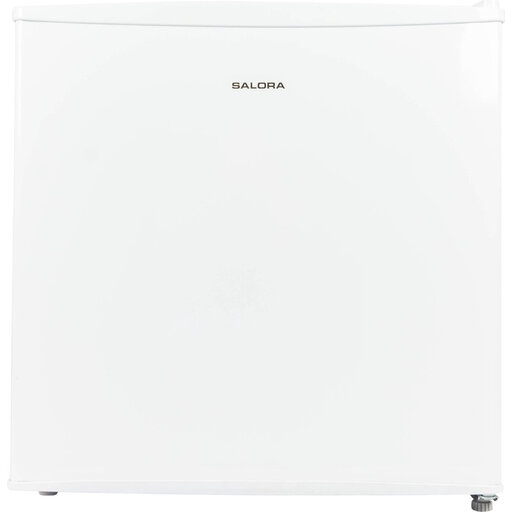 Image unavailable
A good choice if you want to freeze a small number of bread portions and don’t need much extra space.
The product information lists a capacity of 31 litres, two compartments, a four-star freezer compartment and a freezing capacity of 2 kg per 24 hours.
 Image unavailable
A good choice if you’re looking for more freezer space and want the option to switch the appliance to fridge mode.
The product information lists a capacity of 122 litres, No Frost and a four-star freezer compartment at −18 °C with a freezing capacity of 5.5 kg per 24 hours. Use the freezer setting to freeze fresh bread.
No, not if your existing four-star freezer compartment has enough accessible space for freezing fresh bread. The Netherlands Nutrition Centre recommends freezing bread in portions after purchase and taking out only what you need.
For currant bread, the Netherlands Nutrition Centre recommends storing it in the freezer for 1–3 months and notes that bread becomes drier if it’s frozen for longer. For other types of bread, check the Storage Guide or the packaging; this timeframe doesn’t guarantee the quality of every loaf.
Not without first checking the permitted ambient temperature for the specific model. For example, Liebherr states that the FNe 1404 can operate at ambient temperatures as low as −15 °C; this specification doesn’t automatically apply to other freezers.
The EU energy label for household fridges and freezers shows, among other things, the energy class, annual consumption and capacity. Milieu Centraal recommends comparing annual consumption in kWh across models with enough usable capacity.
Report the fault to the retailer. According to the Dutch government, there is no fixed two-year statutory guarantee period in the Netherlands; what you’re entitled to expect depends on the product and the circumstances of the purchase. A manufacturer’s guarantee doesn’t replace your statutory rights.