First, check whether your existing freezer has enough room for the individually wrapped portions of dough. An extra freezer also uses electricity between pizza nights. If you regularly freeze a larger batch of fresh dough, compare capacity, freezing capacity in kg per 24 hours and layout. If you only freeze a few portions or have limited kitchen space, size may matter more than extra capacity.
Who would find a separate freezer useful?
If you prepare several portions of dough at once
You’re making several portions for a get-together and want to know whether your freezer can handle a fresh batch. Compare the model’s freezing capacity: Inventum, for example, lists this separately from the total capacity for the VR600 and VK952W.
If you have limited kitchen space
You want to store dough separately, but the appliance and wrapped portions also need to fit in the space available. The Consumentenbond points out that drawers can make the contents of an upright freezer easier to access.
If you also use your freezer regularly for other foods
You want to store more frozen food as well as pizza dough, so energy use and maintenance matter. Milieu Centraal recommends taking the stated annual consumption in kWh into account; the European Commission also lists this information on the energy label.
What should you look for when choosing?
Existing freezer space
Choose this when: the wrapped portions will fit and the compartment is suitable for freezing fresh food.
Consider: check the available space and the existing compartment’s features before adding a large batch of fresh dough.
Freestanding under-counter freezer
Choose this when: you want a separate place for portions of dough but have limited floor or kitchen space.
Consider: capacity, drawer layout and freezing capacity vary by model; measure the space where you plan to put it, too.
Upright freezer
Choose this when: you regularly store other foods as well as pizza dough and drawers are important to you.
Consider: allow for the space it needs and compare the annual energy consumption of models suited to how you’ll use it.
Chest freezer
Choose this when: you want to store larger quantities or awkwardly shaped packages and have enough floor space.
Consider: smaller portions can be harder to find. If you’re placing it in a cold space, check the model’s permitted ambient temperature.
| What to consider |
What should you look for? |
Who should pay extra attention? |
| Large fresh batch |
Compare the freezing capacity in kg per 24 hours with the amount you want to freeze at once. Also check whether the packages will fit in the drawers or chest. |
If I prepare several portions of dough at once, I want to know whether the freezer can handle that fresh batch. Around 33% of consumers prioritise freezing capacity for a large batch. |
| Space and layout |
Measure the available space and compare the external dimensions, net capacity and drawer layout with the wrapped portions. |
With limited space, I want to find a model that fits and keeps my portions of dough within easy reach. For around 27% of consumers, having enough room for the appliance and a practical layout is the main priority. |
| Annual energy consumption |
Compare the stated annual consumption in kWh of models in a suitable size; don’t look only at the energy label rating. |
If the freezer stays on between pizza nights, I want to take its stated annual energy consumption into account. Around 20% of consumers prioritise electricity use when an appliance will be used over a long period. |
| Layout and defrosting |
Check whether drawers suit smaller packages and look at the exact defrosting technology: Low Frost is not the same as NoFrost. |
I want to find small portions easily and defrost as little as possible. For around 20% of consumers, easy-to-access portions and less defrosting are the main considerations. |
Common pitfalls
-
Looking only at the capacity in litres
Net capacity and freezing capacity answer different questions: the first tells you how much the freezer can store, while the second tells you how much fresh food it can freeze in 24 hours.
Measure the wrapped portions and compare both the layout and the freezing capacity in kg per 24 hours.
-
Confusing Low Frost with NoFrost
According to the manufacturer, Low Frost reduces frost build-up, but it is not the same as NoFrost. The maintenance required depends on the technology used in the model.
Check the product information and maintenance instructions for the freezer you’re considering.
-
Choosing an extra freezer without comparing annual energy consumption
An extra appliance still uses electricity between meals with friends and family.
First check your existing freezer space, then compare the stated annual consumption in kWh of suitable models.
Brands and models compared
Inventum
The VR600 is an under-counter model, while the VK952W is a chest freezer with a higher stated capacity.
- Inventum lists a capacity of 98 litres, three drawers and a freezing capacity of 6.5 kg per 24 hours for the VR600.
- For the VK952W, Inventum lists a capacity of 198 litres and 9 kg per 24 hours.
- The VK952W has a chest layout rather than three drawers. These figures are model specifications, not independent performance measurements.
Bosch
The GTV15NWEB is a freestanding under-counter model to compare with other compact freezers.
- Bosch lists a capacity of 83 litres and a freezing capacity of 4.0 kg per 24 hours for this model.
- Bosch says the GTV15NWEB does not have NoFrost. Its stated freezing capacity is not an independent measurement.
ETNA
The VV856WIT is an under-counter model with three drawers for keeping portions separate.
- ETNA lists a capacity of 85 litres, energy rating D, annual consumption of 131 kWh and a freezing capacity of 4 kg per 24 hours.
- ETNA says this model has no frost-prevention feature, so don’t assume it has NoFrost.
Liebherr
The FNe 1404 is a compact model with NoFrost for anyone looking to cut down on defrosting.
- Liebherr lists a capacity of 92 litres and NoFrost for the FNe 1404.
- The benefits Liebherr attributes to NoFrost are manufacturer claims; compare the other model specifications and costs with suitable alternatives.
AEG
The ATB48E1AW is an under-counter model with LowFrost for anyone looking to reduce frost build-up without needing NoFrost.
- AEG lists a capacity of 85 litres, a freezing capacity of 4.2 kg per 24 hours, annual consumption of 164 kWh and static freezing technology for this model.
- The claim that it’s easier to defrost does not mean that defrosting is no longer needed.
Freezers at Joybuy
This selection includes freestanding freezers in a range of sizes and designs. Compare the listed product features with your portions, available space and maintenance preferences.
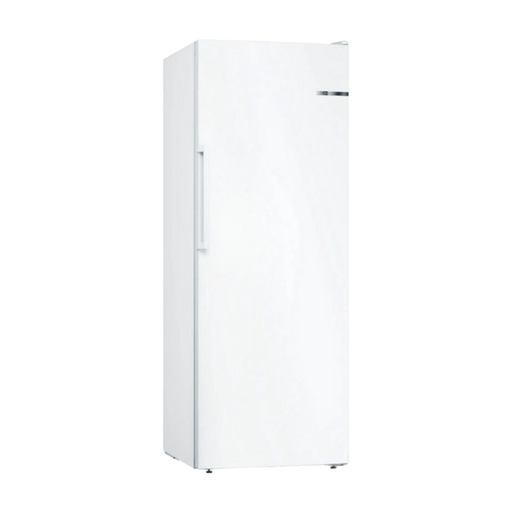 Image unavailable
Bosch Series GSN29VWEV Series 4 freestanding freezer
A freestanding model to compare if you’re looking for a separate freezer; the product name lists the Series 4 range.
View at Joybuy
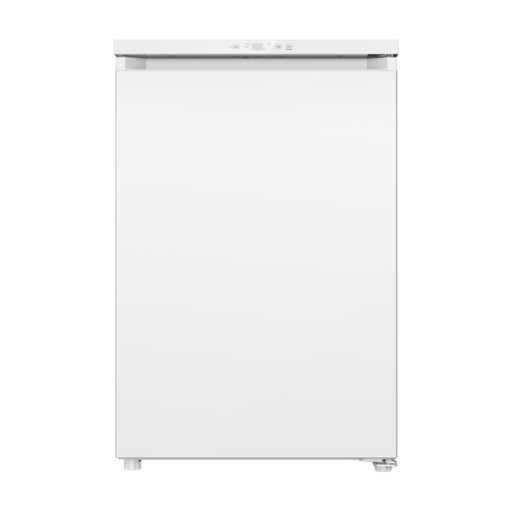 Image unavailable
Frilec BREMEN138-NF-050DW under-counter freezer
An under-counter model to consider if you’re looking for a separate, more compact place to store frozen food. The product name lists No-Frost and energy rating D.
View at Joybuy
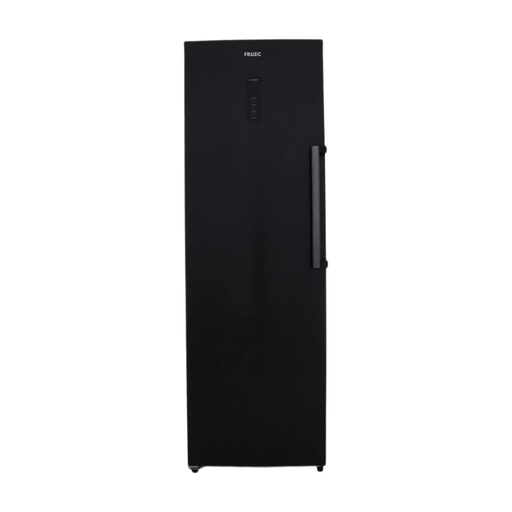 Image unavailable
Frilec BREMEN295-NF-H-040CDI freestanding freezer
A larger model to compare if you’re looking for more storage space. The product name lists a capacity of 274 litres, No-Frost and energy rating C.
View at Joybuy
 Image unavailable
CHiQ JR122WSD freezer, 122 L
A freestanding freezer to compare if you’re looking for a separate place to store frozen food. The product name lists a capacity of 122 litres, No-Frost and a convertible fridge setting.
View at Joybuy
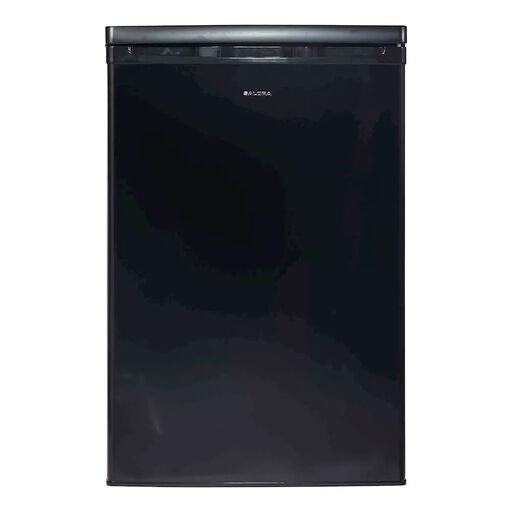 Image unavailable
Salora FRT910B freestanding freezer, 91 L
A freestanding model to compare if you’re looking for a separate place to store portions. According to the product description, this model does not have No Frost.
View at Joybuy
Frequently asked questions
Is one month in the freezer a fixed storage time for all homemade pizza dough?
No. The Voedingscentrum gives one month for an opened, thin pizza base; this is not a set storage time for all raw, homemade dough. Follow the product information for packaged dough.
What should you look for if you’re freezing lots of fresh portions of dough at once?
As well as the available space, compare the freezing capacity in kg per 24 hours. This specification tells you how much fresh food a model can freeze during that period, not how much it can store in total.
Can you keep a freezer in a cold garage?
It depends on the model. Inventum states that the VK952W is suitable for use in a space as cold as −15 °C; this specification does not automatically apply to other freezers. Check the manual for the model you’re considering.
How do you defrost pizza dough?
Make room in the fridge and cover the dough. The Voedingscentrum recommends using the fridge as a general method for defrosting frozen food, but does not give specific defrosting or proving times for pizza dough.
Does the manufacturer’s guarantee cover the full statutory guarantee in the Netherlands?
No. According to the Rijksoverheid, the Netherlands has no fixed statutory guarantee period; you’re entitled to a product that meets what you could reasonably expect. If there’s a fault, contact the retailer. A manufacturer’s guarantee is in addition to this.
What information is shown on a freezer’s European energy label?
For household freezers, the EU label shows information including the energy class on the A–G scale, annual energy consumption in kWh, freezer capacity and noise level. The European Commission describes these label details; compare models that suit how you’ll use your freezer and the space you have available.


