For a few sealed portions, your existing freezer compartment may be enough, as long as you can keep the sauce at −18 °C or colder and have enough room. If you regularly need extra freezer space, compare compact tabletop models by their layout, external dimensions and annual energy consumption. NoFrost can mean less defrosting, but it doesn’t, in itself, tell you how much electricity a model uses. The Voedingscentrum recommends setting your freezer to −18 °C, while Milieu Centraal points out that an extra appliance uses electricity too.
Who is this choice relevant to?
Portions for future meals
You make pasta sauce in advance and want to be able to find and defrost sealed portions one at a time. A safe storage temperature and a practical way to organise portions matter more than extra capacity. The Voedingscentrum recommends a temperature of −18 °C for frozen food.
Cooking with limited kitchen space
You regularly need extra freezer space, but the available space will determine whether a tabletop model—and the clearance it needs—will fit. The Consumentenbond points out that food can be easier to reach in a freezer with drawers.
If you’re considering energy use or maintenance
You’re comparing the energy use of an extra appliance, or you want to spend less time defrosting a freezer you need. Milieu Centraal notes that two refrigeration appliances use more energy together than one.
What should you consider when choosing?
Using your existing freezer compartment
A good fit if: you’re storing just a few portions and the compartment has enough room while maintaining a temperature of −18 °C or colder.
The trade-off: you don’t need to make room for another appliance, but you’ll be sharing the available space with other food.
A tabletop freezer with drawers
A good fit if: you freeze portions regularly, want to keep them organised and have space for the appliance.
The trade-off: drawers can make portions easier to access, but an extra freezer takes up space and uses electricity.
A larger freezer
A good fit if: as well as pasta sauce, you want to store larger quantities or food in awkward shapes.
The trade-off: the extra capacity may be unnecessary if you’re only freezing a few single portions. A chest freezer also has a different layout from an upright freezer with drawers.
| What to consider |
What to look for |
Who should pay particular attention? |
| Storing portions |
Check that the freezer can maintain a temperature of −18 °C or colder and has room for sealed containers. |
I want to take out sauce one meal at a time and defrost only what I need; around 36% of consumers put portion storage first. |
| Available space |
Measure the space where the appliance will stand and the route to get it there. Also check the manual for the required ventilation clearance. |
If space is limited, I want to know in advance whether the appliance will fit with room for the door and ventilation; around 29% of consumers put placement first. |
| Energy use |
Compare the stated annual energy consumption in kWh for models with a suitable capacity. |
I want to know how much electricity an extra appliance will use, even when it’s not very full; around 21% of consumers put energy use first. |
| Defrosting and noise |
Check whether the model has NoFrost and compare its stated noise emissions if it will be close to a living area. |
If I need extra freezer space, I also want to consider defrosting maintenance and noise; around 14% of consumers put maintenance or noise first. |
Common buying mistakes
-
Buying a second freezer without checking your existing freezer compartment first
You may already have room for a few sealed portions in your existing compartment. An extra appliance takes up space and uses electricity.
First, check how much space you have and whether you can keep the sauce at −18 °C or colder.
-
Choosing based only on the energy rating or the size
The energy label also shows annual energy consumption in kWh and capacity. The energy class alone doesn’t tell you how much usable space there is for your containers.
When comparing specific models, look at annual energy consumption, layout and external dimensions together.
-
Assuming NoFrost means lower energy use
NoFrost helps limit ice build-up and the need to defrost. It doesn’t replace comparing the stated annual energy consumption.
Choose NoFrost if you want to spend less time defrosting manually, and compare energy use separately.
-
Freezing a large pan of sauce as one portion
You may end up defrosting more sauce than you need for one meal. The Voedingscentrum recommends storing prepared dishes in portions and advises against refreezing leftovers that have already been defrosted and reheated.
Divide the sauce into sealed single portions and label them with the date they were frozen.
Relevant brands to compare
Inventum
According to Inventum, the VR550 is a freestanding tabletop freezer with a capacity of 88 litres and three transparent drawers.
- For the VR550, Inventum lists a four-star rating, energy label D and a freezing capacity of 4 kg per 24 hours.
- Inventum says this model doesn’t have NoFrost. These specifications apply to the VR550, not all the brand’s freezers.
Bosch
According to Bosch, the GTV15NWEB is a freestanding tabletop freezer with a capacity of 83 litres and three drawers.
- Bosch lists annual energy consumption of 164 kWh for this model under the standard test, and a noise level of 39 dB.
- It doesn’t have NoFrost. Bosch notes that actual energy use depends on how and where the freezer is used.
Liebherr
According to Liebherr, the FNe 1404 Pure is a tabletop freezer with a capacity of 92 litres and NoFrost.
- Liebherr lists a noise level of 37 dB and external dimensions of 85 × 55 × 60,7 cm for this model.
- Check the dimensions and annual energy consumption for the specific model. NoFrost alone doesn’t prove that a freezer uses less electricity.
Frilec
Frilec offers the BREMEN132-040BW as a tabletop freezer; the product listing gives its capacity as 87 litres.
- The product listing gives this version an energy rating of B.
- Check the product information sheet and warranty terms for the exact version before relying on a particular warranty period.
Freezers at Joybuy
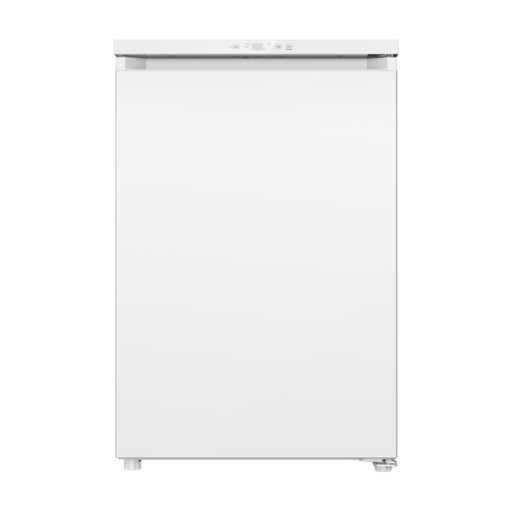
These models offer extra space for frozen portions, including compact tabletop models with and without NoFrost.
 No image available
Frilec BREMEN138-NF-050DW
An option if you’re looking for a tabletop freezer with NoFrost to reduce the need for manual defrosting.
NoFrost; energy label D.
Joybuy
 No image available
CHiQ JR122WSD
An option if you’re looking for extra freezer space and a convertible fridge setting.
122 litres; four-star compartment; convertible fridge setting; No-Frost; energy label E.
Joybuy
 No image available
Frilec BREMEN132-040BW
A tabletop freezer with three drawers to keep different portions organised separately.
87 litres; energy label B; no No Frost. Manual defrosting may be needed.
Joybuy
 No image available
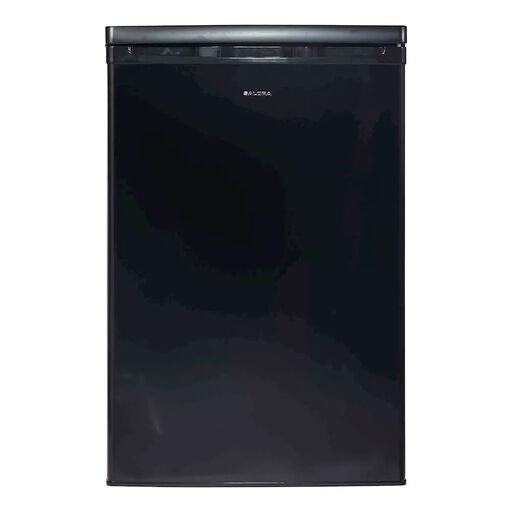
Salora FRT910B
An option if you want to store single portions in separate drawers and adjust the temperature.
91 litres; four transparent drawers; temperature range from −12 °C to −20 °C; no No Frost. Manual defrosting may be needed.
Joybuy
 No image available
Salora 47FRT60WH
An option if you’re looking for a smaller freezer with three drawers and an adjustable temperature range.
60 litres; three drawers; temperature range from −12 °C to −20 °C; no No Frost or automatic defrosting.
Joybuy
Frequently asked questions
How should you cool and store pasta sauce before freezing it?
Divide the sauce into sealed portions and put them in the fridge or freezer within two hours of cooking. The Voedingscentrum recommends not leaving prepared dishes out of the fridge for more than two hours. Remember to label them with the date they were frozen.
How long can you keep frozen pasta sauce?
The Voedingscentrum recommends keeping leftover prepared meals in the freezer for three months. The Bewaarwijzer also gives three months for meat-free pasta sauce, after which its quality may deteriorate. It’s best not to refreeze leftovers that have already been defrosted and reheated.
What should you consider when positioning and maintaining a freezer?
Check the external dimensions, the clearance needed for the door and the ventilation space specified in the manual for the exact model. An unheated room isn’t automatically suitable: Inventum gives an ambient temperature range of 10 °C to 38 °C for the VR550. For a model without NoFrost, also check the defrosting instructions.
What should you know about energy use and your rights when buying in the Netherlands?
The EU energy label for household freezers shows information including the energy class, annual energy consumption in kWh, capacity and noise. Your electricity costs depend on your tariff and actual energy use. If a product is faulty, the seller is your point of contact for an appropriate solution, according to the Rijksoverheid. When you buy a new, similar appliance, the shop must take back your old one.


