
Freezing small portions
You blanch green beans and want to freeze them in manageable portions. The amount you add in one day makes freezing capacity important. The Netherlands Nutrition Centre recommends freezing food in small portions.


If you have a suitable 4-star freezer compartment with enough space and capacity for your portions, you may not need an additional freezer. Otherwise, compare compact models by the largest quantity you freeze at a time, their dimensions, annual energy consumption and maintenance requirements. A second appliance takes up extra space and uses electricity.
You blanch green beans and want to freeze them in manageable portions. The amount you add in one day makes freezing capacity important. The Netherlands Nutrition Centre recommends freezing food in small portions.
You’re looking for extra freezer space, but first want to check whether the appliance will fit where you plan to put it. Measure the space and compare the external dimensions of the models you’re considering.
You’re weighing up annual energy consumption and the convenience of less defrosting against the space required. Milieu Centraal points out that two refrigeration appliances use more energy together than one appliance.
First, check that the freezer is suitable for freezing fresh, blanched beans. Then compare its batch capacity, the space available, annual energy consumption and defrosting method.
| What to consider | What to look for when buying | Who is this important for? |
|---|---|---|
| Freezing fresh beans | Check for a 4-star rating, whether the appliance can operate at -18 °C or colder, and its freezing capacity in kg/24 hours. Compare that capacity with your largest batch. | If I blanch a large quantity in one day, I want to know whether I can freeze it in portions within the appliance’s capacity. Around 36% of consumers give batch capacity top priority. |
| Available space | Measure the space and compare the external dimensions, capacity and layout. If you’re placing the appliance in an unheated room, also check the permitted ambient temperature for the exact model. | In a small kitchen, I want to know in advance whether the appliance will fit and provide enough room for my portions. Around 29% of consumers prioritise available space. |
| Annual energy consumption | Compare the annual energy consumption in kWh of models with a suitable capacity. Remember to factor in the extra consumption of a second freezer. | If I add an appliance that’s on all the time, I want to take its annual energy consumption into account when choosing. Around 21% of consumers give energy consumption top priority. |
| Defrosting and maintenance | Check whether the exact model has NoFrost or needs to be defrosted manually. Compare this with its capacity and dimensions too. | I’d rather not defrost manually on a regular basis, so I check the defrosting method for each model. Around 14% of consumers prioritise ease of maintenance. |
Capacity tells you how much you can store, not how much food the appliance can freeze in a day. That difference matters if you want to process a large harvest all at once.
Compare your largest batch with the stated freezing capacity in kg/24 hours, and freeze the beans in small portions.
According to the Consumers’ Association, a freezer compartment with four stars is suitable for freezing fresh food, so check this for compact models too.
Check for a 4-star rating and rule out any freezer compartment that isn’t suitable for freezing fresh food.
A second freezer uses electricity, even if you only use it for a small amount of food.
First check whether your existing 4-star freezer space is sufficient. If you’re considering an additional appliance, compare its annual consumption in kWh.
Maintenance requirements vary by model. For example, Liebherr describes SmartFrost on the Fci 1624 as a way to reduce frost build-up, while the brand lists NoFrost for the FNsddi 1624.
Check the defrosting method for the exact model you’re considering.
ETNA offers compact freestanding under-counter models with drawers, including the VV856WIT and VV956WIT.
The GTV15NWEB is a freestanding under-counter model worth comparing if you’re looking for a compact freezer.
Beko offers the slim FS166020 and the compact NoFrost FNE1074N, among other models.
The compact Fci 1624 and FNsddi 1624 models use different defrosting methods, which are worth comparing.
This selection includes a NoFrost under-counter model, larger upright freezers and chest freezers. Compare their dimensions with the space available, and check for each model whether it’s suitable for fresh food and how much it can freeze in 24 hours.
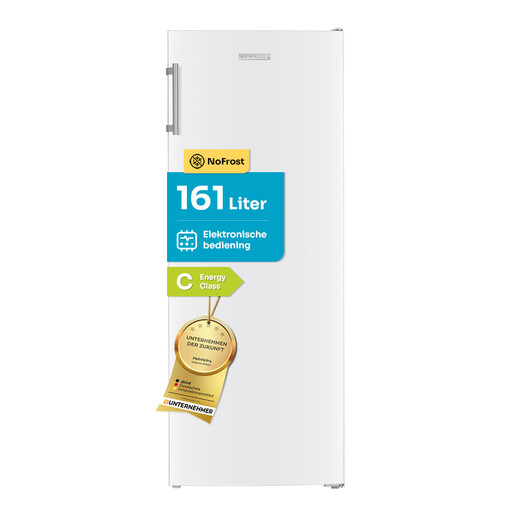 No image available
This larger freezer could suit you if you want to store extra food as well as green beans; first check that its capacity and the space available are right for your household.
 No image available
If you want to compare an under-counter model with No-Frost, check that this version fits in the space you have in mind and suits the amount you freeze at a time.
 No image available
This chest freezer is worth comparing if you’re looking for extra freezer space as well as room for beans; measure the space first and think about how much food you want to store.
 No image available
The smaller capacity may suit you if you’re comparing chest freezers for a limited amount of extra food; check the external dimensions and make sure there’s enough storage space for your portions.
 No image available
This chest freezer is worth comparing if you’re looking for extra storage space with a basket; measure the available space before choosing.
The Netherlands Nutrition Centre describes blanching as briefly boiling the beans, cooling them immediately in iced water and drying them thoroughly before freezing. Freeze the cooled beans in small portions and don’t add too many at once.
The Netherlands Nutrition Centre’s storage guide recommends keeping cooked frozen green beans for one year; after that, their quality may deteriorate. Keep the freezer at -18 °C or colder.
That depends on the permitted ambient temperature for the exact model. Compare the lowest temperature you expect in the shed with the climate class and any additional model information. The Consumers’ Association describes climate class as the official standard.
For freezers covered by EU energy labelling rules, the energy label must also be clearly displayed when sold online. It includes the energy class and annual consumption in kWh, among other details. This information doesn’t replace checking whether a model is suitable for your freezing batch.