
Family that cooks ahead
Regularly freezes prepared dishes and portions, and mainly needs suitable, well-organised freezer space. The Netherlands Nutrition Centre offers advice on storing cooked leftovers.


For one cooled fruit crumble, a second freezer isn’t necessarily needed: first use the freezer you already have if the covered dish or portions will fit. A table-top model suits limited extra freezer space, a tall upright freezer is useful if you regularly store several family meals, and a chest freezer may be the answer if a wide dish won’t fit in drawers. Compare the internal dimensions, annual energy consumption in kWh and installation requirements. The Consumers’ Association discusses differences in shape and capacity, while Milieu Centraal recommends choosing a suitable size and considering energy consumption.
Regularly freezes prepared dishes and portions, and mainly needs suitable, well-organised freezer space. The Netherlands Nutrition Centre offers advice on storing cooked leftovers.
Wants to store a crumble now and then without putting a large appliance in the kitchen; the dimensions of the dish and drawers are key. The Consumers’ Association explains what to consider when choosing a freezer.
Is considering extra freezer space, but wants to work out whether it’s needed and compare the energy consumption of a suitable appliance first. Milieu Centraal recommends considering the size and energy consumption.
Measure both the dish and the space for the appliance before you choose. These considerations reflect the Consumers’ Association’s advice on size and shape, Milieu Centraal’s guidance on choosing an appropriate energy consumption level, and the Netherlands Nutrition Centre’s advice on portions and storage.
Choose this if: the covered dish or portions will fit and you only freeze a crumble occasionally.
Trade-off: you won’t need another appliance, but the available drawer height and space for other food may limit what you can store.
Choose this if: you’re looking for a little extra freezer space and the dish or portion containers will actually fit in the drawers.
Trade-off: a compact model has less usable space, so check the internal drawer dimensions rather than relying on the litre capacity alone.
Choose this if: you regularly want to store several family meals and other food separately.
Trade-off: a tall freezer needs more floor space; compare its dimensions and annual energy consumption in kWh.
Choose this if: a wide dish or an irregularly shaped item won’t fit easily in the drawers of an upright freezer. The Consumers’ Association says chest freezers are suitable for larger or unusually shaped foods.
Trade-off: the open interior may be better suited to large items, while individual items are generally easier to reach in a freezer with drawers.
| What to consider | What should you check? | Who is this more important for? |
|---|---|---|
| Space for family meals | Compare the internal dimensions, drawer layout and usable capacity with your dish or portion containers. If you freeze a lot of food at once, also check the freezing capacity. | If I cook several family portions ahead, I want enough usable space and a layout that lets me keep containers separate. Around 33% of consumers say space for family meals is their main need. |
| Compact installation | Measure the space available and the dish; also check the internal drawer dimensions and the ventilation clearance specified in the manual. | If space is limited, I want a compact appliance, but the dish still needs to fit in the drawer. Around 25% of consumers prioritise compact installation. |
| Energy consumption and whether you need one | First check the freezer space you already have. If you’re buying a freezer, compare both its energy label and annual consumption in kWh with models of a suitable size. | If I only freeze a crumble now and then, I don’t want to choose an appliance with more space than I need. Around 25% of consumers say running costs and whether they need a second appliance are their main concerns. |
| Defrosting and maintenance | Check whether the exact model has No Frost and compare annual energy consumption alongside its size. | If I use the freezer often, I want to know whether the model needs manual defrosting. Around 17% of consumers prioritise ease of maintenance. |
An upright freezer with drawers and a chest freezer have different internal shapes. The stated capacity doesn’t tell you whether your dish will fit through a drawer opening.
Measure the dish with its lid on and compare it with the usable internal space of the exact model.
You could end up with an appliance that isn’t suitable for the dish you wanted to store in it.
Choosing the right size and checking annual energy consumption in kWh are two separate considerations. An extra freezer uses electricity even if you only need it occasionally.
First check whether there’s room in your existing freezer. If not, compare suitably sized models by their energy labels and annual consumption.
An extra appliance will use electricity on an ongoing basis; the cost depends on the appliance and your electricity tariff.
An older product listing for the Bosch GSN58AWEV gives its energy rating as A++, but Bosch says this model is no longer available. An old listing is therefore not a reliable basis for checking a product’s current availability or energy label.
Check the energy label and availability of the full model number before making a decision.
The VR550 is a table-top model that gives you an idea of the capacity and drawer layout to compare in a compact freezer.
The GTV15NWEB is a compact model you can use to compare capacity and whether it has No Frost.
The FNe 1404 is a table-top model with No Frost as a key feature.
The B5RFNE294W is a larger, freestanding upright freezer to consider if you have more room for an appliance.
The BREMEN132-040BW is a table-top model to compare if you’re looking for a compact size.
The Joybuy products below include table-top models, a chest freezer and larger freezers, including a built-in model. Compare the space your dish needs, the room available and the features that suit the way you’ll use it.
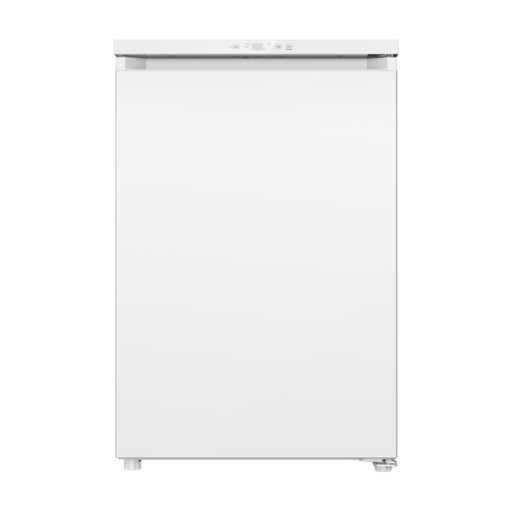 No image available
A table-top model for anyone looking for a separate freezer with No Frost; measure the dish and the available space before deciding.
The product information lists a capacity of 87 litres, three freezer drawers, energy rating D and a freezing capacity of 5 kg per 24 hours.
The stated external dimensions are 84,5 × 55 × 59,5 cm. According to the product information, the ambient operating temperature is 10–43 °C.
 No image available
A compact model with three drawers for keeping individual portions separate; check whether the dish itself will fit in a drawer.
The product information lists a capacity of 87 litres, energy rating B, annual consumption of 84 kWh and a freezing capacity of 4,4 kg per 24 hours.
The external dimensions are 85 × 55 × 58 cm. This model does not have No Frost; the product information says it needs to be defrosted manually when ice has built up.
 No image available
A chest freezer may suit you if you’d rather not slide a dish into an upright freezer drawer; check that the internal space will accommodate your dish.
The product information lists a capacity of 95 litres, a removable basket and switchable fridge and freezer modes.
The stated external dimensions are 550 × 475 × 848 mm. The product information also lists energy rating E, 165 kWh per year and a seven-setting thermostat.
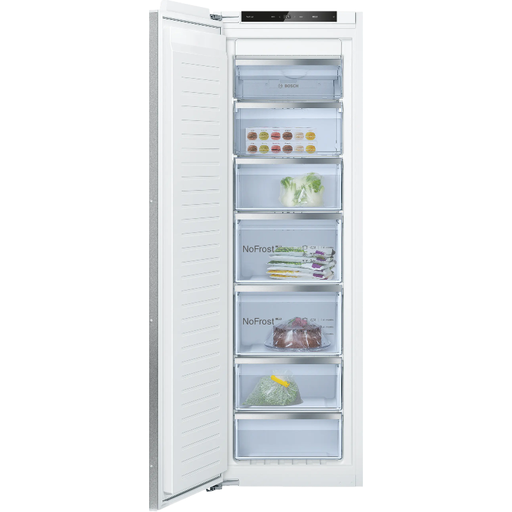 No image available
A built-in model to consider if you have a suitable housing space; the external space and niche dimensions need to fit your kitchen.
The product information lists a capacity of 212 litres, NoFrost and a freezing capacity of 13,8 kg per 24 hours.
The stated niche dimensions are 177,5 × 56 × 55 cm.
 No image available
A larger freezer to compare if a small table-top model doesn’t offer enough space; also check that its external dimensions fit the available space.
The specifications list a capacity of 122 litres, No-Frost and a freezing capacity of 5,5 kg per 24 hours. A four-star compartment at -18 °C is also mentioned.
The stated dimensions are 1155 × 475 × 565 mm. The product information lists switchable fridge and freezer modes.
The Netherlands Nutrition Centre advises cooling cooked leftovers within two hours, then covering them and putting them in the fridge or freezer. Label them with the date, set the freezer to at least -18 °C and don’t freeze too much at once.
The Netherlands Nutrition Centre advises keeping a cooked leftover in the freezer for no longer than three months; after that, its quality may deteriorate. Defrost it in the fridge or using the microwave’s defrost setting. Don’t reheat a leftover that has already been reheated for a third time. This advice doesn’t say how crisp the crumble topping will remain after freezing and reheating.
No, it depends on the model and the temperature in the room. Check the climate class and the manufacturer’s information for the exact appliance, and measure the minimum temperature in the shed; not every appliance works well below 10 °C.
For new appliances in the relevant EU categories, the energy label must also be clearly visible in online shops; compare the annual consumption in kWh as well. The European Union explains the energy labelling requirements. According to the Dutch government, a manufacturer’s warranty or an extended warranty is in addition to your statutory consumer rights, and the retailer is your point of contact if there’s a problem.