What should you look for when choosing?
Existing freezer space
Choose this when: there’s room for sealed, clearly labelled portions and the freezer can be set to −18 °C.
Bear in mind: the space available and access to it depend on the other users, so you may not need an extra appliance.
Freestanding under-counter model
Choose this when: you want your own compact freezer with drawers for storing portions separately.
Bear in mind: an under-counter model usually has less usable capacity than a larger upright freezer. Check the depth and door clearance too.
Larger upright freezer
Choose this when: several users regularly want to store different portions or other frozen food.
Bear in mind: the extra space needed for installation; compare the stated annual energy consumption of specific models.
Chest freezer
Choose this when: you mainly want to store larger or awkwardly shaped items and have room to open the lid.
Bear in mind: smaller portions you reach for often may be less accessible than they would be in drawers.
Your choice mainly comes down to space and layout, suitable freezer capacity, energy consumption and shared maintenance.
| What to consider |
What to look for when buying |
Who is this most important for? |
| Space and organisation |
Compare the external dimensions, usable capacity and number of drawers with the space available and the portions you want to store. |
If I share a small kitchen, I want to organise portions without bringing in an oversized appliance. Around 33% of consumers put space and organisation first. |
| Freezer temperature and capacity |
Check that the freezer can reach −18 °C and compare its stated freezing capacity in kg per 24 hours. |
If you regularly add several portions, you’ll want enough suitable space and an appropriate stated capacity. Around 27% of consumers mainly freeze larger quantities. |
| Energy consumption |
Compare the energy label and stated annual consumption in kWh of suitable models. |
If I’m considering an extra appliance, I also want to take its ongoing energy consumption into account. Around 20% of consumers consider this their main concern. |
| Defrosting and maintenance |
Check the full model number to see whether it has NoFrost, and agree on who will take care of maintenance. |
If you share a freezer, you’ll want to know in advance whether it may need manual defrosting and who will do it. Around 20% of consumers want to keep shared maintenance to a minimum. |
The Netherlands Nutrition Centre recommends setting a freezer to −18 °C and not freezing too much at once. Compare energy consumption only between suitable models, and bear in mind that actual consumption may differ from the stated figure.
Freezers at Joybuy
These models offer extra freezer space for portions of cookie dough, from compact under-counter models to a larger upright freezer. For each model, check the space needed for installation and whether the freezer can be set to −18 °C.
 No image available
Frilec BREMEN138-NF-050DW
An under-counter model to compare if you want your own compact freezer space and less manual defrosting.
87-litre capacity, freezing capacity of 5 kg per 24 hours, four-star freezer compartment and NoFrost. The product information recommends a temperature of −18 °C. Energy rating D; stated height 84.5 cm and width 55 cm.
View at Joybuy
 No image available
CHiQ JR122WSD 122L
A larger upright freezer to consider if several users regularly need extra freezer space.
122-litre capacity, four-star freezer compartment and stated freezing capacity of 5.5 kg per 24 hours. The product information lists NoFrost and energy rating E; the stated height is 1,155 mm.
View at Joybuy
 No image available
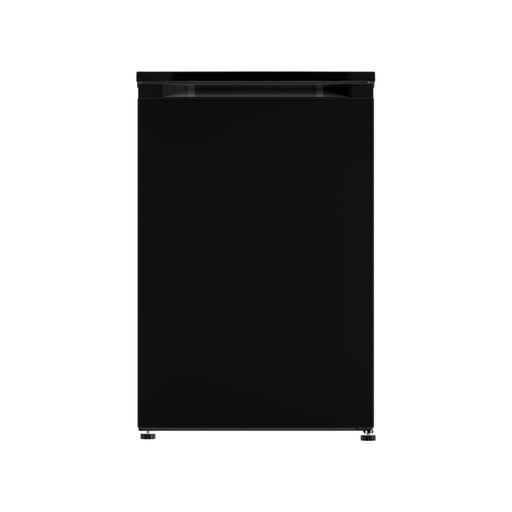
Exquisit GS581-051CB
An under-counter model with drawers to compare if you want to store portions separately in a shared kitchen.
85-litre capacity, three transparent drawers and stated freezing capacity of 4.5 kg per 24 hours. Energy rating C. Manual defrosting is required; check whether this exact model can be set to −18 °C.
View at Joybuy
 No image available
Frilec BREMEN132-040BW
An under-counter model with three drawers to consider if you want your own well-organised freezer space.
87-litre capacity, three transparent drawers and stated freezing capacity of 4.4 kg per 24 hours. Energy rating B. It does not have NoFrost, so manual defrosting may be needed; check whether this exact model can be set to −18 °C.
View at Joybuy
 No image available
Salora 47FRT60WH
A compact freezer to compare if the stated freezing capacity is important to you.
60 litres of freezer space and a stated freezing capacity of 6 kg per 24 hours. According to the product information, the temperature can be set from −12 to −20 °C; the stated dimensions are 84.5 × 47.2 × 44.6 cm. NoFrost and automatic defrosting are not listed.
View at Joybuy
Frequently asked questions
Can I use a fridge’s freezer compartment instead of a separate freezer?
Yes, as long as the compartment can be set to −18 °C for this purpose and has enough room for your portions. According to the Netherlands Nutrition Centre, one- and two-star freezer compartments cannot reach this temperature. Freeze smaller portions, and don’t freeze too much at once.
Does freezing raw cookie dough make it safe to eat unbaked?
No. Don’t assume that freezing makes raw cookie dough safe to eat. The Netherlands Nutrition Centre warns that flour can contain harmful bacteria and advises against tasting raw dough; baking kills these bacteria.
How can you keep portions organised in a shared freezer?
Freeze smaller portions, keep them well sealed and agree on how to label them clearly. The Netherlands Nutrition Centre recommends using sealed containers or tins and advises against overfilling the freezer all at once.
What should you consider when installing and maintaining a freezer?
Measure the available height, width and depth, and allow room to open the door. Also check the installation instructions for your chosen model. Check the cooling system against the full model number: Bosch lists the GTV15NWEB without NoFrost, while Liebherr lists NoFrost for the FNe 1404.
What happens to my old freezer if I buy a new one as a private individual?
When you buy a new, similar freezer, the seller is required by the Government of the Netherlands to take your old appliance away free of charge. This take-back scheme applies to private individuals, not businesses.


