
Cooking for a celebration with one freezing session
You’re making compote for a shared meal and want to find out first whether your existing freezer has enough room.


For a single shared festive meal, you don’t automatically need an extra freezer. First check that your existing freezer is set to −18 °C and has enough space for the cooled portions. If it doesn’t, compare the amount you want to freeze at once with the capacity of the exact model, and measure the space where it will go. Tabletop models, upright freezers with drawers and chest freezers all differ in size and layout.
You’re making compote for a shared meal and want to find out first whether your existing freezer has enough room.
You need extra space, but restrictions on width, depth or floor area may limit which appliance will fit.
You want to store portions or other food more often after the festive meal, so you’re comparing layout, freezing capacity and annual energy consumption.
Suitable if: your freezer is set to −18 °C and has enough free space for the sealed portions.
Trade-off: you won’t need to make room for another appliance, but you will need to check the available space and how much you’re adding at once.
Suitable if: you regularly need a little extra freezer space and only have a small area available.
Trade-off: capacity and freezing performance vary by model; a second appliance will also use electricity.
Suitable if: you store food more often and want to find and retrieve separate containers easily.
Trade-off: measure the height and compare the capacity and freezing performance of the exact model.
Suitable if: you regularly store larger quantities and have enough floor space and room to open the lid.
Trade-off: small portions are generally less accessible than in an upright freezer with drawers; check that the layout suits your containers.
To freeze and store compote, your freezer needs to be set to −18 °C. The Voedingscentrum advises that freezer compartments with one or two stars are not suitable for this. The percentages in the table indicate which considerations may matter most to consumers in this situation.
| What to consider | What to look for when buying | Who is this important to? |
|---|---|---|
| Space and freezing capacity | Work out how much compote you want to freeze at once. Check the available space and compare the capacity and stated freezing capacity of the exact model. | If I’m making compote for a shared meal, I want to know whether all the cooled portions will fit in one go. Around 36% of consumers prioritise space and freezing capacity. |
| Space for the appliance | Measure the width, depth and height, and also check how much room is needed to open the door or lid. | When space is limited, I want to know in advance whether an appliance will fit and still be able to open. Around 29% of consumers base their choice mainly on the space available for the appliance. |
| Energy consumption | Compare the energy label and stated annual consumption in kWh of suitable models. | If I’m considering a second appliance, I want to take its ongoing energy use into account. Around 21% of consumers prioritise avoiding extra energy consumption. |
| Finding your portions | Check that your containers fit in the drawers or basket, and that you can reach them without moving lots of other food. | For a meal with separate portions, I want to be able to find them easily. Around 14% of consumers focus mainly on the layout and accessibility. |
Capacity in litres tells you how much you can store. Freezing capacity in kg per 24 hours tells you how much fresh food the model can freeze during that time.
Compare both figures with the available space and the amount of compote you want to add at once.
A second appliance uses electricity, while your existing freezer may have enough room for the portions.
Check the temperature and available space first. Only then compare the stated annual energy consumption of specific additional models.
Access to your portions and the space requirements vary by type of model.
Measure the space and think about how you want to retrieve containers from drawers, a basket or an integrated freezer. For an integrated model, also check the niche dimensions and door fitting.
The VR550 and VK952W show how a compact tabletop model and a larger chest freezer can meet different space requirements.
The freestanding VV6143NWIT upright freezer is an example of a model with separate drawers.
The GSN29VLEP is a freestanding upright freezer with storage for different packaging sizes.
The IFNd 3924 is an integrated model; this option is only suitable if you have a compatible built-in niche.
This Joybuy selection includes freestanding upright freezers, a compact tabletop model and chest freezers for extra freezer space. For each exact model, check that it can be set to −18 °C and that its dimensions and layout suit your needs.
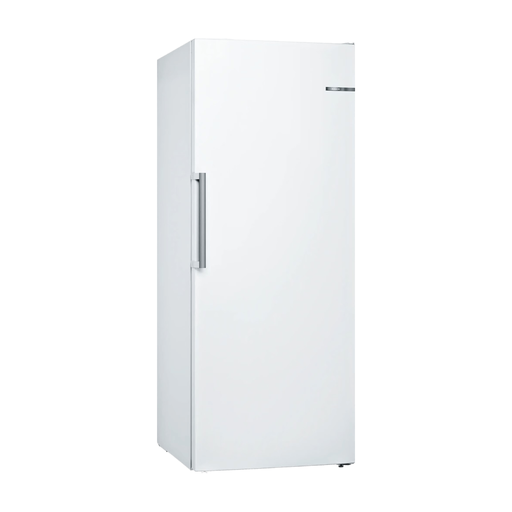 No image available
A freestanding upright freezer for anyone looking for extra freezer space. Check that its dimensions and layout suit the space available.
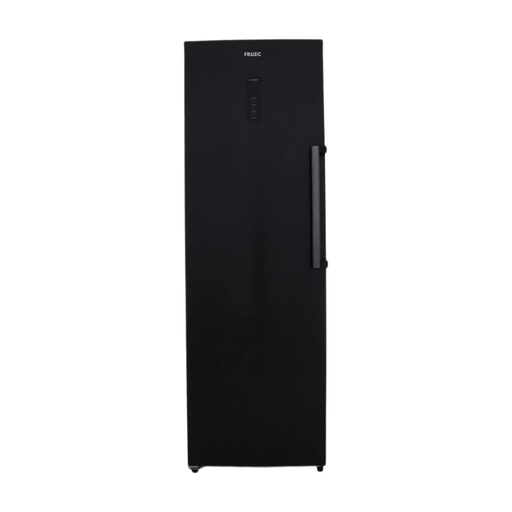 No image available
A freestanding upright freezer for extra storage. Check its external dimensions and whether the layout suits the way you store your portions.
 No image available
A freestanding tabletop model for anyone looking for extra freezer space but short on room. Measure the space available before choosing a model.
 No image available
A chest freezer for extra storage. Check that you have enough floor space and room to open the lid.
 No image available
A chest freezer for anyone who wants to store larger quantities. Bear in mind the floor space required and how you’ll access the food.
No, not automatically. First check that your existing freezer is set to −18 °C, that the portions will fit and that you’re not adding more fresh food at once than the model can handle. Only consider an extra appliance if you don’t have enough space.
Leave the prepared compote to cool thoroughly, then put it in a sealed container in the fridge or freezer within two hours. This advice on storing cooled food comes from the Voedingscentrum. It’s best to freeze it in portions and defrost each portion covered in the fridge. The Voedingscentrum recommends three months in the freezer for opened tinned or jarred apple sauce as a quality guideline; this isn’t automatically a guarantee of how long every homemade recipe will keep.
Compare the external dimensions and the space needed for the door, drawers or lid with the area where you plan to put it. Follow the installation instructions for the exact model on ventilation clearance and connection. For an integrated freezer, the niche dimensions and door fitting must also be compatible.
Compare the stated annual consumption in kWh for suitable models. According to the Dutch government, if a product bought by a consumer in the Netherlands develops a problem, the seller must provide a solution. This is separate from any manufacturer’s warranty.
Check the energy label for the exact freezer model; EPREL is the EU database for energy label information. The NVWA sets out separate food safety rules for selling food or catering from home. Sharing a meal doesn’t mean the compote is being sold or that these rules for businesses apply to a private situation.