
Freezing herbs occasionally
You want to keep a few small portions for a weekend lunch and first check whether your existing freezer compartment has enough room.


For a few portions of chopped herbs, your existing freezer compartment should be fine if there’s enough room and it can be set to at least −18 °C. According to Voedingscentrum, compartments with one or two stars aren’t suitable. An extra freezer is worth considering if you regularly run out of space. Compare its dimensions, annual energy use and layout, and check whether the model has NoFrost.
You want to keep a few small portions for a weekend lunch and first check whether your existing freezer compartment has enough room.
You often need extra freezer space, but the room available and how easy it is to reach small portions will determine whether a table-top model is right for you.
You store other foods too, so you’re taking annual energy use and the amount of defrosting required into account when you choose.
Start by checking the space and temperature of your existing freezer compartment. The size, energy use and maintenance of an extra appliance only become deciding factors if you regularly run short of capacity.
Choose this if: you only want to store a few small portions of herbs and have enough space at a temperature of at least −18 °C.
The trade-off: you won’t need another appliance, but a small compartment can fill up quickly.
Choose this if: you regularly need extra freezer space and a table-top model will fit in the space available.
The trade-off: check the energy use of each model and be prepared to defrost it by hand if necessary.
Choose this if: you need extra capacity and want to spend less time defrosting. Check that the specific model has NoFrost.
The trade-off: compare the dimensions, capacity and annual energy use of the specific model. NoFrost doesn’t automatically mean you need an extra freezer.
Choose this if: you want to store plenty of other food as well as herbs and have enough room for the appliance.
The trade-off: the extra capacity may be unnecessary if you only need to store a few portions of herbs. Also consider how easy it is to find small packages.
| Question to ask | What to check | Who may find this important? |
|---|---|---|
| Do you need an extra freezer? | Check the space available and whether your existing compartment can reach at least −18 °C. Compartments with one or two stars don’t meet this temperature requirement. | I want to fit a few sealed portions of herbs in my existing freezer compartment first, without buying another appliance. Around 36% of consumers put avoiding unnecessary extra freezer capacity first. |
| Will the appliance fit in the space? | Measure the available space and check the external dimensions and drawer layout of the exact model. | If I need extra freezer space, I want to know first whether the appliance will fit in my kitchen and whether I can easily find small portions. Around 29% of consumers prioritise where they can put extra freezer space. |
| How much energy does it use? | For models with a suitable capacity, compare the energy label and consumption in kWh per year. Use your own electricity tariff to work out your personal costs. | I don’t want to choose more freezer space than I need, so I also consider annual energy use. Around 21% of consumers make energy use a key factor in their choice. |
| How much defrosting and maintenance is needed? | Check the specifications for the exact model: not every table-top freezer has NoFrost or another anti-ice feature. | If I buy an extra freezer, I want to know in advance how much maintenance the model requires. Around 14% of consumers make minimising defrosting their top priority. |
If there’s enough suitable space for a few portions, a second appliance won’t solve a problem you actually have. Milieu Centraal points out that two refrigeration appliances use more energy together than one large appliance.
First, check how much space is available and whether the compartment can reach at least −18 °C. Only compare extra appliances if your existing capacity regularly falls short.
An extra appliance also means ongoing energy use.
According to Voedingscentrum, these freezer compartments can’t be set to the recommended temperature of at least −18 °C.
Check the star rating and the temperature settings before freezing fresh herbs.
Specifications vary by model: Bosch doesn’t list NoFrost for the GTV15NWEB, while Liebherr describes the FNe 1404 as a NoFrost model. ETNA doesn’t list an anti-ice feature for the VV856WIT.
Check the specifications for the exact model to see what maintenance features it has before you choose.
A model without an anti-ice feature may need to be defrosted by hand.
According to Inventum, the VR550 is a freestanding table-top freezer with a capacity of 88 litres and three transparent drawers.
Bosch describes the GTV15NWEB as a table-top freezer with 83 litres of freezer space and external dimensions of 850 × 560 × 580 mm.
According to Liebherr, the FNe 1404 is a compact NoFrost table-top freezer with a capacity of 92 litres.
According to ETNA, the VV856WIT is a freestanding table-top freezer with an 85-litre four-star compartment and three drawers.
These product options range from compact table-top models to portable freezer boxes and a chest freezer for extra storage space.
 No image available
A good fit if you’re looking for extra space in a table-top model and consider NoFrost important.
Capacity: 87 litres; No Frost, Fast Freeze and energy rating D. Stated annual energy use: 145 kWh. Dimensions: 84,5 × 55 × 59,5 cm.
The stated ambient temperature range is 10 °C to 43 °C; check that the location meets this operating requirement.
 No image available
A good fit if you want extra freezer space with separate drawers and don’t mind defrosting the model yourself when needed.
Capacity: 87 litres; three transparent drawers and energy rating B. Stated annual energy use: 84 kWh; stated freezing capacity: 4,4 kg per 24 hours.
This model doesn’t have NoFrost. Before freezing fresh herbs, check that the appliance can be set to at least −18 °C.
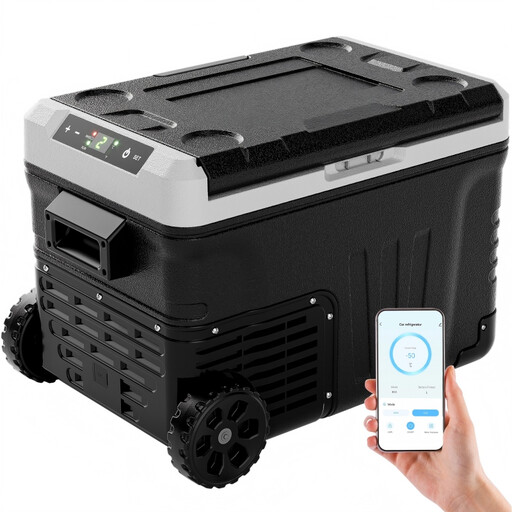 No image available
A good fit if you’re looking for a portable freezer box and want to organise small portions separately.
Capacity: 35 litres. Temperature range: −20 °C to 20 °C. The description lists two baskets, a removable divider, wheels and handles.
The stated connections are 12/24 V DC and 220/240 V AC.
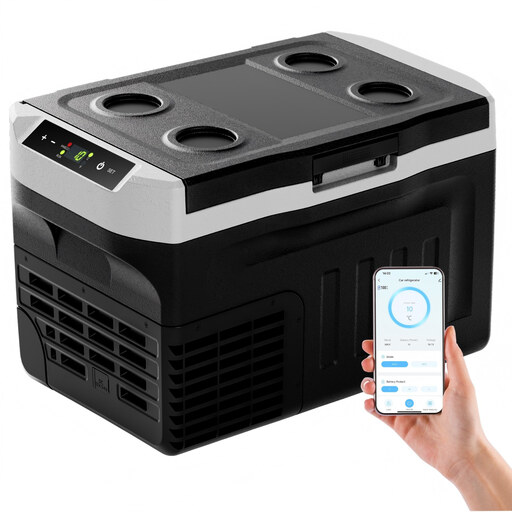 No image available
A good fit if you’re looking for a compact portable freezer box for use at home or on the go.
Capacity: 21 litres. Temperature range: −20 °C to 20 °C. The description lists removable shelves and app control.
The stated connections are 12/24 V DC and 220/240 V AC.
 No image available
A good fit if you want to store considerably more than just herbs and have room for a chest freezer.
Capacity: 141 litres. Energy rating E and stated annual energy use of 179 kWh. The description lists a seven-setting thermostat and a removable basket.
Dimensions: 632 × 554 × 848 mm. Before using it to store fresh herbs, check that the model can reach at least −18 °C.
Yes, if there’s enough room and the compartment can be set to at least −18 °C. According to Voedingscentrum, freezer compartments with one or two stars can’t reach this temperature. Chop the herbs finely and freeze them in a sealed bag or container.
No. Voedingscentrum advises against defrosting finely chopped herbs before use. It also suggests freezing them in oil, for example in an ice-cube tray.
For models with a suitable capacity, compare the energy label figures for consumption in kWh per year. Multiply the difference by your own electricity tariff if you want to compare costs; the label also lists the capacity and noise level.
According to the Dutch Government, you’re entitled to a product that works as it should, but there’s no fixed statutory warranty period in the Netherlands. If a product is faulty, the retailer must provide a solution; any manufacturer’s warranty is separate.
The Dutch Government says energy labels are compulsory for household appliances. Check the label for the specific model and compare appliances with a suitable capacity.