
If you freeze small portions from time to time
You occasionally blanch broccoli and want to know whether your existing freezer has enough space, or whether a compact chest freezer would suit the amount you store.


A separate chest freezer makes sense if your existing freezer doesn’t have enough space or freezing capacity. For small portions, choosing the right size matters more than having as much capacity as possible. Compare the stated freezing capacity in kg per 24 hours with your largest batch in a day, and check the external dimensions, layout and annual energy consumption too. The Netherlands Nutrition Centre advises draining and drying broccoli thoroughly after blanching, freezing it in small portions and setting the freezer to at least −18 °C.
You occasionally blanch broccoli and want to know whether your existing freezer has enough space, or whether a compact chest freezer would suit the amount you store.
If you prepare several portions in one day, the stated freezing capacity in kg per 24 hours is important. Inventum and Tomado list this capacity for their specific models.
You want to store broccoli alongside other frozen food, so you’re taking the installation dimensions, layout and energy consumption into account. Milieu Centraal recommends choosing a suitable size and suggests using the annual energy consumption on the energy label as a point of comparison.
A good fit if: there’s enough room for your portions and you can set the freezer to at least −18 °C.
Bear in mind: the available space and freezing capacity of your current freezer.
A good fit if: you need separate storage, have room to open the lid and your daily batch is within the stated freezing capacity.
Bear in mind: items at the bottom need organising, and Low Frost doesn’t mean you’ll never need to defrost it.
A good fit if: you regularly store more frozen food as well as broccoli, or prepare larger batches in a day.
Bear in mind: extra capacity doesn’t remove the need to check the freezing capacity, annual energy consumption and external dimensions.
A good fit if: you’d rather keep your portions in drawers or compartments, or have limited space for an opening lid.
Bear in mind: compare the external dimensions and energy consumption of specific models; one type of appliance isn’t automatically more efficient than another. Tomado describes a chest freezer as one large storage space, while drawers and compartments are features of an upright freezer.
| What to consider | What to look for when buying | Who is this important for? |
|---|---|---|
| Capacity and space | Measure the available space and the clearance needed to open the lid. Compare these with the model’s external dimensions and capacity. | If I only freeze small portions now and then, I don’t want a chest freezer that takes up more space than my stock requires. Around 33% of consumers prioritise a suitable size and the space available. |
| Freezing capacity per day | Weigh your largest daily batch and compare it with the stated number of kg per 24 hours for the exact model. Inventum lists 4,5 kg/24 uur for the VK562W; Tomado lists 2,25 kg/24 uur for the TCF0991W. | If I prepare several portions in one day, I want to know whether the stated capacity is suitable. Around 27% of consumers prioritise freezing capacity for daily batches. |
| Energy consumption | For models of a suitable size, compare the stated energy consumption in kWh per year, not just the energy label rating. | If a freezer stays on between preparation days, I want to take its annual energy consumption into account. Around 20% of consumers give top priority to limiting additional energy use. |
| Layout and maintenance | Check how many baskets or compartments there are, how easy it is to reach the bottom and what defrosting steps the manufacturer recommends. | If I store small packs, I want to find them easily and know what maintenance is involved. Around 20% of consumers prioritise keeping portions organised and making maintenance practical. |
Capacity doesn’t tell you how much fresh food the appliance can freeze in 24 hours. For just a few portions, a larger chest freezer may also take up more space than your supplies call for.
Work out how much you store at a time and the size of your largest daily batch. Then compare the capacity, kg per 24 hours and annual energy consumption.
A larger chest freezer takes up floor space and uses electricity for as long as it’s switched on.
Moisture and heat make it harder to freeze small portions properly. The Netherlands Nutrition Centre advises draining and drying vegetables thoroughly after blanching.
After blanching, let the broccoli cool, drain and dry it thoroughly, then pack it into small portions before freezing.
For the VK562W with Low Frost, Inventum still recommends defrosting two to three times a year.
Before buying, read the maintenance instructions for the exact model and check whether it has a defrost water drain.
When defrosting, allow time for the job and make space somewhere else cold to store your frozen food.
The stated minimum ambient temperature applies to the specific model, not automatically to every chest freezer.
Compare the lowest temperature in the room with the installation instructions for the exact model you’re considering.
The VK562W is a compact 99-litre chest freezer. Its size may suit you if space is limited and you also want to compare the stated freezing capacity.
According to Tomado, the TCF0991W is a 99-litre chest freezer with a basket.
With a capacity of 192 litres, the CFc 1875 Plus is a larger option to compare if you also want to store other frozen food.
According to Beko, the HSM22340 has a capacity of 230 litres. It’s a roomier chest freezer option for those who store more than just portions of broccoli.
This selection includes compact chest freezers, upright freezers and under-counter alternatives for small portions. For this type of storage, the Netherlands Nutrition Centre recommends a freezer that can be set to at least −18 °C; check this for the model you’re considering.
 No image available
The removable basket gives you an option for organising smaller packs.
Capacity: 95 litres. Switches between fridge and freezer modes. Energy label rating: E. Check whether the freezer mode can be set to at least −18 °C for your storage needs.
 No image available
The removable basket can help you organise smaller packs in the freezer.
Capacity: 99 litres. Stated freezing capacity: 4,5 kg per 24 hours. Switches between fridge and freezer modes. Energy label rating: E.
 No image available
The wire shelf gives you an option for organising smaller packs.
Capacity: 99 litres. Stated freezing capacity: 4,5 kg per 24 hours. 4-star freezer compartment. Energy label rating: E.
 No image available
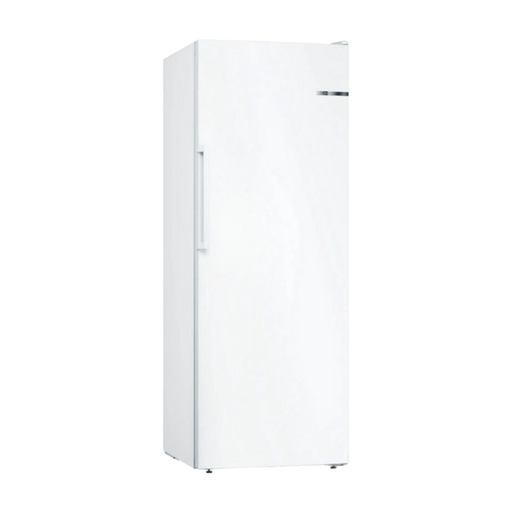
The drawers and BigBox provide separate compartments for storing portions.
The stated set temperature is −18 °C and the freezing capacity is 16 kg per 24 hours. The description also lists NoFrost and SuperFreeze.
 No image available
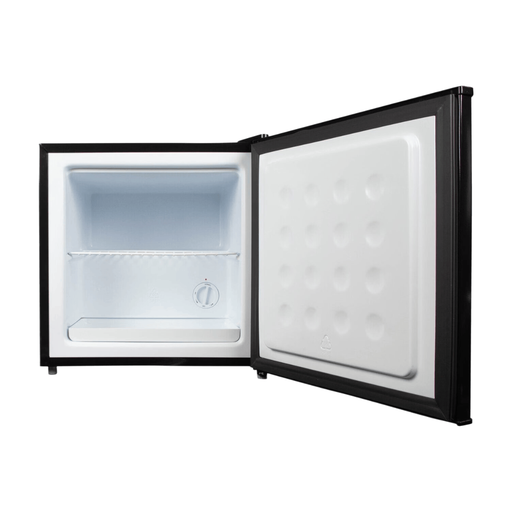
This compact under-counter model is worth comparing if you have limited space for a chest freezer.
Capacity: 31 litres. Stated freezing capacity: 2 kg per 24 hours. The description lists two compartments and an adjustable thermostat.
Blanch the broccoli briefly, then cool it straight away in iced water. Drain and dry it thoroughly, then pack it into portions. The Netherlands Nutrition Centre advises against freezing too much at once and recommends setting the freezer to at least −18 °C.
No. Check the permitted ambient temperature for the exact model. Inventum states that the VK562W can operate down to −15 °C, as does Liebherr for the CFc 1875 Plus; this specification doesn’t automatically apply to other chest freezers.
No. For the VK562W with Low Frost, Inventum still recommends defrosting two to three times a year. Follow the maintenance instructions for the model you choose.
Compare the stated annual energy consumption in kWh for models of a suitable size. Your actual electricity costs will also depend on your tariff and how you use the appliance.
The Dutch government says you’re entitled to a product that works properly and that you should contact the seller if it’s faulty; there is no fixed statutory warranty period for all products in the Netherlands. The European Commission states that household freezers are covered by EU energy labelling rules, and that the label shows information including the energy class, annual consumption, capacity and noise level.