What should you look for when buying?
Existing freezer space
Suitable if: you only freeze a few portions and have space in a freezer that can be set to at least -18 °C.
Consider: the available space and the amount you can add at once are still limiting factors; freeze berries in small portions.
Compact freezer
Suitable if: you want a separate freezer for modest quantities and have limited space.
Consider: freezing capacity and volume vary by model; check them against your largest expected batch.
Freestanding upright freezer
Suitable if: you store lots of labelled portions and want to reach them easily in drawers.
Consider: check that the external dimensions will fit, and compare the stated annual energy consumption of models that meet your storage needs.
Chest freezer
Suitable if: you have room for a top-opening appliance and want to store large or unusually shaped items.
Consider: the contents are generally less easy to reach than those of an upright freezer with drawers, as the Consumers’ Association explains.
| What to consider |
What to look for |
Who might value this more? |
| Freezing large batches |
Compare the stated freezing capacity in kg/24 hours with the usable capacity in litres of the specific model. |
After a large harvest, I want to know whether the fresh batch of berries is within the amount the appliance can freeze in 24 hours. Around 37% of consumers put this peak capacity first. |
| Finding the right fit |
Measure the available space and check the external dimensions, the clearance needed for the door or lid, and the capacity. |
If I’m only storing a few punnets, I don’t want to choose an appliance that takes up more space than necessary. Around 27% of consumers give the right size and limited space their highest priority. |
| Finding portions |
Look at the layout of the drawers or baskets and check whether there is room to freeze the berries separately on a tray first. |
If I want to grab a labelled portion quickly later, an organised layout matters. Around 18% of consumers put being able to find portions first. |
| Annual energy consumption |
Compare the EU energy label, kWh/year and capacity of models that suit your storage needs. |
If an appliance is running all year round, I want to take its stated annual energy consumption into account when choosing. Around 18% of consumers make energy consumption their top priority. |
The EU energy label for freezers uses a scale from A to G and includes information such as annual energy consumption and capacity. The European Commission explains what this label information means; under EU rules, labels for products covered by the regulations must also be displayed clearly online. Compare the details for each model and weigh them against the space you actually need.
Brands to consider
The examples below relate to specific models; they are not an assessment of the full range or product availability.
Inventum
The range includes a compact freezer as well as larger upright and chest freezers, to suit different space and storage needs.
- For the VR550, Inventum states a capacity of 88 litres, three drawers and a freezing capacity of 4 kg/24 hours.
- For a larger peak batch, it’s important to compare the capacity of the specific model; the stated figure is not an independent measurement of freezing speed.
Beko
The HSM22340 is a 230-litre freestanding chest freezer for those looking for a top-opening appliance with space for stock.
- Beko states that this model has a D energy rating and a static cooling system.
- A chest freezer is less easy to access than an upright freezer with drawers; the details for this model don’t apply to every Beko freezer.
Liebherr
The FNe 4204 Pure NoFrost is a freestanding upright freezer with drawers.
- Liebherr states that this model has a total volume of 160 litres and NoFrost.
- Compare the external dimensions and energy label details with other models; these are manufacturer specifications, not an independent comparison.
Bosch
The GSN36VWDG is a large freestanding upright freezer with NoFrost and an organised storage layout.
- For this model, Bosch states a freezer capacity of 334 litres, a freezing capacity of 15,5 kg/24 hours, NoFrost and 214 kWh/year.
- Check that the external dimensions and stated energy consumption suit your needs; these model details don’t apply to the whole brand.
Freezers at Joybuy
These product picks focus on extra freezer space: compact freezers, freestanding upright freezers and chest freezers. First check whether your existing freezer has room and can be set to at least -18 °C.
 No image available
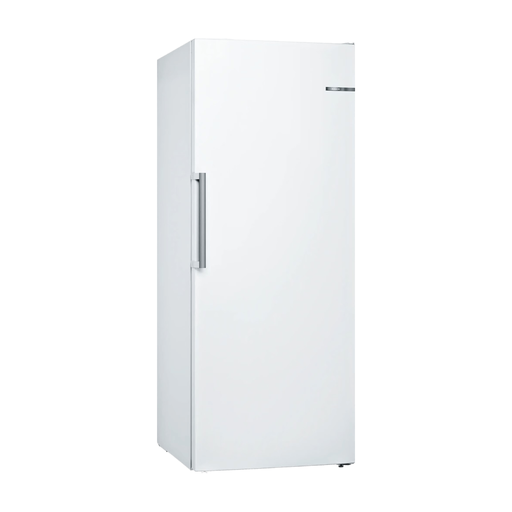
Bosch GSN54AWCV Serie 6 upright freezer, 328 L, energy rating C
An option for storing lots of portions and freezing a larger berry harvest. The specifications state a capacity of 328 litres, a freezing capacity of 23 kg/24 hours, NoFrost and a flexible Vario Zone layout.
View at Joybuy
 No image available
Frilec BREMEN138-NF-050DW compact freezer, 87 L, energy rating D
A compact freezer for a modest amount of extra space. The specifications state a capacity of 87 litres, a freezing capacity of 5 kg/24 hours, three drawers, NoFrost and Fast Freeze.
View at Joybuy
 No image available
Comfee RCC143WH2EU(E) chest freezer, 99 L, energy rating E
A compact chest freezer for extra stock and smaller portions you can keep in the basket. The specifications state a capacity of 99 litres, a freezing capacity of 4,5 kg/24 hours, a removable basket and the option to switch between fridge and freezer settings.
View at Joybuy
 No image available
CHiQ JR122WSD upright freezer, 122 L, energy rating E
A freestanding upright freezer for a medium-sized batch and organised storage. The specifications state a capacity of 122 litres, a freezing capacity of 5,5 kg/24 hours, NoFrost and multi-airflow.
View at Joybuy
 No image available
Salora 47FRT60WH compact freezer, 60 L
A compact model for limited extra freezer space and individual portions. The specifications state a capacity of 60 litres, a freezing capacity of 6 kg/24 hours, three storage compartments and a temperature range of -12 to -20 °C; NoFrost is not listed.
View at Joybuy
Frequently asked questions
How should I freeze fresh berries when I get home?
Set the freezer to at least -18 °C and don’t add too many berries at once. The Netherlands Nutrition Centre advises washing blackcurrants first, patting them dry and freezing them in a thin layer; a thick layer can freeze together.
How long do frozen berries stay in good condition?
According to the Netherlands Nutrition Centre, blueberries and blackcurrants keep well in the freezer for 8–12 months; their quality may decline after that. Check the relevant storage advice for other types of berry.
What should I check if my freezer is in an unheated room?
Check the permitted ambient temperature range for the specific model. For example, Bosch specifies SN from +10 °C for the GSN36VWDG; this model specification doesn’t show that the freezer is suitable for a colder room. Don’t assume the same applies to other models.
What information is shown on a freezer’s energy label?
For this product category, the EU energy label uses a scale from A to G and includes information such as kWh per year, volume and noise. Under EU rules, sellers must also display labels clearly online for products covered by the regulations.
What can I do with my old freezer, and who should I contact if my new one is faulty?
When you buy a similar new appliance, the retailer must, under Dutch government rules, take your old appliance back free of charge if you’re a private customer; this also applies to online purchases. If a product you’ve bought is faulty, contact the retailer: they must offer a solution and cannot simply refer you to the manufacturer.


