
Families with an existing freezer
You want to freeze banana slices for a meal and check first whether your current freezer has enough space. The Voedingscentrum recommends freezing food in small portions.


First, check whether your current freezer can reach −18 °C and has enough room for small, sealed portions of banana. For a single family meal, you may not need an extra appliance. If you also regularly freeze other food for the family, choose based on the capacity you need, the space available and annual energy consumption. A chest freezer is worth considering if you also store large or awkwardly shaped items.
You want to freeze banana slices for a meal and check first whether your current freezer has enough space. The Voedingscentrum recommends freezing food in small portions.
You’d like extra freezer space for future meals, but need to weigh up the size and layout. The Consumentenbond discusses the differences in usable space between freezer types.
You regularly freeze other food as well as fruit and want to keep it organised and easy to reach. The Consumentenbond highlights the capacity you need as one factor to consider when choosing.
Choose this if: your current freezer can reach −18 °C and has room for small, sealed portions.
Trade-off: you don’t need to make room for another appliance just for this meal.
Choose this if: you need extra freezer space on a regular basis and have limited floor or kitchen space.
Trade-off: it has less capacity than a larger upright freezer; No Frost availability varies by model.
Choose this if: you regularly freeze larger quantities of food for the family and want to find portions separately.
Trade-off: compare the external dimensions and energy label of the exact model.
Choose this if: you store large or awkwardly shaped items as well as bananas; the Consumentenbond identifies this as a suitable use.
Trade-off: allow for the space needed to open the lid and find items.
Start by checking how much space is free in your current freezer. The Consumentenbond recommends choosing a capacity that suits the food you keep in stock; Milieu Centraal also points out that you can compare annual energy consumption in kWh on the energy label.
| What to consider | What to look for | Who it matters more to |
|---|---|---|
| Freezer capacity needed | First check how much space is free in your current freezer; for a new appliance, compare its capacity and external dimensions. | If I want to freeze food for the family as well as bananas, I need to know how much extra space I’ll need. Around 36% of consumers say the freezer capacity they need is their main concern when buying. |
| Space and layout | Measure the space where the appliance will go, check that drawers or the lid can be opened, and read the model’s installation instructions. | If kitchen space is limited, I need to know whether the appliance will fit and whether small portions will be easy to reach. Around 29% of consumers prioritise space and layout. |
| Energy consumption | For models with a suitable capacity, compare the energy rating and stated annual consumption in kWh; use your own electricity tariff to work out the cost. | For an appliance that runs all the time, I want to be able to compare annual energy consumption. Around 21% of consumers prioritise energy use. |
| Defrosting | Check whether the exact model has No Frost; don’t assume every under-counter freezer does. | If I’d rather avoid manual defrosting, I’ll look specifically for this feature in the model details. Around 14% of consumers say ease of maintenance is their main concern when buying. |
The Voedingscentrum explains how to freeze bananas in small, sealed portions. A second appliance also takes up space and uses electricity continuously.
First check whether your current freezer can reach −18 °C and has enough room. Consider extra capacity mainly if you need it for other food for the family, too.
An extra appliance means ongoing energy consumption.
An energy rating alone doesn’t tell you how much electricity a freezer uses each year or how much space it offers.
For models with a suitable capacity, also compare the stated annual consumption in kWh on the energy label. Milieu Centraal highlights both as factors to consider.
The permitted ambient temperature varies by model; Inventum, for example, lists different temperature limits for its models.
Check the installation instructions for the exact model and compare its stated temperature limits with the temperature in the intended location.
Offers both an under-counter model and a larger upright freezer to compare if you’re looking for extra freezer space.
Offers, among other options, an under-counter model and a larger freestanding freezer; compare the features of each model.
The FNe 1404 is an under-counter model with No Frost to consider if you’re looking for a compact appliance with this feature.
The FS166020 is a slim under-counter model to consider if width is limited.
This selection includes upright freezers, a chest freezer and a built-in model for extra freezer space. For each exact model, check that it can reach −18 °C and that the space where it will go is suitable.
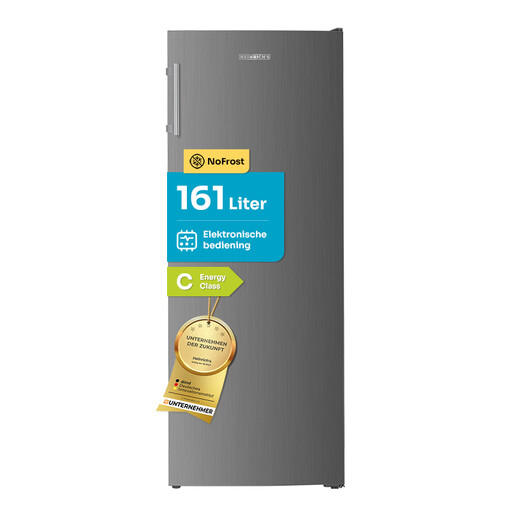 No image available
An option if you want to store food for the family as well as bananas in an upright freezer.
The product name lists a capacity of 161 litres, No-Frost and energy rating C.
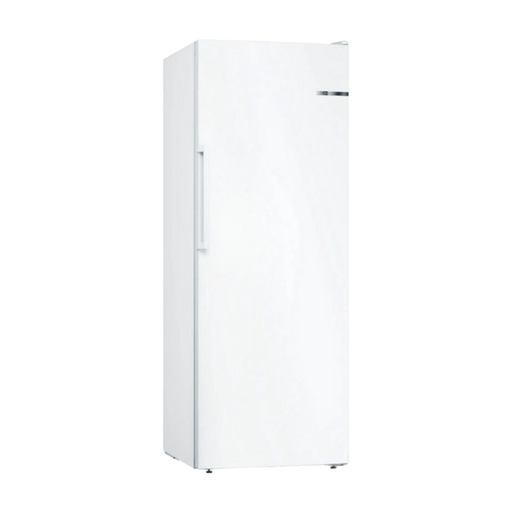 No image available
A freestanding model to consider if you’re looking for a freezer with NoFrost; check this model’s capacity and the space it needs.
The product name lists NoFrost and Series 4.
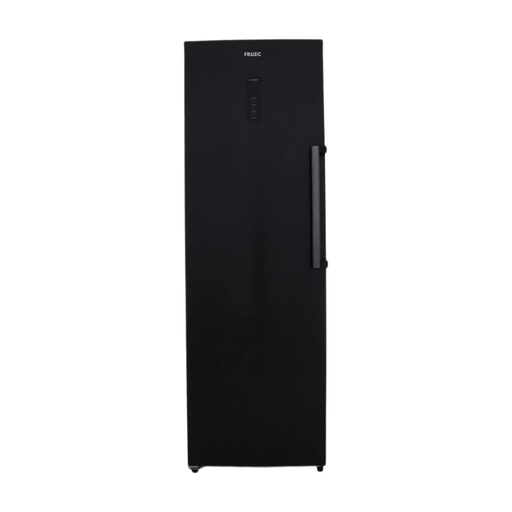 No image available
An option if you need extra freezer space and a freestanding model will fit in the intended location.
The product name lists a capacity of 274 litres, No-Frost and energy rating C.
 No image available
A chest freezer to consider if you want to store other food as well as bananas and have room for a lid that opens upwards.
The product name lists a capacity of 95 litres, energy rating E and a 7-setting thermostat.
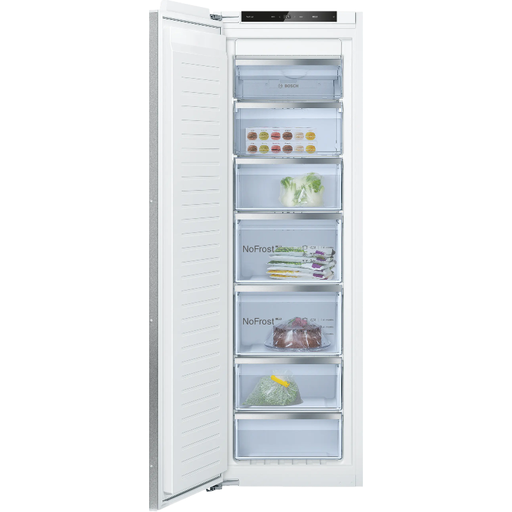 No image available
A built-in option if you’re looking for a freezer that can fit into a suitable housing unit.
The product name lists NoFrost and SuperFreeze. Check that the housing unit is suitable for this model.
Peel the banana, cut it into smaller pieces if you like, then store the slices in an airtight container or freezer bag. The Voedingscentrum recommends freezing small portions in a freezer that can reach −18 °C; don’t add too much fresh food at once.
The Voedingscentrum recommends keeping bananas in the freezer for 8 to 12 months; after that, their quality may deteriorate. This guidance doesn’t guarantee that the texture will be the same after defrosting for every type of recipe.
It depends on the permitted ambient temperature for the exact model. Inventum lists a minimum temperature of 10 °C for the VR550 and says the VR1430W can be placed in rooms down to −15 °C; don’t assume these limits apply to other models.
The energy label shows, among other things, the energy rating on the A–G scale, annual consumption in kWh and the freezer’s volume. The European Commission describes this information for household freezers; compare models with a capacity that suits the way you’ll use them.
In the Netherlands, you’re entitled to a product that is fit for purpose. According to the Rijksoverheid, if a product is faulty, the seller must provide a solution; there is no fixed statutory warranty period.