
Small-batch makers
You make compote now and then and want to know whether your current freezer has enough room for sealed, dated containers. The Voedingscentrum recommends storing leftovers this way.


If your current freezer has enough room for the portions you make, you don’t need to buy another appliance. A mini freezer or under-counter model may be enough for small batches made regularly; for larger batches, the key factors are the space available and the stated freezing capacity. Also compare annual energy consumption, installation requirements and how much defrosting you’re prepared to do. The Voedingscentrum advises storing cooled leftovers in sealed, dated containers, while Milieu Centraal recommends considering the right size and energy consumption.
You make compote now and then and want to know whether your current freezer has enough room for sealed, dated containers. The Voedingscentrum recommends storing leftovers this way.
You cook several portions at once and want to match your freezer’s capacity to the amount you plan to freeze in one go.
You’re looking for extra freezer space, but first want to check how much room you have, how much energy the appliance uses each year and whether the location is suitable.
A good fit if: you can store the cooled compote in sealed, dated portions without overloading the freezer space you already have.
Trade-off: you won’t need to make room for another appliance, but there may not be enough space for a larger batch.
A good fit if: you only need a little extra space and freeze small amounts at a time.
Trade-off: check that your containers will fit, as well as the freezing capacity; a compact size doesn’t tell you how much you can freeze per day.
A good fit if: you regularly want to organise several portions in separate compartments or drawers.
Trade-off: capacity and freezing performance vary between models. Measure the space, and check annual energy consumption and the defrosting function too.
A good fit if: you want to store larger quantities as well as compote, or need a suitable location in a cold space.
Trade-off: allow enough clearance above the lid. Drawers may be more convenient if you want to keep lots of small containers neatly organised.
| What to consider | What to look for | Who should pay particular attention? |
|---|---|---|
| Space and portion layout | Count your usual containers and other frozen foods. Compare the capacity and interior layout, and measure the outside dimensions and doorway too. First check whether your current freezer is big enough. | I want enough room for my individual portions, but not an appliance that’s bigger than I need. Around 33% of consumers prioritise having the right amount of space for their portions. |
| Freezing capacity | Compare the amount of compote you usually freeze in a day with the stated capacity in kg per 24 hours. This is different from the total capacity in litres. | If I’m freezing several portions after cooking a batch, I want to know how much will fit at once. Around 27% of consumers prioritise freezing capacity. |
| Annual energy consumption | Check the kWh per year and capacity on the energy label. Also consider whether one existing appliance has enough room before choosing a second freezer. | I want to factor in the extra electricity use, even in weeks when I don’t freeze any compote. Around 20% of consumers prioritise ongoing energy use. |
| Installation and maintenance | Measure the space and the clearance needed to open the door or lid. Check the permitted ambient temperature, ventilation instructions and whether the model has NoFrost, Low Frost or no anti-frost function. | I want to be sure the freezer can be kept where I intend to put it, and know how much defrosting it will need. Around 20% of consumers prioritise installation or maintenance. |
Capacity tells you how much you can store; the stated freezing capacity tells you how much fresh food the manufacturer says the appliance can freeze in 24 hours. These figures don’t mean the same thing.
Check that your containers will fit, and compare the freezing capacity with the amount of cooled compote you usually freeze in one day.
An extra appliance uses electricity all the time. Milieu Centraal highlights choosing the right size and considering energy consumption when making your decision.
First measure the spare space in your current freezer, then compare the stated annual energy consumption on the energy label.
An extra appliance will keep using electricity even when you’re not freezing compote.
Defrosting features vary by model, and a suitable ambient temperature isn’t guaranteed for every freezer.
For the exact model, check both the permitted ambient temperature and the details of its NoFrost, Low Frost or anti-frost function.
A model that needs manual defrosting will require time and attention from time to time; an unsuitable location may make it impossible to use there.
Tomado offers, among other options, a mini freezer and an under-counter model for anyone looking for extra freezer space in a compact size.
Inventum offers both under-counter models and small chest freezers, giving you a choice between drawers and a model with a lid.
The VV856WIT is an under-counter model for anyone who wants to store portions in separate drawers.
The FNE1074N is a compact under-counter model for anyone looking for NoFrost in this size category.
The FNe 1404 Pure NoFrost is a compact under-counter model for anyone keen to spend less time defrosting by hand.
This Joybuy selection includes under-counter models, small chest freezers and a mini freezer, offering options for different amounts of extra freezer space. Compare capacity, freezing performance and installation requirements with your portions and the space you have available.
 No image available
An under-counter model for anyone looking to freeze several portions at once and wanting NoFrost.
Capacity: 87 litres. Stated freezing capacity: 5 kg per 24 hours. Energy rating D. NoFrost. Dimensions: 84,5 × 55 × 59,5 cm. Stated ambient temperature: 10–43 °C; check that this range suits the location you have in mind.
 No image available
A chest freezer for anyone looking for extra storage in this style, as well as space for compote.
Capacity: 141 litres. Energy rating E. Stated energy consumption: 179 kWh per year. The product name mentions a convertible fridge and freezer function and a seven-setting thermostat. The description lists a removable basket and a defrost drain.
 No image available
A chest freezer for storing portions alongside other frozen foods, with a storage basket according to the product name.
Capacity: 98 litres. Energy rating E. The product name mentions a counterbalanced lid, adjustable temperature control and adjustable feet.
 No image available
A larger chest freezer for anyone looking for extra freezer space as well as room for portions of compote.
Capacity: 140 litres. Energy rating E. The product name mentions a counterbalanced lid, adjustable temperature control and adjustable feet.
 No image available
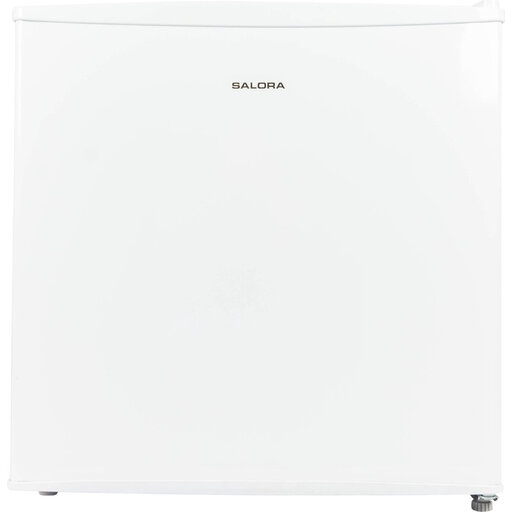
A mini freezer for anyone who needs little extra space and occasionally freezes small amounts.
Capacity: 31 litres. Stated freezing capacity: 2 kg per 24 hours. The product description mentions an adjustable thermostat.
Leave hot compote to cool quickly first, then store it in a sealed container in the fridge or freezer. The Voedingscentrum advises refrigerating leftovers within 2 hours of preparation; small containers and a date on the packaging make portioning and storage easier.
The Consumentenbond recommends −18 °C for a freezer. Check your model’s manual for operating instructions and, if needed, use a suitable thermometer to check the temperature.
Compare the stated consumption in kWh per year on the energy label, taking capacity into account too. To estimate your own costs, multiply the annual consumption by your price per kWh; the result is an estimate based on the energy use shown on the label.
It depends on the exact model and the ambient temperature. Inventum gives the VR550 a minimum ambient temperature of 10 °C and says the VK562W is suitable for a space down to −15 °C. Check the ventilation instructions for the variant you choose too.
For apple sauce from an opened tin or jar, the Voedingscentrum’s storage guide recommends 3 months in the freezer; after that, the quality may deteriorate. This advice isn’t a separate storage test for every homemade apple compote recipe.