
Family that cooks ahead
Freezes meal portions as well as stock regularly and wants accessible, well-organised storage. The Consumentenbond and Voedingscentrum offer practical advice on organising and storing food.


If you only freeze stock occasionally, you may not need an extra appliance: first check whether your existing freezer has room for your sealed portions and can be set to −18 °C or colder. An under-counter freezer suits a smaller space, while an upright freezer with drawers can be handy if you also want to keep other family staples organised. A chest freezer is an option if you also want to store large or unusually shaped items. If you’re considering extra freezer space, compare the freezing capacity and annual energy consumption of specific models too.
Freezes meal portions as well as stock regularly and wants accessible, well-organised storage. The Consumentenbond and Voedingscentrum offer practical advice on organising and storing food.
Wants to store cooled stock in small portions but may not have room for a tall upright freezer. The Consumentenbond explains how easy it is to access items in upright and chest freezers.
Weighs the capacity needed against the energy consumption of a second appliance. Milieu Centraal recommends factoring annual energy use into your comparison.
Choose this if: there’s enough room for the portions you plan to freeze and the appliance can reach −18 °C or colder.
Consider: according to the Voedingscentrum, one- and two-star freezer compartments can’t reach this temperature. Also, don’t freeze too much at once.
Choose this if: you want a separate freezer for a modest amount of food and have limited space to put it.
Consider: according to Liebherr, the Liebherr FNe 1404 has a capacity of 92 l. Check that your containers will fit in the drawers and that the capacity is sufficient.
Choose this if: you regularly freeze portions of stock as well as other family food, and want to find everything easily.
Consider: check the height and layout of the specific model. The Inventum VR1430W we looked at is 143 cm tall, according to Inventum.
Choose this if: you also want to store large or unusually shaped items.
Consider: small containers may be less accessible than in an upright freezer with drawers. The Consumentenbond explains this difference.
Compare the layout and energy consumption as well as the capacity. Easy access and enough space matter for small containers, while Milieu Centraal recommends factoring in the energy use of an extra appliance too.
| Priority | What to look for | Who is this a higher priority for? |
|---|---|---|
| Well-organised space for portions | Count the containers and other food you need to fit in the freezer at the same time. Look at the layout and check that you can reach the containers easily. | I cook ahead and want to find stock containers easily alongside the rest of the family’s food; around 33% of consumers prioritise well-organised space for portions. |
| Freezing several portions | Check that the appliance can be set to −18 °C or colder and compare the stated freezing capacity of different models. Don’t freeze too much at once. | I want to store several portions once they’ve cooled, without putting too much strain on the freezer; around 27% of consumers prioritise freezing food in batches. |
| A suitable place to put it | Measure the available space and check the installation requirements for the exact model, especially if it will be in an unheated room. | I have a specific spot in the kitchen, utility room or shed and want to know which freezer will fit; around 20% of consumers start by looking at the space available. |
| Energy use and maintenance | Compare annual energy consumption in kWh on the energy label and consider whether your existing freezer already has enough room. | I don’t want to run an extra appliance to store food in space I’ll hardly use; around 20% of consumers prioritise energy use and maintenance. |
The freezer you already own may be enough for a few portions, but according to the Voedingscentrum, a one- or two-star freezer compartment can’t reach the recommended −18 °C.
First, check the available space and temperature settings. Milieu Centraal points out that an extra refrigeration appliance also uses extra energy.
A second appliance means ongoing energy use.
The shape and layout also affect how easy it is to take out small containers of stock. The same capacity doesn’t necessarily mean the food is equally accessible.
Measure your containers and the space where the freezer will go, and check the layout of the specific under-counter freezer, upright freezer or chest freezer.
The Voedingscentrum recommends letting cooked leftovers cool first, then putting them in the fridge or freezer within two hours.
Divide the stock into small, tightly sealed portions and follow the guidance on cooling food safely.
The freestanding Inventum VR1430W is an upright freezer with drawers. The specifications below apply to this model.
The ETNA VV6143NWIT is an upright freezer with four drawers and a flap compartment. The specifications given are specific to this model.
The Liebherr FNe 1404 Pure NoFrost is an under-counter freezer for anyone looking for a compact, separate freezer.
The models below include upright freezers, an under-counter freezer and a chest freezer. Compare different capacities and layouts to find the right fit for portions of stock and other household food.
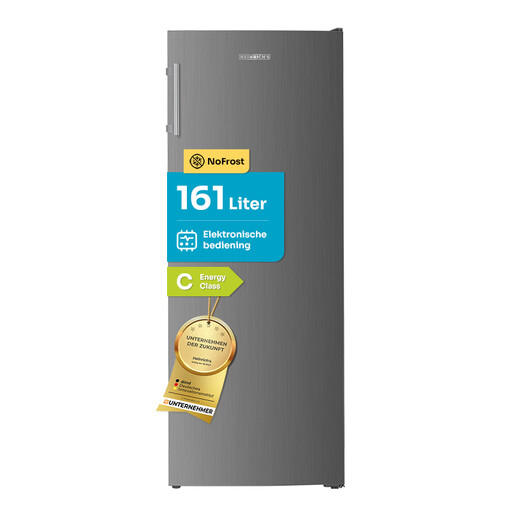 Image unavailable
An option if you want to store portions of stock alongside other family food in an upright freezer with drawers.
161 l; No-Frost; temperature range −14 °C to −22 °C; energy class C.
 Image unavailable
An under-counter freezer to consider if you have limited space for an appliance.
87 l; energy label B.
 Image unavailable
A freestanding freezer for anyone looking for separate freezer space at home.
122 l; 4-star freezer compartment; No-Frost; energy class E.
 Image unavailable
A chest freezer to consider if you want to store large or unusually shaped items as well as stock.
99 l; removable basket; can switch between fridge and freezer modes; energy class E.
Small portions may be less accessible in a basket than in the drawers of an upright freezer.
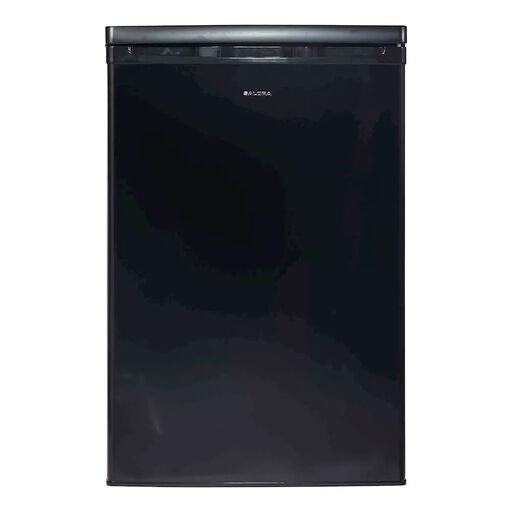 Image unavailable
A freestanding model to consider if you’re looking for a separate freezer.
91 l; reversible door; adjustable thermostat; stated energy consumption 166 kWh per year.
According to the product information, this model doesn’t have No-Frost, so it needs to be defrosted manually.
Set the freezer to −18 °C or colder and use small portions in clean, tightly sealed containers. The Voedingscentrum recommends letting cooked leftovers cool first, then putting them in the fridge or freezer within two hours. Don’t freeze too much at once.
For opened stock, the Voedingscentrum’s Bewaarwijzer recommends two days in the fridge and three months in the freezer. After that, the quality may deteriorate. Don’t rely on these time limits for stock that hasn’t been cooled or stored safely.
It depends on the installation requirements for the specific model. Inventum says the VR1430W operates at ambient temperatures down to −15 °C, and Liebherr says the same for the FNe 1404. This information doesn’t automatically apply to other models.
Compare the annual energy consumption in kWh on the energy labels of models that offer the capacity you need. Milieu Centraal points out that a second refrigeration appliance uses extra energy; the energy class alone won’t tell you what your actual consumption will be.
When you buy a new, similar appliance, the shop must take the old one away free of charge under the Dutch government’s old-for-new scheme. This also applies to online purchases; arrange the practical details with the retailer.