
Cook who freezes small portions of stock
You want to freeze cooled stock in separate, sealed, dated containers and find them easily in a shared freezer.


For small, labelled portions and limited space, a compact under-counter freezer is a sensible place to start. If you regularly make larger batches, an upright freezer usually offers more usable space, while a chest freezer can accommodate large or unusually shaped containers. Compare the dimensions, layout, freezing capacity and annual energy consumption of the exact model. Let the stock cool before storing it, and put it away promptly.
You want to freeze cooled stock in separate, sealed, dated containers and find them easily in a shared freezer.
You share the available space and want to check in advance that the dimensions and drawer layout will suit the space and your containers.
You often make larger batches, so you’re comparing the usable capacity, freezing capacity and annual electricity consumption of an additional appliance.
Best for: a designated spot and usually small, individual containers of stock.
The trade-off: takes up less space than a tall upright freezer, but has less room for storing several batches at once.
Best for: regularly freezing larger quantities, or for several users who need more storage space.
The trade-off: usually needs more height; check that the space available and the drawer layout are suitable.
Best for: large quantities or unusually shaped containers, if you have enough space.
The trade-off: finding individual small containers can take extra organisation.
The Netherlands Nutrition Centre advises letting cooked food cool first and not leaving it out of the fridge for more than two hours. The EU energy label includes information such as annual energy consumption, capacity and noise level, so don’t compare models on their energy rating alone.
| What to consider | What to check before buying | Who should pay particular attention? |
|---|---|---|
| Portions and freezing capacity | Check the drawer layout and freezing capacity in kg/24 hours, then compare it with the batch you plan to freeze. | If you want to divide stock into small, sealed containers and keep a shared freezer organised, the layout matters. Around 36% of consumers give top priority to freezing food promptly and keeping it organised. |
| Space and accessibility | Measure the space and check the external dimensions, usable capacity and drawer dimensions of the exact model. | If you share a freezer, you’ll want it to fit the space and for everyone in the household to be able to find their portions. Around 29% of consumers prioritise a suitable size and accessible layout. |
| Annual energy consumption | Compare the kWh/year consumption of models that offer enough usable space. | If an additional freezer is running all the time, you’ll want to compare the annual energy consumption of models that suit your storage needs. Around 21% of consumers make energy consumption their top consideration. |
| Defrosting and maintenance | Check whether each model has NoFrost, SmartFrost or static cooling, and agree who will manage the shared freezer stock and cleaning. | If several people use the freezer, it can be helpful to agree in advance how to keep portions easy to identify and who will take care of maintenance. Around 14% of consumers consider maintenance their top priority. |
The external dimensions and drawer layout also determine whether your containers will fit and whether the stock will remain easy to reach in a shared kitchen.
Measure the available space and your usual containers. Then compare both the capacity and layout of the exact model.
The Netherlands Nutrition Centre advises letting cooked food cool first. Inventum warns that with the VR550, a quantity exceeding the stated freezing capacity can raise the temperature of food already in the freezer.
Let the stock cool promptly, divide it into small sealed portions and compare your planned batch with the stated capacity in kg/24 hours.
These are different features and depend on the model. Assuming they’re the same could mean you have more defrosting to do than expected.
Check the features and maintenance instructions for the exact model, not just the brand name.
The EU label also shows annual energy consumption and capacity. Comparing the letter alone won’t tell you how much electricity a suitable model uses according to its label.
Compare the kWh per year for models that both offer enough usable space.
The VR550 is a good example of a compact under-counter freezer with drawers.
The GTV15NWEB is a compact model to compare for capacity, dimensions and freezing capacity.
The FNe 1404 and Fc 1404 are separate under-counter models with different frost-prevention systems.
The FS166020 is a narrower under-counter model for spaces where width is a key constraint.
The BREMEN132-040BW is an example of an under-counter model to compare for capacity, layout and energy rating.
These models are options to compare for storing stock, from compact freezers with compartments or drawers to larger freestanding upright models.
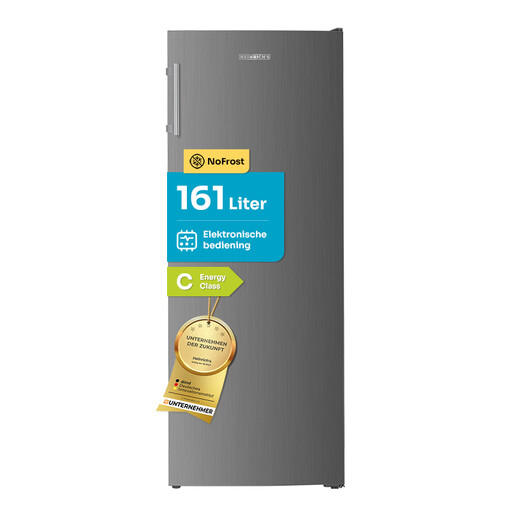 No image available
The three freezer drawers make it easy to organise individual portions in a shared freezer.
161 litres; three freezer drawers; Fast Freeze; adjustable from −14 °C to −22 °C; energy class C.
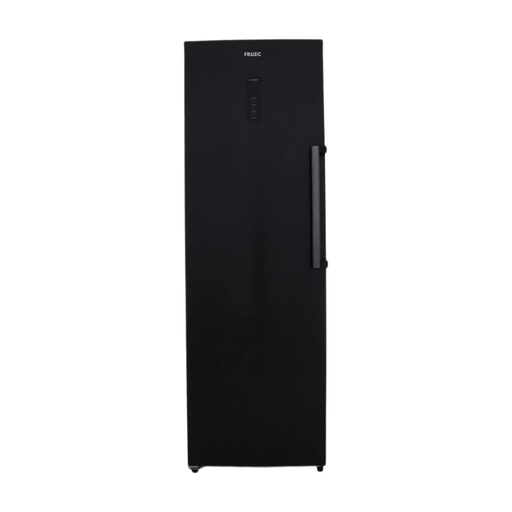 No image available
The larger capacity and stated freezing capacity make this model worth comparing if you regularly freeze larger batches. Bear in mind the height required.
274 litres; No-Frost; freezing capacity 17 kg/24 hours; height 185 cm; energy class C.
 No image available
The three compartments make it easy to separate portions; check that the available capacity is enough for your stock.
60 litres; three compartments; freezing capacity 6 kg/24 hours; 4-star rating; dimensions 44,5 × 47,5 × 84,5 cm.
 No image available
The three transparent drawers can help you keep portions separate in a compact freezer.
87 litres; three transparent drawers; freezing capacity 4,4 kg/24 hours; energy class B. NoFrost is not included; manual defrosting may be needed if a lot of frost builds up.
 No image available
This convertible model is an option if you select the freezer setting for storing stock; compare its capacity and freezing capacity with your batch.
122 litres; 4-star compartment; freezing capacity 5,5 kg/24 hours; energy class E; noise level 39 dB; dimensions 1155 × 475 × 565 mm.
The Netherlands Nutrition Centre advises letting the stock cool for about half an hour, then putting it in the fridge or freezer within two hours of cooking. Divide it into small, clean, tightly sealed containers and label them with the contents and date frozen. Set the freezer to −18 °C or colder, and compare a large batch with the freezing capacity of your chosen model.
Follow the instructions for the exact model. Static cooling, SmartFrost and NoFrost aren’t the same: Beko describes the FS166020 as static, while Liebherr lists the FNe 1404 as a NoFrost model and the Fc 1404 as a SmartFrost model.
Compare the annual kWh consumption of the exact model and take your own electricity tariff into account; an energy rating alone doesn’t determine how much you’ll use in your situation. According to the Dutch Government, statutory consumer protection applies in the Netherlands, and the retailer is your point of contact if a product is faulty. There is no fixed two-year statutory guarantee period in the Netherlands.
Not simply because housemates or other private individuals share a kitchen. If a business prepares, processes or sells food there, it must follow a food safety plan or the relevant hygiene code based on HACCP, according to the Netherlands Food and Consumer Product Safety Authority. So first establish whether the kitchen is used privately or commercially; this requirement doesn’t apply as a general purchasing rule to every freezer.