
Cook with a narrow kitchen
Wants to freeze soup in portions without giving up worktop space, so starts by measuring a suitable spot on the floor.


Start by measuring the available floor space or alcove: a freezer doesn’t have to sit on the worktop. Then choose one based on how much soup you want to freeze at a time, its external dimensions and its freezing capacity in kg per 24 hours. A compact model takes up less width, while a larger under-counter freezer or chest freezer may offer more freezer space. Divide cooled soup into well-sealed portions and store them at around −18 °C.
Wants to freeze soup in portions without giving up worktop space, so starts by measuring a suitable spot on the floor.
Regularly freezes a larger pan of soup and needs to assess the freezing capacity per 24 hours as well as the storage capacity.
Has room for an under-counter freezer and weighs the convenience of NoFrost against the external dimensions, capacity and energy consumption.
Start with the spot where the freezer will go, then decide how much soup you want to freeze at once. This lets you weigh up dimensions, capacity and maintenance without focusing only on the number of litres.
| What to consider | What to look for | Who should prioritise this? |
|---|---|---|
| Available space | Measure the width, height and depth, and check the door and ventilation clearances in the installation instructions. | If space is limited, I want the freezer to fit in a measured floor space without taking up worktop room. Around 33% of consumers say available space is their main buying consideration. |
| Amount to freeze at a time | Compare the weight of the portions you want to freeze within 24 hours with the stated capacity in kg/24 h. Also check that the containers will fit inside. | If I’m freezing a large pan of soup in portions, I want to know how much I can add each day, rather than relying on the litre capacity alone. Around 33% of consumers focus mainly on how much they can fit in per freezing session. |
| Layout and defrosting | Check whether your sealed containers will fit in the drawers or baskets, and whether the model has NoFrost or static cooling. | I want to find portions quickly and avoid taking on more maintenance than suits my routine. Around 20% of consumers prioritise an organised layout and less defrosting. |
| Energy consumption | Compare the annual consumption in kWh on the energy label of models with enough capacity. | Once I’ve found a suitable size, I also want to factor in annual energy consumption when making my choice. Around 14% of consumers focus mainly on running costs. |
Capacity in litres and freezing capacity in kg per 24 hours are two different specifications. If you add more than the model can freeze in a day, your existing frozen food may start to warm up.
Weigh the amount of cooled soup you want to add at once and compare it with the freezing capacity of the exact model.
External dimensions or a removable top don’t automatically mean an alcove meets the installation requirements.
Before buying, check the installation manual, ventilation clearance and door opening for the model you’ve chosen.
A chest freezer may offer enough capacity, but it won’t work in a spot where a fixed worktop prevents the lid from opening.
Also measure the clear space above the floor area and think about how you’ll keep small soup containers organised.
Since 1 March 2021, the European Commission has used the rescaled EU energy label from A to G for household freezers.
Compare current labels and the stated annual consumption in kWh for models that are the right size for you.
The FS166020 is a freestanding option for anyone short on width.
The VR550 is an under-counter model with drawers, while the VK562W is a chest freezer for a different type of floor space.
The GTV15NWEB is an under-counter model with a stated freezer capacity and freezing capacity.
The FNe 1404 is an under-counter model for anyone considering NoFrost.
This selection includes freestanding under-counter freezers and chest freezers. Compare the stated freezing capacity with the amount of soup you want to add at a time, and measure the available floor space, including room for ventilation or the lid.
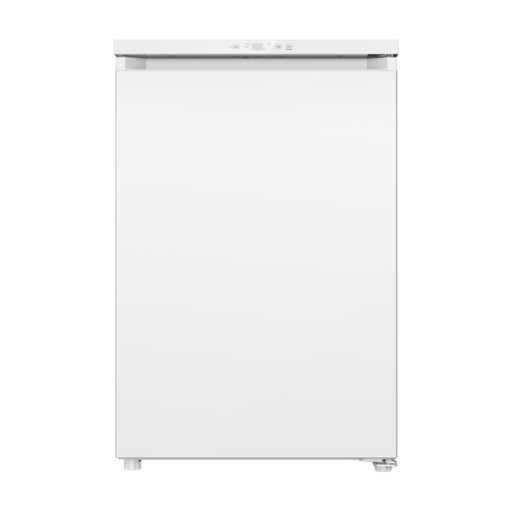 No image available
An under-counter model to consider if you want to store soup portions in a freestanding freezer and its stated capacity suits your batch size.
Capacity: 87 litres. Freezing capacity: 5 kg/24 h. Annual consumption: 145 kWh. NoFrost and Fast Freeze. External dimensions: 84,5 × 55 × 59,5 cm. Allow for the specified ventilation clearance.
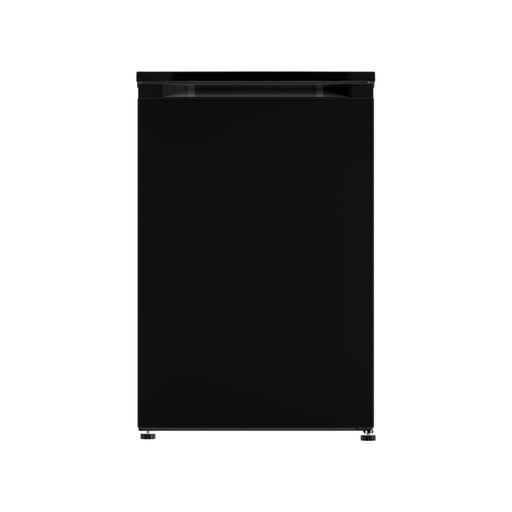 No image available
The stated capacity and freezing capacity are worth considering if you want to store several portions and freeze them each day.
Capacity: 85 litres. Freezing capacity: 4,5 kg/24 h. Three transparent drawers. Annual consumption: 105 kWh. External dimensions: 84,5 × 54,9 × 55,7 cm. If ice builds up, this model needs to be defrosted manually.
 No image available
This freestanding under-counter model is an option if you have room for a freezer that’s 55 cm wide and want to store portions in drawers.
Capacity: 87 litres. Freezing capacity: 4,4 kg/24 h. Three transparent drawers. Annual consumption: 84 kWh. If ice builds up, this model needs to be defrosted manually.
 No image available
A chest freezer to consider if you have a suitable spot on the floor near the kitchen and enough clearance to open the lid.
Capacity: 98 litres. Energy rating E. Includes a storage basket; the temperature is adjustable. The lid has a counterweight and needs clear space above it.
 No image available
This chest freezer may suit you if you’re looking for extra freezer space and have room above the appliance to open the lid.
Capacity: 140 litres. Energy rating E. Includes a storage basket. The product information states that the lid stays open.
Divide the soup into small portions, let them cool first, then seal them well and put them in the fridge or freezer. Don’t leave leftovers out of the fridge for more than two hours. The Netherlands Nutrition Centre recommends a freezer temperature of −18 °C or colder.
The Netherlands Nutrition Centre recommends keeping both clear and thickened vegetable soup in the freezer for three months; after that, its quality may deteriorate. Label the packaging with the contents and freezing date.
Ideally, defrost the soup covered in the fridge; you can also use the microwave for a small portion. Don’t leave a meal to defrost outside the fridge all day or overnight, and then heat it thoroughly until piping hot.
Compare the annual consumption in kWh on the EU energy label for models with enough capacity. To estimate your own costs, multiply that figure by your electricity tariff; the label rating alone won’t tell you what it will cost you.