
Family cook who likes to plan ahead
You regularly freeze several portions of sauce or complete meals and want enough usable space and freezing capacity.


For a few extra tubs of cooled tomato sauce, an under-counter freezer is a better fit than a large chest freezer. If you regularly freeze several family meals, you could compare a larger upright freezer or chest freezer. Match the capacity and freezing capacity to what you want to freeze at once, check the permitted temperature range for the location, and compare energy use and ease of maintenance.
You regularly freeze several portions of sauce or complete meals and want enough usable space and freezing capacity.
You’re looking for extra freezer space for portions of sauce without having to find room for a large appliance, or you’re considering putting one in a utility room or shed.
You’re comparing electricity use and the effort of manual defrosting with the space and features you need.
A good fit if: you want to store a few portions of sauce and other family favourites, and have little floor or kitchen space.
Keep in mind: capacity is limited; compare the freezing capacity with the amount you want to add at once.
A good fit if: you want to store other foods neatly as well as sauce, and have room for a taller appliance.
Keep in mind: the external dimensions and stated annual energy consumption; NoFrost may suit you if you want to avoid manual defrosting.
A good fit if: you regularly prepare large quantities, freeze other supplies too and have enough floor space.
Keep in mind: the space required and the maintenance; if you’re using an unheated shed, check the temperature range for the specific model.
| What to consider | What should you check? | Who is this important for? |
|---|---|---|
| Space and freezing capacity | Count your usual tubs and other frozen food; compare the drawer layout and stated freezing capacity in kg/24 hours with what you want to freeze in a day. | If I want to freeze a family-sized batch of sauce all at once, I’ll still need room for my other supplies. Around 33% of consumers consider space and freezing capacity their top concern when buying. |
| Location and dimensions | Measure the height, width and depth, and allow for the door or lid to open. Compare the temperature at the intended location with the range specified for the exact model. | If I’m short on space or want to put the freezer in an unheated room, I need to know whether it will fit there and can be used there. Around 27% of consumers give location the highest priority. |
| Energy use | For models that meet your space requirements, compare the current EU energy label and stated consumption in kWh/year. | I don’t want to choose a larger capacity than I need, and I want to be able to compare the stated annual energy consumption. Around 20% of consumers consider energy use their main buying concern. |
| Defrosting and organisation | Check whether the model has NoFrost, how many drawers or compartments it offers, and how you can organise portions. | I want to be able to find my portions of sauce and avoid unnecessary manual defrosting. Around 20% of consumers prioritise easy maintenance and organisation. |
The Netherlands Nutrition Centre recommends a temperature of −18 °C or colder for freezing food. A one- or two-star freezer compartment cannot reach that temperature.
Before buying, check whether the exact freezer compartment can be set to at least −18 °C, especially if you want to store sauce for a long time.
A larger model takes up more room. Choosing a suitable size and checking the stated consumption in kWh/year will help you compare models without focusing on capacity alone. Milieu Centraal recommends choosing a suitable size; the EU energy label shows the energy efficiency class.
Count your usual tubs and other supplies, measure the intended location, then compare the energy labels and annual consumption of models that fit.
The permitted ambient temperature range varies by model. For example, Inventum specifies 10–38 °C for the VR550, while Liebherr makes a model-specific claim that the FNe 4204 operates down to −15 °C.
Measure the temperature at the intended location and compare it with the manual and the permitted installation range for the exact model.
According to the Consumers’ Association, a NoFrost freezer does not need to be defrosted manually. The Beko HSM22340 they tested has a static cooling system.
Choose based on both the capacity you need and how willing you are to maintain a static model; check the features of the specific version.
The VR550 is a compact under-counter model to compare if a few extra drawers are enough for your portions of sauce.
The VV856WIT is a compact under-counter model to compare if you want to make the most of your available kitchen space.
The FNe 4204 is a freestanding upright freezer to compare if you need more space than an under-counter model offers.
The HSM22340 is a chest freezer to compare if you have plenty of storage space and enough floor area.
The GSN36VLCG is a larger freestanding NoFrost freezer to compare if you need to store a substantial amount of food for your family.
These models include under-counter freezers, a freestanding upright freezer and a chest freezer, so you can choose one to suit the amount of sauce and other frozen food you need to store, as well as the space available.
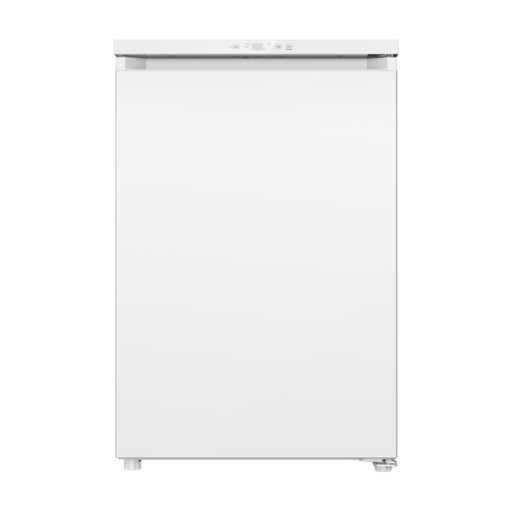 No image available
An under-counter model to compare if you want to store portions of sauce and other supplies in drawers.
Capacity: 87 litres; stated freezing capacity: 5 kg/24 hours; recommended temperature: −18 °C.
NoFrost; D energy rating; dimensions: 84,5 × 55 × 59,5 cm.
 No image available
An under-counter model to compare if you want to spread several portions of sauce and other supplies across drawers.
Capacity: 87 litres; three transparent drawers; stated freezing capacity: 4,4 kg/24 hours.
B energy rating; no NoFrost. Manual defrosting may be needed if a thick layer of frost builds up.
Dimensions: 55 × 85 × 58 cm.
 No image available
A chest freezer to compare if you want to store extra supplies and have room for a model with a lid.
Capacity: 140 litres; adjustable temperature control; E energy rating.
The title mentions a storage basket and a counterbalanced lid.
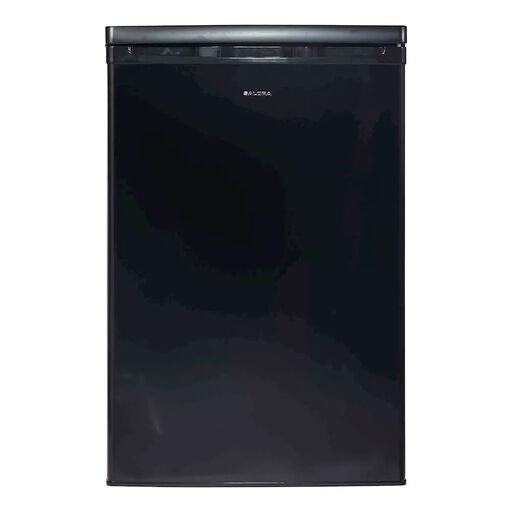 No image available
A freestanding upright freezer to compare if you add portions of sauce at different times and want to keep them in drawers.
Capacity: 91 litres; four transparent drawers; stated freezing capacity: 4,4 kg/24 hours.
Temperature range: −12 °C to −20 °C; no NoFrost. Dimensions: 85 × 55 × 58 cm.
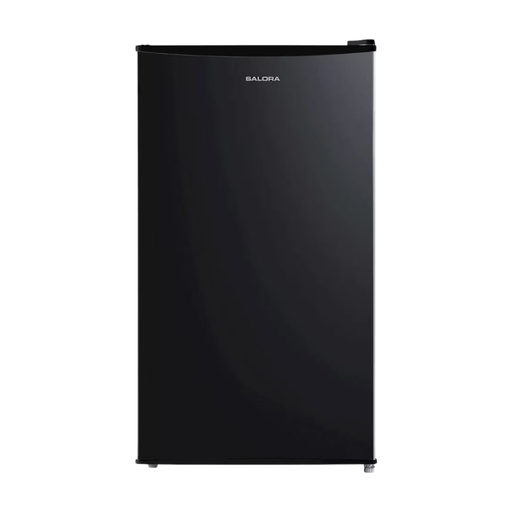 No image available
A compact under-counter model to compare if you only need to store a small amount of extra frozen food.
Capacity: 60 litres; stated freezing capacity: 6 kg/24 hours.
Temperature range: −20 °C to −12 °C; no NoFrost. Dimensions: 47,2 × 44,6 × 84,5 cm.
Cool cooked leftovers within two hours, divide them into airtight containers, label them with the date and store them in a freezer that can be set to at least −18 °C. The Netherlands Nutrition Centre recommends keeping frozen leftovers for three months; this time limit does not automatically apply to every unopened sauce or sauce made with different ingredients.
The Netherlands Nutrition Centre recommends defrosting leftovers in the fridge or using the microwave’s defrost setting, then heating them thoroughly until piping hot. Stir sauce heated in the microwave well, and it’s best not to refreeze leftovers that have already been reheated.
It depends on the permitted ambient temperature range for the exact model, not just its design. Inventum specifies 10–38 °C for the VR550, while Liebherr makes a model-specific claim that the FNe 4204 operates down to −15 °C. Compare the manual with the temperatures at the intended location.
According to the Consumers’ Association’s usage advice, a freezer with NoFrost does not need to be defrosted manually. You’ll still need to clean it and check your supplies.
When you buy a new, similar appliance as a private customer, the Dutch government says the retailer must take away your old appliance free of charge. This also applies to online purchases; the government outlines alternatives for free collection if the delivery service cannot take the old appliance away at the same time.