What should you consider when choosing?
Compact tabletop freezer
Best for: a few extra portions of dough and not much other frozen food, especially if space is limited.
Consider: the limited capacity needs to accommodate both your wrapped portions and the food you already store.
Freestanding upright freezer
Best for: regularly taking out portions of dough alongside a wider range of family supplies; drawers can make it easier to find what you need.
Consider: compare models by capacity, dimensions and kWh per year. The Inventum VR1430B is listed with a capacity of 161 litres and energy label C; the Bosch GSN33VLEP with 225 litres and label E. These details do not provide a complete comparison of their energy use, so check the annual consumption of the exact models.
Chest freezer
Best for: a larger stock of food or items that are awkward to stack, provided you have room for the lid and the basket layout.
Consider: the Consumers’ Association says chest freezers are suitable for large or unusually shaped items, but does not include them in its freezer tests. According to Inventum, the Inventum VK952W has a capacity of 198 litres, a basket and Low Frost; this model still needs defrosting from time to time.
Integrated freezer
Best for: replacing an appliance in an existing kitchen where an integrated model is needed and the exact niche dimensions and door installation are compatible.
Consider: the Consumers’ Association highlights the need for a precise fit and a more limited choice than with freestanding models. The dimensions and door-on-door installation details for the Liebherr IFNd 3924 apply only to that model.
First compare the capacity and layout with the food you actually store, then check the installation requirements and energy use. The Netherlands Nutrition Centre recommends setting your freezer to at least −18 °C; according to the Centre, one- and two-star freezer compartments cannot reach this temperature.
| What to consider |
What to look for when buying |
Who is this for? |
| Space and access |
Compare capacity in litres, drawers or baskets, and the dimensions of your wrapped portions. |
I want to fit portions of dough alongside the usual family supplies and find them easily; around 36% of consumers say storage capacity and access are their top buying priorities. |
| Fit |
Measure the width, height and depth, as well as the space needed to open the door or lid. If you’ll keep it in a cold shed or garage, check the permitted ambient temperature range for the exact model. |
If there’s limited space in my kitchen, utility room or alcove, I want to make sure the freezer fits and can be opened; around 29% of consumers say physical fit is their top buying priority. |
| Energy use |
Check the energy label and annual consumption in kWh; compare models with a suitable capacity. |
I want to leave an additional appliance running for a long time without choosing one that’s too large; around 21% of consumers say annual energy use is their top buying priority. |
| Defrosting and layout |
Check the defrosting system of the exact model and whether drawers or baskets suit the way you want to access your portions. |
If I want to spend less time defrosting and keep portions organised, maintenance is my top priority; around 14% of consumers say maintenance and layout are their top buying priorities. |
Freezers at Joybuy
This selection includes freestanding upright freezers, compact models and chest freezers for extra space alongside your family supplies.
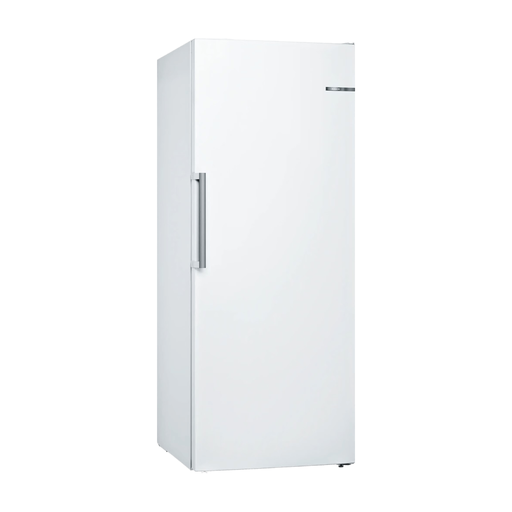 Image unavailable
Bosch GSN54AWCV Serie 6, 328 l
The stated capacity may suit several portions of dough alongside other family supplies; check that the model can be set to at least −18 °C.
The product description lists No Frost, a capacity of 328 litres, energy label C and annual consumption of 170 kWh.
View at Joybuy
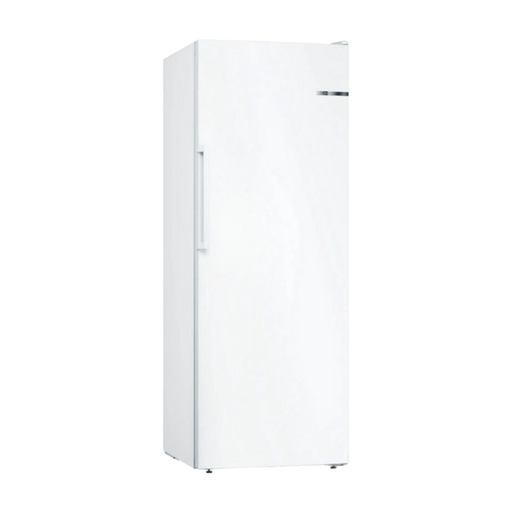 Image unavailable
Bosch GSN29VWEV Serie 4
The stated layout options may be useful for storing different types of frozen food; check that the model can be set to at least −18 °C.
The product description lists a capacity of 200 litres, NoFrost, VarioZone, a BigBox drawer and SuperFreeze.
View at Joybuy
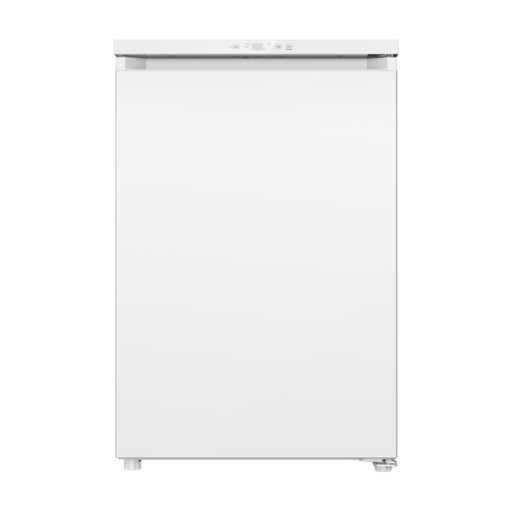 Image unavailable
Frilec BREMEN138-NF-050DW, 87 litres
This compact model may suit a small amount of additional frozen food; the product description gives a recommended freezing temperature of −18 °C.
The specifications list No Frost, energy class D and a freezing capacity of 5 kg per 24 hours. It’s a convertible model: select the 4-star freezer mode to freeze food.
View at Joybuy
 Image unavailable
TCL CF182EWE0NL, 140 litres
This chest freezer may suit additional frozen food; allow space to open the lid and check that the model can be set to at least −18 °C.
The product title lists a capacity of 140 litres, energy class E, a storage basket, a counterbalanced lid and an adjustable temperature control.
View at Joybuy
 Image unavailable
CHiQ JR122WSD, 122 litres
This model can provide extra freezer space; the product information recommends a setting of −18 °C for the 4-star compartment.
The specifications list 122 litres of freezer capacity, No Frost, Multi-Airflow, 39 dB and energy class E. Use freezer mode to store pizza dough.
View at Joybuy
Frequently asked questions
Can I freeze pizza dough in small portions?
Yes. The Netherlands Nutrition Centre recommends freezing food in small portions, not adding too much at once and setting your freezer to at least −18 °C. Wrap and label portions individually; advice about an opened, thin pizza base does not determine how long every homemade dough recipe will keep its quality.
When should I take the dough out of the freezer for pizza night?
Leave the dough to defrost in the fridge and allow enough time for this. The Netherlands Nutrition Centre recommends defrosting food in the fridge, but does not give a universal exact defrosting time. Check that your portions have thawed and follow your recipe too.
Can any freezer be kept in an unheated garage?
No, you shouldn’t assume that based on the type of freezer alone. Check the permitted ambient temperature for the exact model and compare it with the temperature in the intended location.
Is an energy label required for domestic freezers in the Netherlands?
Domestic freezers covered by EU rules must meet energy labelling requirements. According to the European Commission, the label shows details including the efficiency class, annual energy consumption, capacity and noise emissions; check the label for the exact version.
What can I do if my new freezer turns out to be faulty?
In the Netherlands, contact the retailer if the product has a fault. According to the Dutch government, there is no fixed statutory guarantee period, and a manufacturer’s guarantee does not replace your statutory rights.


