
Cooking for several family meals
You regularly make extra sauce and want to store several portions without squeezing out the rest of the family’s frozen food.


An under-counter freezer may be enough for a few extra containers, while a larger upright model could be worth considering if you regularly freeze several family-sized portions. A chest freezer is a sensible option if the sauce is part of a larger frozen food stock and you have enough floor space. With any model, compare the usable capacity, where it will go and its annual energy consumption; the Netherlands Nutrition Centre recommends a freezer that can be set to −18 °C.
You regularly make extra sauce and want to store several portions without squeezing out the rest of the family’s frozen food.
You want to keep a few extra portions, but need to consider the external dimensions and accessibility of a small freezer.
You freeze other meals or ingredients as well as sauce, and take the space required and energy consumption into account.
Suitable for: a few extra containers of sauce and limited floor space.
Consider: the limited capacity may leave less room for other frozen food.
Suitable for: regularly freezing several portions and storing containers separately.
Consider: allow for the space it needs and compare the energy consumption of specific models; Milieu Centraal highlights energy consumption as an important factor when choosing.
Suitable for: storing sauce as part of a larger frozen food stock.
Consider: if you only need to store a few containers of sauce, it may take up more floor space than necessary.
| What to consider | What to look for | Who is this important for? |
|---|---|---|
| Space for family-sized portions | Compare the dimensions of your containers with the layout and usable capacity of the exact model. | I want enough room for the containers needed for a family meal, without having to push out the rest of my frozen food. Around 33% of consumers also prioritise space for family-sized portions. |
| Freezing sauce | Check whether the freezer can be set to −18 °C; if you cook large batches, compare the freezing capacity in kg per 24 hours. The Netherlands Nutrition Centre recommends setting a freezer to −18 °C. | When I cook a large batch, I want to be able to store cooled sauce in portions. Around 25% of consumers put the amount that can be frozen at once at the top of their list. |
| Positioning and access | Measure the space and room needed to open the door or lid; if you plan to put the freezer in a shed or garage, check its climate class. The Dutch Consumers’ Association explains that the climate class indicates the permitted range of ambient temperatures. | If my kitchen, garage or shed has limited space, I want to know whether the appliance will fit and remain accessible. Around 25% of consumers prioritise positioning and access. |
| Energy consumption and maintenance | Compare the stated consumption in kWh per year and check whether the model features No Frost, SmartFrost or manual defrosting. Milieu Centraal recommends taking energy consumption into account when choosing. | I want to know how much energy a freezer uses and how much effort defrosting may involve. Around 17% of consumers put running costs and maintenance at the top of their list. |
According to the Netherlands Nutrition Centre, this type of freezer compartment cannot be set to −18 °C.
Before you buy, check the freezing function and the temperature settings of the exact appliance.
The Netherlands Nutrition Centre recommends cooling leftovers quickly and not leaving them out of the fridge for more than two hours.
Divide the sauce into small, well-sealed portions and put them in the fridge or freezer promptly.
Liebherr describes SmartFrost on the CFe 2080 as a feature that reduces frost build-up. Bosch describes No Frost on the GSN36VLFP as a feature that prevents ice forming, so the terms do not mean the same thing.
Read the maintenance instructions for the exact model rather than relying on the feature name alone.
The climate class indicates the ambient temperatures at which the appliance should work properly, according to the Dutch Consumers’ Association.
Check the class against the temperatures where you plan to put the freezer, and follow the instructions for the specific model.
The examples below refer to specific models and product ranges; the features mentioned are not a general assessment of an entire brand.
The VR550 is an under-counter model for anyone looking to store a modest amount of extra food.
The freestanding GSN36VLFP is an example of an upright freezer for larger quantities and containers stored separately.
The CFe 2080 is an example of a spacious chest freezer for storing larger quantities.
The upright FS166020 is a compact model for anyone looking to store a small amount of extra food.
The models below suit different ways of storing frozen food, including an under-counter freezer, freestanding upright freezers and a chest freezer. Check that each model’s layout and temperature settings suit the portions you want to store.
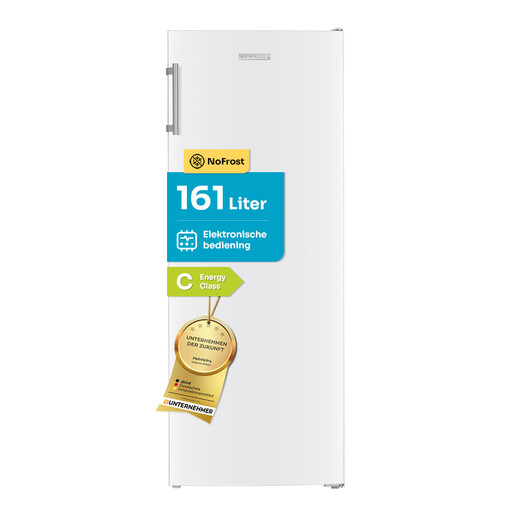 Image unavailable
An option for storing several portions and other frozen food separately.
161 litres; No Frost; temperature setting from −14 °C to −22 °C; energy class C.
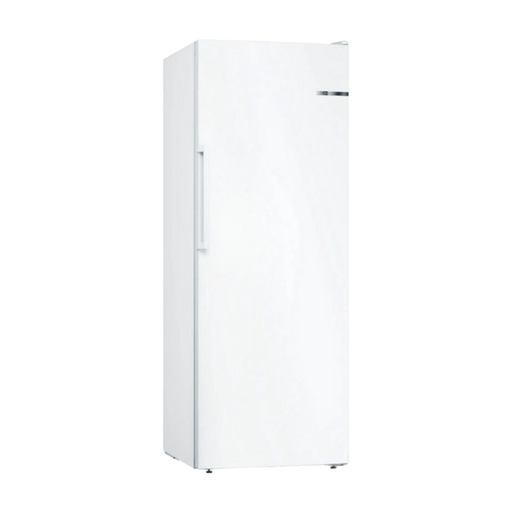 Image unavailable
A freestanding upright freezer for anyone looking to store several portions and other frozen supplies.
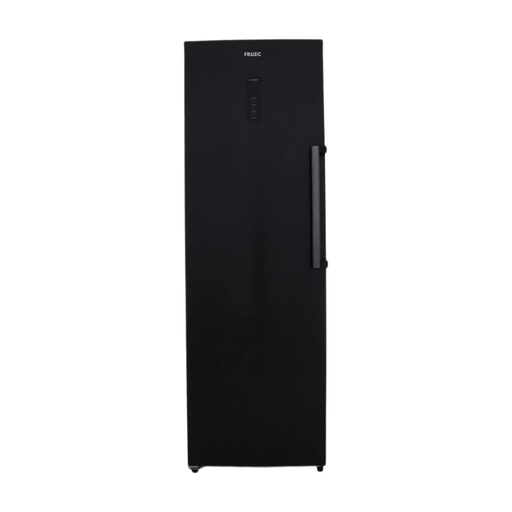 Image unavailable
A freestanding model for anyone looking to store more frozen food alongside portions of sauce.
274 litres; No Frost; energy class C.
 Image unavailable
An under-counter model for anyone looking to store extra portions separately in a more compact space.
87 litres; energy class B. No No Frost; according to the user instructions, defrost manually when a lot of frost has built up.
 Image unavailable
A chest freezer for storing sauce and other frozen food as a separate stock.
95 litres; energy class E; switches between fridge and freezer modes; removable basket.
Cool the sauce quickly, divide it into small, well-sealed portions and put them in the fridge or freezer within two hours. The Netherlands Nutrition Centre recommends a freezer that can be set to −18 °C.
First check the climate class of the exact model: this indicates the range of ambient temperatures in which the appliance works properly. Follow the model-specific instructions on where to place it, too.
Don’t assume that defrosting is unnecessary. Liebherr describes SmartFrost on the CFe 2080 as a feature that reduces frost build-up; Bosch describes No Frost on the GSN36VLFP as a feature that prevents ice forming. These are manufacturers’ descriptions of specific models.
Compare the stated consumption in kWh per year for the exact models. Milieu Centraal recommends taking energy consumption into account when choosing; an energy class alone doesn’t tell you how many kWh a model uses per year.