
Cook with a narrow kitchen
You want to freeze portions of carrots without ventilation clearance, an open door or pulled-out drawers getting in the way.


Start by checking the available width and depth, ventilation clearance and space for the door to open. For small portions of blanched carrots, a freestanding table-top model may fit, provided it can be positioned in line with the manual. If you often freeze larger quantities at once, also compare the freezing capacity in kg per 24 hours and the drawer capacity. Then weigh up annual energy consumption against noise and defrosting requirements. An integrated model is only an option if the housing space and installation requirements are suitable for that exact model.
You want to freeze portions of carrots without ventilation clearance, an open door or pulled-out drawers getting in the way.
You regularly blanch lots of carrots at once and want enough specified freezing capacity per 24 hours, as well as storage space.
You compare annual energy consumption and noise, and consider how much manual defrosting you are willing to do.
| What to consider | What should you check? | Who is this important for? |
|---|---|---|
| Positioning | Measure the width and depth, ventilation clearance, door opening and space needed to pull out the drawers. Follow the manual for the exact model. | I want to position the freezer without obstructing the walkway or the use of the door and drawers. Around 36% of consumers put positioning first. |
| Freezing cycle | Compare the quantity of carrots you freeze at a time with the specified freezing capacity in kg per 24 hours and the available drawer capacity. | If I freeze a larger harvest in one go, I want to know whether the specified capacity is suitable. Around 29% of consumers focus mainly on the quantity per cycle. |
| Energy and noise | Compare annual consumption in kWh and the specified noise level in dB for models with a suitable capacity. | Alongside finding the right size, I want to take energy use and noise into account. Around 21% of consumers prioritise these factors. |
| Defrosting | Check whether the model needs manual defrosting, has LowFrost or offers NoFrost. Also compare its size, capacity and energy consumption. | I want to spend less time defrosting by hand without losing sight of the space available and the capacity I need. Around 14% of consumers prioritise defrosting requirements. |
Ventilation clearance and an open door also take up space. For example, the Inventum VR550 manual specifies 10 cm of clearance around the model.
Check the installation requirements for the exact model and measure the depth, door swing and remaining walkway too.
An appliance that does not fit usefully in the chosen spot can obstruct access to the kitchen or make the drawers difficult to use.
Litres indicate storage space; kg per 24 hours is the specified quantity the appliance can freeze in that period.
Compare the quantity of carrots in each blanching batch with the freezing capacity, and check that packaged portions will fit in the drawers.
You may need to divide a larger quantity across several freezing cycles.
The EU energy label also shows annual consumption in kWh and freezer capacity. Choosing a suitable size is still important for the food you want to store.
Compare models with a suitable capacity and work out any running costs using your own tariff.
A freezer uses electricity while in operation; your personal costs depend on its consumption and your tariff.
According to AEG, the AEG ATB48E1AW has LowFrost and needs to be defrosted manually. The Liebherr FNe 1404 is marketed as a NoFrost model.
Check the defrosting system on the exact model, and do not let it distract you from checking the dimensions and energy consumption.
Manual defrosting takes time and means you will need a plan for your frozen portions while you do it.
The Inventum VR550 is a freestanding table-top model, 55 cm wide, with 88 litres of freezer space.
The Bosch GTV15NWEB is an alternative table-top model, 56 cm wide, if its dimensions and the required installation clearance will fit.
The FNe 1404 is a table-top model, 55 cm wide, for those who value NoFrost.
The AEG ATB48E1AW is a freestanding table-top model, 56 cm wide, with LowFrost.
The BREMEN132-040BW is a compact table-top model. A Dutch retailer lists a width of 55 cm and a capacity of 87 litres.
This selection includes freezers for different storage needs, including table-top models and an integrated model. Check the dimensions, installation requirements and freezing capacity of each model.
 No image available
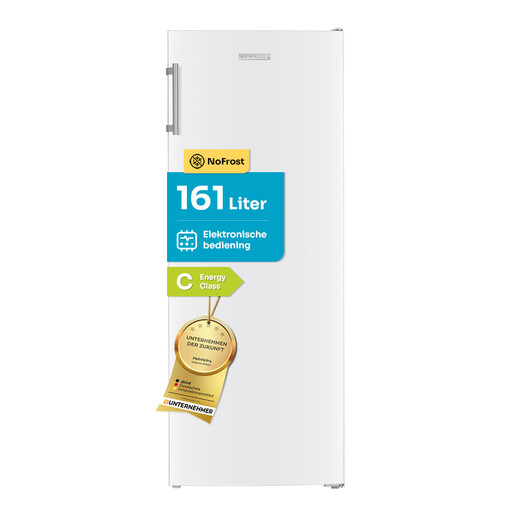
The capacity may suit anyone looking to store more portions of carrots; measure the available space first.
161 litres; three freezer drawers and two trays; No-Frost; C energy label.
The title also mentions a reversible door hinge, an alarm and a temperature range of -14°C to -22°C.
 No image available
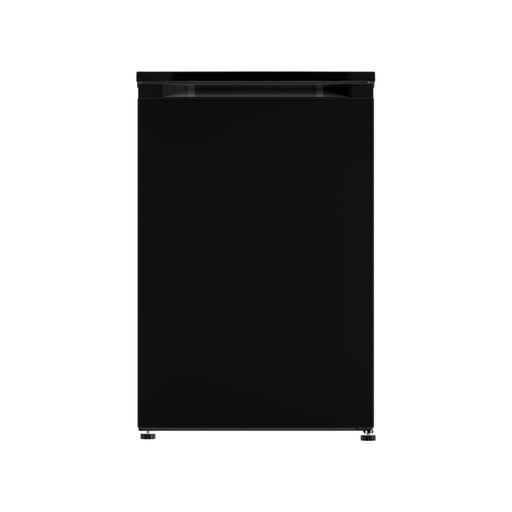
This table-top model may suit you for storing portions, if its external dimensions and manual defrosting fit your kitchen and your needs.
85 litres; three drawers; specified freezing capacity of 4,5 kg per 24 hours; 105 kWh per year; 39 dB.
Dimensions: 84,5 × 54,9 × 55,7 cm. Reversible door; manual defrosting.
 No image available
The three drawers can help you organise portions; check that you have room for the appliance and bear in mind that it needs manual defrosting.
87 litres; three drawers; specified freezing capacity of 4,4 kg per 24 hours; 84 kWh per year; 37 dB.
Width 550 mm and depth 580 mm; reversible door. Defrost manually when a lot of frost has built up.
 No image available
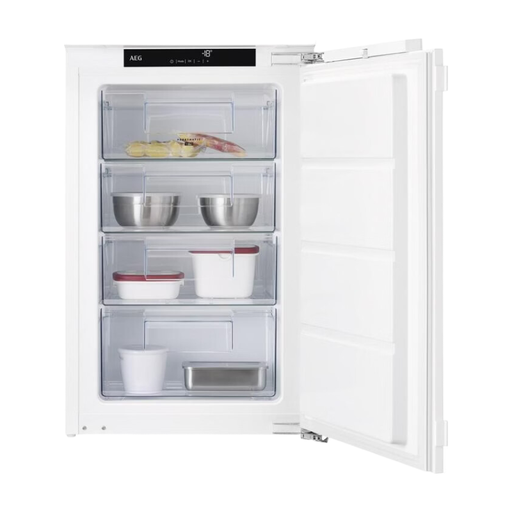
This integrated model is only an option if the housing space and installation requirements are suitable for this model.
98 litres; four drawers; specified freezing capacity of 4,5 kg per 24 hours; 34 dB.
The title mentions Frost Free; the product description refers to Frostmatic.
 No image available
The included storage basket can be useful if you want to keep portions separate; check that the shape and controls suit the space available.
98 litres; storage basket; adjustable temperature control; adjustable feet.
The product name mentions a counterbalanced lid and an E energy label.
Wash the carrots and, if needed, cut them into evenly sized pieces. Blanch them briefly, cool them straight away in iced water, drain and dry thoroughly. The Voedingscentrum generally recommends blanching for 1–3 minutes, depending on the vegetable, piece size and desired softness. Then freeze the carrots in portions.
According to the Voedingscentrum’s storage guide, you can keep carrots in the freezer for one year; after that, their quality may deteriorate. The Voedingscentrum recommends briefly blanching carrots before freezing them.
Only if the installation requirements for the exact model allow it. For example, the Inventum VR550 manual specifies 10 cm of clearance all around for ventilation. A removable top does not automatically mean that an appliance will fit in every enclosed space.
Compare the annual consumption in kWh on the EU energy label for models with a suitable capacity. You can multiply this figure by your own electricity tariff to estimate your personal costs; the label alone does not show what those costs will be.
Check whether the carrots are still frozen solid: according to the Voedingscentrum, food in this condition can go back in the freezer. If the outside has softened, it is best not to refreeze it. Keep it in the fridge and eat it within two days.