
Occasional freezer user
You mainly want to store a few portions of crumble after a trip to the farmers’ market. Check whether your existing freezer space is sufficient before buying another appliance.


If you only freeze fruit crumble occasionally, start by checking whether your existing freezer compartment has enough space and can reach −18 °C. If it doesn’t, a compact table-top freezer may be all you need. If you regularly bring home larger quantities from the farmers’ market, it’s worth comparing a larger upright freezer or chest freezer. Consider the stated annual energy consumption and the space you have available. NoFrost reduces the need to defrost models that feature it, but it doesn’t automatically make one freezer a better fit than another. Voedingscentrum advises cooling leftovers quickly and storing them in a well-sealed container, so check that your packaging or dish will fit in the layout you choose.
You mainly want to store a few portions of crumble after a trip to the farmers’ market. Check whether your existing freezer space is sufficient before buying another appliance.
You often store larger quantities as well as crumble, so you’re comparing the usable capacity and layout of an upright freezer or chest freezer.
You have limited space for an appliance or want to keep an eye on energy use. Compare the dimensions, energy label and stated annual energy consumption of models that suit your needs.
Choose this if: your current freezer compartment can reach −18 °C and has room for cooled portions in well-sealed containers.
Keep in mind: how much free space is available. According to Voedingscentrum, one- and two-star freezer compartments do not meet the −18 °C recommendation.
Choose this if: you regularly store small portions and have little floor space available.
Keep in mind: the external dimensions and drawer layout. Check that your container or oven dish will fit.
Choose this if: after several trips to the farmers’ market, you want to store larger quantities and keep other items separate.
Keep in mind: how much space you’ll need. Compare the energy label of the exact model, too.
Choose this if: you store large quantities or bigger packages and have enough floor space.
Keep in mind: how easy it is to reach smaller portions, and which defrosting system the exact model uses.
| What to consider | What to check before buying | Who is this most important for? |
|---|---|---|
| Space for portions | Measure the space for the appliance and your container. Check the drawer layout and whether the freezer compartment can reach −18 °C. | After a trip to the farmers’ market, I want to store a few portions without adding a larger appliance; around 33% of consumers say compact space for portions is their main buying priority. |
| Larger farmers’ market haul | Compare capacity in litres with the stated freezing capacity in kg per 24 hours; these are different measurements. | If I freeze larger quantities after several trips to the farmers’ market, space and layout matter most; around 27% of consumers prioritise this need for storage. |
| Energy consumption | Compare the energy label and stated kWh per year of models with a suitable capacity. | I don’t want to choose a size larger than I need, so I pay attention to annual energy consumption; around 20% of consumers put energy use at the top of their list. |
| Defrosting and access | Check whether the model you’ve chosen has NoFrost and whether its layout makes portions easy to reach. | If I often take out small portions, I want to find them easily and spend less time defrosting; around 20% of consumers prioritise easy maintenance above all else. |
External dimensions and usable layout vary from one model to another. The stated capacity alone won’t tell you whether a container or dish will fit in a drawer.
Measure both the space where the appliance will go and the portions in their containers. Check the drawer layout, door clearance and required installation space for the exact model.
A freezer uses energy between trips to the farmers’ market, too. Milieu Centraal recommends considering energy consumption when choosing a freezer.
Compare the energy label and kWh per year of suitable models. Only calculate your own energy costs using your own tariff.
These terms don’t mean the same thing. Liebherr lists NoFrost for the FNd 4234 and SmartFrost for certain chest freezers, so check the feature on the exact model. Milieu Centraal notes that the energy label for freezers was revised on 1 March 2021.
Read the current energy label and the description of the defrosting system for the model you’re considering. Don’t compare older label ratings directly with current ones.
The VR550 is a specific table-top model to compare if you’re looking for a compact, freestanding freezer.
The GTV15NWEB is a table-top model to include when comparing compact freestanding freezers.
The FNd 4234 is an example of a larger NoFrost upright freezer; a chest freezer is another option for storing larger quantities.
This selection ranges from compact freestanding freezers to larger models. First, compare the space you have and the internal layout with the amount of crumble and any other farmers’ market finds you want to store.
 No image available
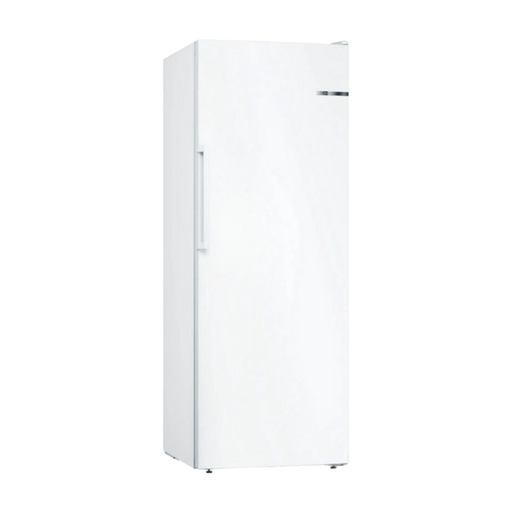
A larger upright freezer to compare if you want to store supplies from several trips to the farmers’ market as well as crumble.
According to the product description: 200 litres of capacity, a freezing capacity of 16 kg per 24 hours and NoFrost. The description also mentions a −18 °C setting and SuperFreeze.
 No image available
A compact freestanding model to compare if you’re looking for extra room for portions.
According to the product description: 87 litres of capacity, a four-star rating, a stated freezing capacity of 5 kg per 24 hours and No Frost. The temperature setting is switchable; for this use, select the freezer setting, with −18 °C as the recommended temperature.
 No image available
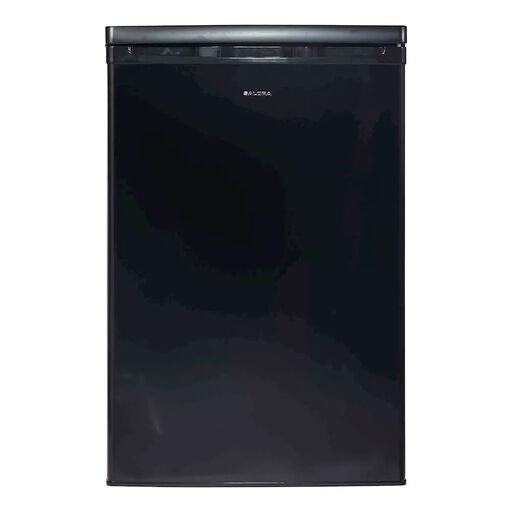
A freestanding model to compare if you want to keep portions separate in drawers.
According to the product description: 91 litres of capacity, four transparent drawers, a temperature range of −12 °C to −20 °C and a freezing capacity of 4,4 kg per 24 hours. The description states that this model does not have No Frost.
 No image available
A compact freestanding model to compare if you’re looking for a smaller freezer with several compartments.
According to the product description: 60 litres of capacity, three freezer compartments and a freezing capacity of 6 kg per 24 hours. The temperature range is −12 °C to −20 °C; the description states that this model does not have No Frost.
 No image available
A model to compare if you’re looking for extra capacity and its switchable setting suits your needs.
According to the product description: 122 litres of capacity, No-Frost and a freezing capacity of 5,5 kg per 24 hours. The product sheet lists −18 °C as the recommended setting for the freezer compartment; select freezer mode for this use.
Let the crumble cool quickly first, then store it in a well-sealed container in the fridge or freezer. Voedingscentrum advises not leaving leftovers out of the fridge for more than two hours. How long a particular crumble will keep also depends on its ingredients.
Set the freezer compartment to −18 °C. According to Voedingscentrum, one- and two-star freezer compartments can’t reach this temperature. Check the settings and specifications of the appliance you use.
Voedingscentrum recommends defrosting in the fridge as the best method for foods including leftovers. You can also defrost food in the microwave. Follow any instructions on the packaging.
Before installing it, check the permitted ambient temperature range and ventilation requirements for the exact model. A freezer that’s suitable for a kitchen isn’t necessarily suitable for a cold garage.
Household fridges and freezers must meet EU energy labelling requirements. EUR-Lex states that, for online sales, the seller must clearly display the electronic label and product information sheet. According to the Dutch government, a manufacturer’s or seller’s guarantee is in addition to the statutory guarantee. When you buy a new, similar appliance, the retailer must take back your old appliance under the old-for-new scheme.