
Market-goer freezing a fresh batch
You blanch your peas after buying them and want to freeze the batch without exceeding the appliance’s stated freezing capacity.


Choose a freezer based on the amount of peas you want to freeze fresh at a time. To do this, check the model’s freezing capacity in kg/24 hours, not just its volume in litres. A table-top freezer may suit a smaller space and smaller batches, while an upright freezer or chest freezer offers a different way to store larger stocks. Also compare annual energy consumption, installation requirements and maintenance.
You blanch your peas after buying them and want to freeze the batch without exceeding the appliance’s stated freezing capacity.
You want to store portions of peas, but the space available makes the overall dimensions, door opening and drawer layout important.
You regularly store larger quantities of vegetables and weigh up the convenience of drawers against the storage space offered by a chest freezer.
When choosing a freezer for blanched peas, your priorities may differ: handling a fresh batch, finding a suitable spot, keeping track of year-round running costs or making room for a larger stock.
A good fit if: you have limited space and mainly freeze smaller batches. According to their manufacturers, the Inventum VR550 and ETNA VV856WIT each have a freezing capacity of 4 kg/24 hours.
Consider: storage space is more limited; according to ETNA, the ETNA VV856WIT has neither FastFreeze nor an anti-frost function.
A good fit if: you want to store several batches and other groceries in drawers. Bosch states that the GSN36VLCG has 334 litres of freezer capacity and a freezing capacity of 16 kg/24 hours.
Consider: check the height, width, depth and annual energy consumption of the exact model; the figures listed apply to the Bosch GSN36VLCG.
A good fit if: you regularly store a lot of market produce and have space for a freezer with a top-opening lid. Liebherr states that the CFd 2505 Plus has a total volume of 359 litres.
Consider: an upright freezer with drawers is generally easier to search through; Liebherr describes StopFrost on this model as reducing frost build-up, not as No Frost.
| What to consider | What should you check? | Who should consider this? |
|---|---|---|
| Freezing capacity | Compare your largest usual batch in kg with the stated freezing capacity in kg/24 hours. Also check whether the exact model has a fast-freeze function. | After a trip to the market, I want to know how many fresh peas my freezer can handle according to its specifications; around 36% of consumers prioritise freezing capacity for a fresh batch. |
| Finding the right spot | Measure the height, width and depth, and allow room to open the door or lid. If necessary, check whether the door can be reversed. | In a small kitchen, I want to make sure the freezer fits and is easy to access; around 29% of consumers prioritise finding a suitable place for it. |
| Energy consumption and maintenance | Compare the kWh/year consumption of models that otherwise meet your needs. Check whether each model has No Frost, a frost-reducing function or no anti-frost function. | For year-round use, I want to take energy consumption and the maintenance needed to defrost the appliance into account; around 21% of consumers prioritise these factors. |
| Storage space and access | Check the stated freezer volume and the layout, including drawers, baskets or a chest. Check the freezing capacity separately if you plan to add a lot of fresh food at once. | For stock from several market trips, I want enough space and to be able to find my portions; around 14% of consumers make storage space their top priority. |
The volume in litres doesn’t tell you how many fresh peas a model can freeze in 24 hours according to its specifications. A fresh batch that exceeds the stated capacity may raise the temperature of food that’s already frozen.
Compare both the volume and freezing capacity in kg/24 hours with the amount you usually bring home after a trip to the market.
The permitted ambient temperature varies by model. Beko states that the FNE1074N can operate down to −15 °C; check the requirements for the exact model before choosing an unheated space.
Compare the appliance’s minimum ambient temperature with the temperature in the spot you have in mind.
Liebherr describes StopFrost on the CFd 2505 Plus as a function that reduces frost build-up. This isn’t the same as No Frost, which Bosch lists for the GSN36VLCG reviewed here.
Check the maintenance feature against the full model number, and don’t assume that reduced frost build-up guarantees frost-free use.
A freezer also uses electricity between trips to the market. The energy label shows its annual consumption in kWh.
Compare the kWh/year of appliances that meet your storage and freezing capacity needs, and use your own electricity tariff to work out the cost if you wish.
The VR550 is a table-top freezer with three drawers. Inventum states that this model has a capacity of 88 litres.
According to ETNA, the VV856WIT is a table-top freezer with a capacity of 85 litres and three drawers.
According to Beko, the FNE1074N is a table-top freezer with No Frost and 86 litres of storage space.
The GSN36VLCG is an upright freezer. Bosch states that it has 334 litres of freezer capacity and No Frost.
According to Liebherr, the CFd 2505 Plus is a chest freezer with a total volume of 359 litres.
These models are suited to freezing fresh batches and storing portions. They include upright freezers, table-top models and a chest freezer, giving you different styles to compare.
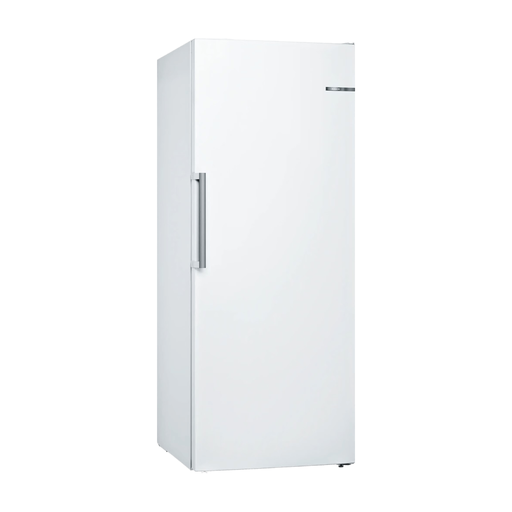 No image available
An upright freezer for storing a larger stock across several compartments.
The product title lists a capacity of 328 L and energy class C. Check the freezing capacity of this version to make sure it can handle your largest fresh batch.
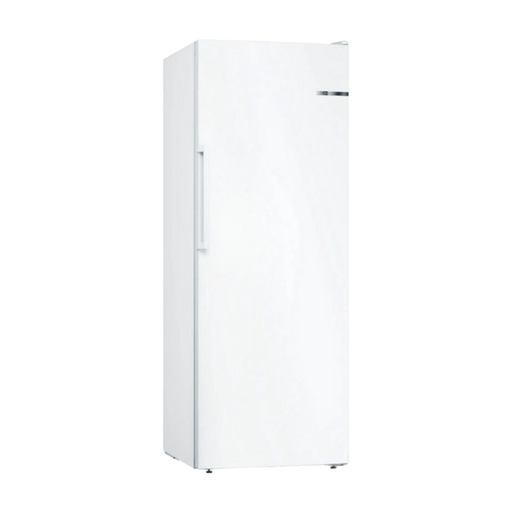 No image available
A freestanding upright freezer to consider if you want to store portions in a cabinet-style model.
Check the freezing capacity and volume of this version before deciding whether it suits your fresh batch and storage needs.
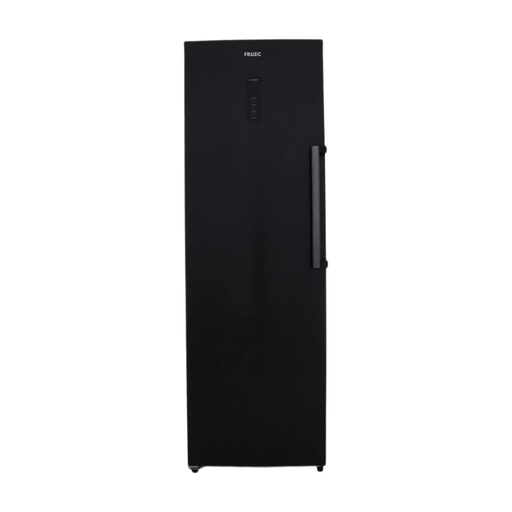 No image available
A freestanding upright freezer for comparing larger storage capacity with No Frost.
The product title lists 274 L, energy class C and No Frost. Check the freezing capacity of this version if you plan to add a lot of peas at once.
 No image available
A table-top freezer to consider if space is limited and you only need to store a smaller stock.
The product title lists 87 L and energy class B. According to the product information, you’ll need to defrost it manually when frost builds up.
 No image available
A chest freezer to compare if you want to store your food in a model with a top-opening lid.
The product title lists 95 L, a removable basket and a defrost drain. Leave enough space to open the lid.
The Voedingscentrum recommends briefly blanching peas. Then cool them quickly in iced water, drain, dry thoroughly and freeze in portions. Blanching times vary by vegetable, so follow suitable preparation instructions for peas.
The Consumentenbond recommends −18 °C as the ideal freezer temperature. The Consumentenbond also notes that setting the temperature lower uses more energy.
No, don’t assume this is possible just because of the type of freezer. Beko states that the FNE1074N operates down to −15 °C; Liebherr lists FrostProtect down to −15 °C for the CFd 2505 Plus. Check the requirements for the exact model and the temperature in the spot you have in mind.
Compare the model-specific consumption in kWh/year on the EU energy label of appliances that meet your storage and freezing capacity needs. You can multiply this figure by your own price per kWh; actual consumption may differ from the standard test result.
According to the Rijksoverheid, you’re entitled to a product that works properly. The Netherlands has no fixed statutory guarantee period, and the retailer is your point of contact if a product is faulty. For many eligible online purchases from a business, you have a 14-day cooling-off period. Also check the delivery, installation and returns terms for the specific appliance.