
Cooking one large batch for the community
You prepare a large amount of stock in advance and want to know how many cooled portions the freezer can actually freeze per batch.


For a large quantity of vegetable stock that you want to freeze in one or a few batches, a chest freezer is a good choice if you have enough floor and lid clearance. An upright freezer with drawers makes it easier to find individual portions, while an under-counter freezer is best for a smaller quantity when space is limited. Alongside capacity, compare the exact model’s freezing capacity with the quantity you plan to freeze per batch, and check the space available, energy consumption and permitted ambient temperature. The Voedingscentrum recommends setting your freezer to −18 °C or colder and cooling prepared stock quickly.
You prepare a large amount of stock in advance and want to know how many cooled portions the freezer can actually freeze per batch.
You store stock for different dishes or collection days and want to label containers and find them again without having to search.
You want to put the freezer in a small kitchen or possibly a cold storage room, and are looking for a suitable size and temperature range.
A good choice if: you want to freeze a large amount of cooled stock in one or a few batches and have space for a lid that opens upwards.
Keep in mind: individual containers may be less easy to reach; baskets and labels can help you find portions.
A good choice if: you want to store separate, labelled portions neatly for different cooking or collection times.
Keep in mind: check that your containers fit in the drawers; capacity alone doesn’t tell you how much fresh stock the appliance can freeze per batch.
A good choice if: you’re freezing a limited number of portions and floor or cupboard space is the deciding factor.
Keep in mind: check the capacity, freezing capacity, container sizes and permitted ambient temperature for the exact model.
| Buying concern | What to look for when buying | For which consumers |
|---|---|---|
| Freezing a batch in time | Estimate the quantity per batch and compare it with the exact model’s freezing capacity in kg/24 hours. Also check the usable capacity. | If I want to divide a large pan into portions, I want to know whether I can freeze them all in one batch. Around 36% of consumers say batch freezing is their main buying concern. |
| Finding portions | Compare the number and size of the drawers with your containers; label the contents and freezing date. | For different dishes or collection times, I want to be able to take out portions without moving other containers. Around 29% of consumers say keeping portions organised is their main concern. |
| Finding the right place for it | Measure the space, access route and clearance needed to open the door. If you’re using a cold storage room, check the exact model’s stated minimum ambient temperature. | If space is limited or I want to put the freezer in a cold storage room, the size and temperature range need to be suitable. Around 21% of consumers are mainly concerned about where to put it. |
| Energy use and maintenance | Once you’ve found a suitable size, compare the energy label and annual consumption in kWh/year. Also check the difference between No Frost and Low Frost. | If I want to keep using the freezer after the community meal, energy use and maintenance also matter. These are the main buying concerns for around 14% of consumers. |
Cool prepared stock quickly and don’t leave it out of the fridge for more than 2 hours. The Voedingscentrum recommends setting your freezer to −18 °C or colder. This is the storage temperature; it doesn’t guarantee that a large fresh batch will freeze straight away.
Capacity tells you how much you can store; freezing capacity in kg/24 hours helps you work out how much fresh stock a model is specified to freeze per batch.
Calculate the quantity of portions per batch and compare it with both specifications for the exact model. If necessary, divide a large quantity into smaller portions and freeze them over several batches.
A lower freezing capacity may mean you’ll need to split the preparation over several batches.
Low Frost isn’t the same as No Frost. For example, Tomado lists the TCF1981W as Low Frost, not No Frost.
Check the features and maintenance instructions for the exact model before choosing.
Allow time for defrosting if needed.
The permitted ambient temperature can vary between models; a suitable size alone doesn’t mean an appliance is suitable for a cold space.
Compare the expected minimum temperature where you plan to put it with the figure given for the exact model, and measure the space needed to open the door or lid.
A freezer may continue to use electricity long after you’ve prepared for the community meal.
First check how much spare freezer space you already have. Then compare the annual consumption in kWh of models that meet your needs.
Factor in electricity use for as long as the appliance is switched on.
Tomado offers chest freezers in various sizes; the TCF1981W is one model to consider for a larger batch.
The VR1430W is a freestanding upright freezer with separate compartments for portions.
The CFc 1875 Plus is a chest freezer worth comparing if storage space and a potentially cold location are important to you.
The GTV15NWEB is an under-counter model to consider if you have a limited amount of stock and little space to put it.
The HSM22340 is a larger chest freezer worth comparing if you’re looking for more storage space.
This selection includes freezers and fridge-freezers for storing portions of vegetable stock. If you’re considering a fridge-freezer, compare the freezer capacity rather than just the total capacity, and check that each model’s freezing capacity is suitable for the quantity you plan to freeze per batch.
 No image available
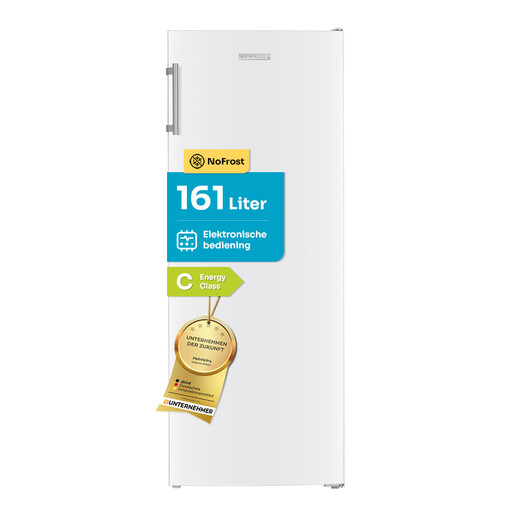
The separate compartments may be useful for storing labelled portions; check that there’s enough space for your containers.
The product information lists a capacity of 161 litres, three drawers, two trays, No Frost and a temperature setting from −14 °C to −22 °C.
 No image available
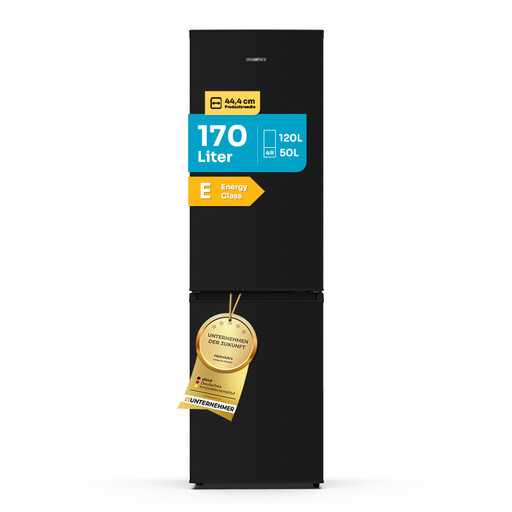
This combination may suit you if you want to freeze stock as well as store chilled food; bear in mind that the freezer space is smaller.
The total capacity is 170 litres, including 50 litres of freezer space. The description lists three freezer drawers and a maximum temperature of −18 °C for the freezer compartment.
 No image available
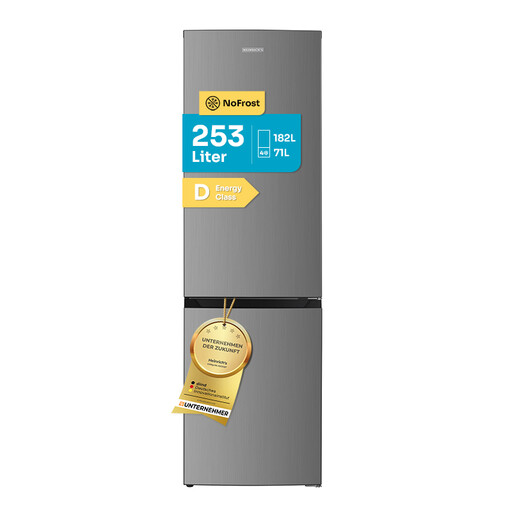
The separate freezer drawers can help you keep portions apart. Compare the freezer space with the quantity you want to store.
The total capacity is 253 litres, including 71 litres of freezer space. The description lists No Frost and a rotary control dial.
 No image available
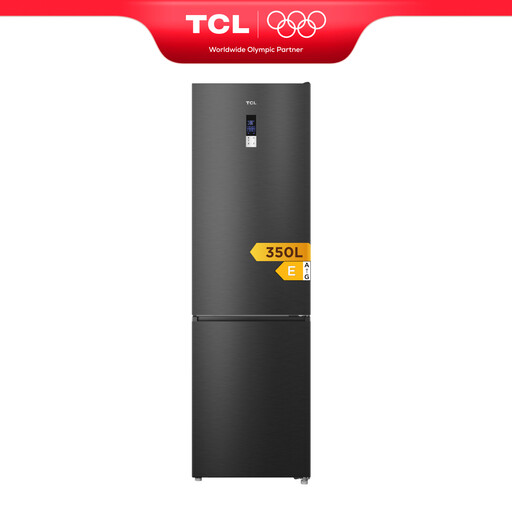
The stated freezer capacity can help you work out whether there’s room for your portions; also check the freezing capacity for a fresh batch.
The total capacity is 350 litres, with 102 litres of freezer space. The product information lists a variable zone and Multi Air Flow.
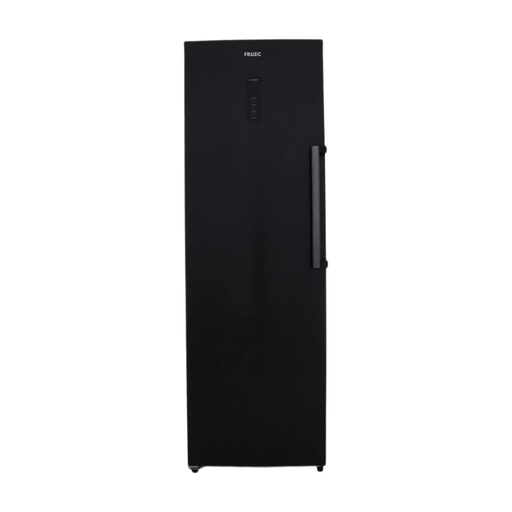 No image available
The stated capacity may suit a larger amount of stock; check the external dimensions and freezing capacity for your batch.
The product information lists a capacity of 274 litres, No Frost and digital temperature control.
Cool prepared stock quickly and don’t leave it out of the fridge for more than 2 hours. If necessary, divide a large quantity into small, sealed portions before putting them in the fridge or freezer. The Voedingscentrum recommends setting your freezer to −18 °C or colder; don’t freeze more fresh portions at once than the appliance can handle.
The Voedingscentrum recommends keeping stock in the fridge for no more than 2 days and in the freezer for up to 3 months. Its quality may deteriorate after that. Label each portion with its contents and freezing date.
Low Frost isn’t the same as No Frost. Tomado lists the TCF1981W as Low Frost, not No Frost; follow the manual for the model you buy when it comes to maintenance.
In the Netherlands, contact the seller if a product turns out to be faulty. The Dutch government states that there is no fixed statutory guarantee period; depending on the product and circumstances, your legal rights may entitle you to a free repair, replacement or refund.
It depends on how often and in what way you prepare and offer food; calling it a ‘community meal’ doesn’t determine this by itself. The NVWA states that a food safety plan is required for anyone who prepares and sells food at markets and events several times a year, and that food businesses must register. If necessary, ask the NVWA how your situation is classified; don’t automatically assume that a one-off private meal counts as a registered business.