If you only need to store a few packaged portions of dough and space is limited, an under-counter freezer is often a sensible place to start. For larger batches, an upright freezer with drawers or a chest freezer offers more storage, but each gives you a different level of accessibility. Compare the dimensions, freezing capacity in kg/24 hours and annual energy consumption of the exact model. If you plan to keep it in a cold garage or shed, check the specified ambient temperature too. The Netherlands Nutrition Centre recommends setting your freezer to −18 °C or colder.
Which type of freezer is right for you?
Planning dough storage in a small space
You freeze a few individually packaged portions after a trip to the market and want to check that the drawers and external dimensions will fit. The Dutch Consumers’ Association describes drawers as a way to make the contents of an upright freezer easier to reach.
Freezing larger batches
You compare capacity, accessibility and freezing performance if you regularly add large quantities of ingredients or portions of dough. The Dutch Consumers’ Association and Inventum offer useful points of reference for comparing layouts and model specifications.
Storing food in a cold utility space
You want to keep a freezer in a garage or shed, so you check the ambient temperatures specified for the exact model. The Dutch Consumers’ Association recommends checking the appliance’s climate class.
What should you look for in a freezer for pizza dough?
Under-counter freezer
Best for: a small number of individual portions and limited floor space.
Keep in mind: the available capacity and freezing performance; check that your packaging will fit in the drawers. The Dutch Consumers’ Association notes that access to drawers is a practical difference between an upright freezer and a chest freezer.
Upright freezer
Best for: storing several portions separately so you can find them in the drawers.
Keep in mind: the height and floor space required; compare the drawers, freezing capacity and energy consumption of each model. The Dutch Consumers’ Association describes drawers as easier to access than a chest freezer.
Chest freezer
Best for: a larger stock of food or awkwardly shaped portions, if you have room to open the lid.
Keep in mind: portions at the bottom are less easy to reach than items in drawers; a Low Frost model may still need defrosting from time to time.
Existing freezer space
Best for: using your current freezer if it has room for the packaged portions of dough and any new food you buy.
Keep in mind: don’t freeze too much at once. Milieu Centraal notes that two refrigeration appliances use more energy together than one suitably sized appliance.
| What to consider |
What to look for |
Who is this most relevant to? |
| Space for portions |
Measure the external dimensions and check that the packaging will fit in the drawers; compare the capacity too. |
If I’m only freezing a few portions, I want them to fit in my available kitchen space and be easy to store. Around 36% of consumers prioritise compact storage for individual portions. |
| Larger batches |
Compare the amount you plan to add at once with the stated freezing capacity in kg/24 hours, and consider how easy it will be to reach the portions. |
If I’m freezing several portions at once after a trip to the market, I want enough space and to be able to find them later. Around 29% of consumers prioritise space and accessibility for larger batches. |
| Energy use and maintenance |
Compare the stated consumption in kWh/year for models with a suitable capacity; check what maintenance No Frost or Low Frost requires too. |
If I’m considering an extra appliance, I want to factor in energy use and ongoing maintenance. Around 21% of consumers prioritise running costs and maintenance. |
| Where you’ll put it |
Measure how cold the space gets and check the climate class and the model-specific temperature limits. |
If my freezer needs to go in an unheated garage or shed, I want to know whether the model I choose is suitable for the temperature there. Around 14% of consumers say that placing a freezer in a cold utility space is their main requirement. |
Common pitfalls
-
Confusing capacity in litres with freezing capacity
Storage capacity in litres doesn’t tell you how much fresh food the manufacturer says a model can freeze in 24 hours. The Netherlands Nutrition Centre also recommends not putting too much in the freezer at once and freezing food in small portions.
Compare the size of your market haul with the stated capacity in kg/24 hours and divide the dough into small portions.
-
Assuming Low Frost needs the same maintenance as No Frost
Inventum states that the Low Frost VK1122W chest freezer needs to be defrosted periodically; for the No Frost VR1430W upright freezer, the manufacturer specifies different maintenance.
Check the technology and maintenance instructions for the exact model, not just the product range.
Defrosting takes time, and how often you need to do it depends on the model.
-
Choosing a freezer for the shed based only on a general description
The suitable ambient temperature varies from model to model. A cold garage or shed may fall outside the temperature range specified for your freezer.
Measure how cold the space gets and check the climate class and any additional temperature information for the exact model.
-
Buying a second freezer without checking your existing storage space
An extra appliance may use more electricity than one suitably sized appliance. Milieu Centraal notes that two refrigeration appliances use more energy together than one.
First check whether your current freezer can comfortably accommodate the portions you plan to store, and set it according to food storage advice.
Brands to compare
Inventum
Offers several types of freezer to compare, from under-counter models to chest freezers.
- Inventum lists a capacity of 88 litres and 4 kg/24 hours for the VR550; 161 litres, No Frost and 12 kg/24 hours for the VR1430W; and 293 litres and 14 kg/24 hours for the VK1122W.
- The manufacturer states that the Low Frost VK1122W needs to be defrosted periodically. These specifications are not an independent performance test.
Bosch
The GTV15NWEB is an example of an under-counter model with a stated capacity, freezing capacity and annual energy consumption.
- Bosch lists a capacity of 83 litres, a freezing capacity of 4.0 kg/24 hours and energy consumption of 164 kWh/year for this model.
- Bosch does not list No Frost for the GTV15NWEB; these features are not automatically found in other Bosch freezers.
Liebherr
The FNsddi 1624 is an example of a compact model with No Frost.
- Liebherr lists a capacity of 92 litres and No Frost for this under-counter model, and says it is suitable for ambient temperatures down to −15 °C.
- Check that the temperature limit and dimensions of this specific model suit the planned location.
AEG
The AGB332E2NW is an example of a larger upright freezer with No Frost.
- AEG lists a capacity of 226 litres, a freezing capacity of 16 kg/24 hours and energy consumption of 230 kWh/year for this model.
- The stated external dimensions are 1550 × 595 × 650 mm; check that the appliance will fit in your available space.
Beko
The B5RFNE294W is an example of a larger upright freezer with No Frost.
- Beko lists a capacity of 260 litres and energy class E for this model.
- Compare the specifications and energy class of the exact model with those of other freezers that meet your space requirements.
Freezer options at Joybuy
These Joybuy products include chest freezers and a fridge-freezer for storing packaged portions and larger stocks of food.
 No image available
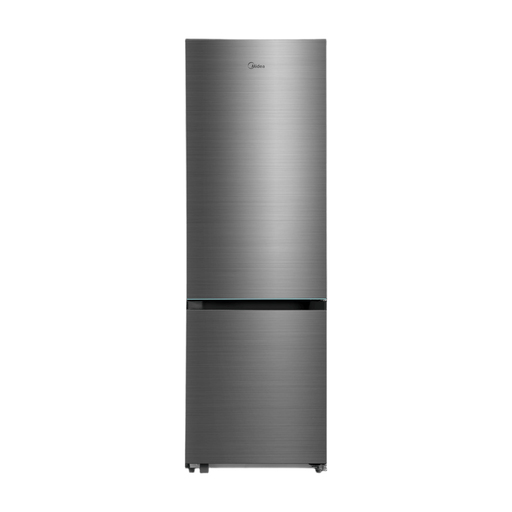
Midea MDRB457FGE46 fridge-freezer, 330 litres
The freezer compartment has two drawers for storing individual portions.
Freezer compartment: 98 litres; freezing capacity: 4.5 kg per 24 hours; stated energy consumption: 248 kWh/year; Total Frost Free; cabinet depth: 57 cm.
View at Joybuy
 No image available
AUCMA convertible chest freezer, 95 litres
A removable basket provides a place for smaller packages in this chest freezer.
Capacity: 95 litres; dimensions: 550 × 475 × 848 mm; energy class E; stated energy consumption: 165 kWh/year; seven thermostat settings. This model can be used as either a fridge or a freezer.
View at Joybuy
 No image available
TCL CF126EWE0NL chest freezer, 98 litres
The 98-litre capacity and included storage basket are worth considering if you want to store portions in a compact chest freezer.
The title lists energy class E and a counterbalanced lid.
View at Joybuy
 No image available
TCL CF182EWE0NL chest freezer, 140 litres
The 140-litre capacity and included storage basket could suit a larger stock of food.
The title lists energy class E and a counterbalanced lid; according to the product description, the lid stays open while you load the freezer.
View at Joybuy
 No image available
Comfee' 99L chest freezer
A removable basket can help keep smaller portions separate in this chest freezer.
Capacity: 99 litres; freezing capacity: 4.5 kg per 24 hours; energy class E; stated energy consumption: 169 kWh/year. The stated minimum ambient temperature is −15 °C.
View at Joybuy
Frequently asked questions
What freezer temperature should you use, and how much pizza dough should you freeze at once?
The Netherlands Nutrition Centre recommends setting your freezer to −18 °C or colder and not adding too much food at once. Divide the dough into small portions. If you’re freezing a large batch, compare the quantity with the model’s freezing capacity in kg/24 hours.
Can I store opened pizza dough for the same length of time as a pizza base?
Not necessarily. The Netherlands Nutrition Centre’s storage guide says an opened thin pizza base can be kept in the freezer for one month before its quality may start to deteriorate. This isn’t a set time limit for every recipe for homemade raw dough. If you’ve bought the dough, follow the storage advice on the packaging too.
Can you keep a freezer in an unheated shed?
It depends on the temperature there and the exact model. The Dutch Consumers’ Association recommends checking the climate class. Inventum specifies a minimum room temperature of 10 °C for the VR550, and says the VR1430W and VK1122W are suitable down to −15 °C.
Do freezers in the Netherlands need an energy label?
Yes. According to the Dutch government, freezers are among the appliances that must carry an energy label. Compare the stated consumption in kWh/year too: an energy class alone doesn’t show how much appliances with different capacities use each year.
Do you still have rights after the two-year manufacturer’s warranty ends?
You may do. According to the Dutch government, there is no fixed statutory warranty period in the Netherlands. What you can expect from a product of satisfactory quality depends on factors including the product and the circumstances. Report any fault to the seller. The manufacturer’s warranty is separate from your statutory rights.


