What should you look for when choosing?
Start by checking your existing freezer space and the containers you want to store. If you need an extra appliance, decide which type and size will suit your stock of food and the space available.
Existing freezer space
A good fit if: the containers fit without overfilling the compartment and the freezer section can reach at least −18 °C.
Trade-off: you don’t need an extra appliance, but the space available and type of freezer compartment limit what you can store.
Under-counter freezer with drawers
A good fit if: you want to find individual portions easily and the internal space suits the size of your containers.
Trade-off: drawers help you organise portions, but usable space varies between models; a model without NoFrost may need defrosting.
Tall upright freezer
A good fit if: an under-counter model doesn’t offer enough room for portions of curry and other frozen food, and you have enough height available.
Trade-off: compare the annual energy consumption and capacity of specific models with what you actually want to store.
Chest freezer
A good fit if: you want to store larger or awkwardly shaped items as well as portions, and have room to open the lid.
Trade-off: for small containers you reach for often, drawers may make it easier to stay organised.
| What to consider |
What should you check? |
Who is this important for? |
| Portions and batch size |
Measure your containers and compare them with the drawers and internal space. If you batch cook, compare the amount you usually freeze with the stated freezing capacity in kg/24 hours. |
If I batch cook, I want to know whether my containers will fit and whether I can freeze my usual batch at once. Around 36% of consumers prioritise having room for their portions and sufficient freezing capacity. |
| Installation space |
Measure the available space and check the door swing and ventilation clearance specified for the exact model. |
In a small kitchen, I want to be able to fit the freezer and open the drawers properly. Around 29% of consumers prioritise available space and easy access. |
| Energy consumption |
Compare the stated energy consumption in kWh per year and the capacity of the models you’re considering. |
If I buy a second appliance, I want to weigh up the extra storage against its energy consumption. Around 21% of consumers focus mainly on energy use. |
| Maintenance and layout |
Check whether the exact model has NoFrost, how many drawers it has and whether your containers will fit inside them. |
I want to find portions easily and avoid defrosting unnecessarily. Around 14% of consumers prioritise maintenance and an organised layout. |
Freezers on Joybuy
This selection of freezers on Joybuy ranges from compact models for portions to options with room for a larger stock of frozen food. For each model, check whether the adjustable temperature, internal space and installation dimensions suit your needs.
 No image available
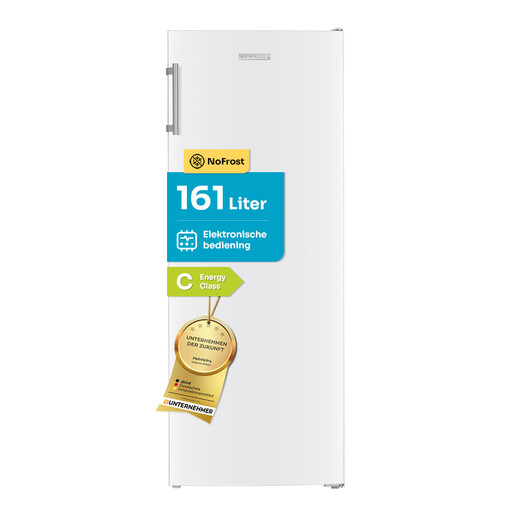
Heinrich’s freezer 161 L, No-Frost
The three freezer drawers offer a layout for storing portions separately.
161 litres; No-Frost; three freezer drawers and two drawers; temperature range −14 °C to −22 °C; energy class C.
View on Joybuy
 No image available
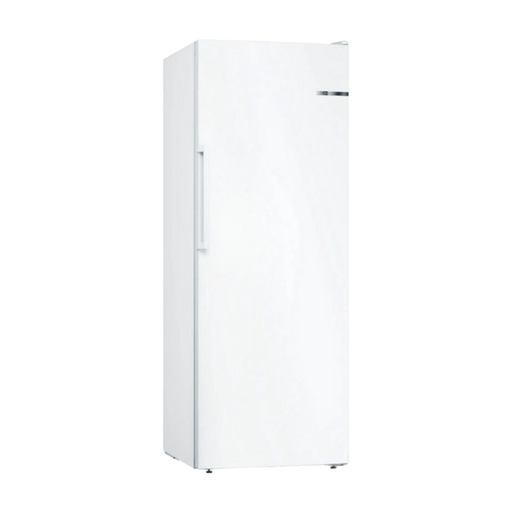
Bosch Series GSN29VWEV Series 4
The stated freezing capacity may be useful if you regularly want to freeze a larger batch of curry.
200 litres; NoFrost; freezing capacity 16 kg per 24 hours; the description lists a −18 °C setting and SuperFreeze.
View on Joybuy
 No image available
Frilec BREMEN138-NF-050DW
This under-counter model may suit you if you want to store portions in a compact space; compare the drawers with your own containers.
87 litres; No-Frost; freezing capacity 5 kg per 24 hours; four-star mode at a recommended −18 °C; switchable fridge and freezer function; energy class D.
View on Joybuy
 No image available
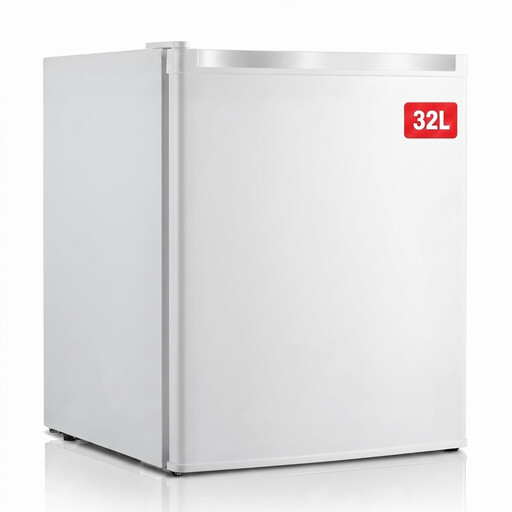
Compact upright freezer 32 L
The compact capacity may suit a small stock of food, provided your containers fit in the space available.
32 litres; seven temperature settings from −10 °C to −22 °C; removable glass shelves.
View on Joybuy
 No image available
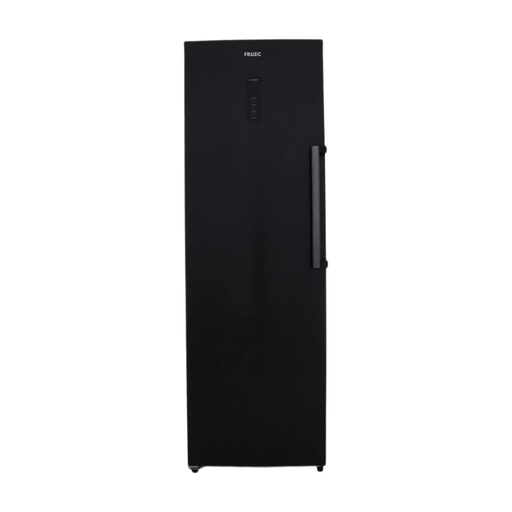
Frilec BREMEN295-NF-H-040CDI
This tall upright model is an option if you want to store more frozen food as well as portions of curry. Before buying, check that it can be set to at least −18 °C.
274 litres; freezing capacity 17 kg per 24 hours; No-Frost; digital temperature control; energy class C; height 185 cm.
View on Joybuy
Frequently asked questions
Can I freeze cooled leftover curry, and how long can I keep it?
Yes. The Netherlands Nutrition Centre lists curry as a leftover meal you can freeze. Cool leftovers quickly and refrigerate or freeze them within two hours. For frozen leftover meals, the Netherlands Nutrition Centre recommends a storage time of three months. Divide the curry into portions and date the containers.
How should I defrost and reheat one portion of curry?
According to the Netherlands Nutrition Centre, defrost the portion in the fridge or microwave, heat the curry thoroughly and eat it straight away. It’s best not to refreeze a leftover meal that has already been frozen and reheated.
Can an under-counter freezer go under my worktop or in a cold shed?
That depends on the requirements for the exact model and the conditions. For the Inventum VR550, the manufacturer specifies, among other things, 10 cm of clearance around the appliance, and the manual gives a minimum ambient temperature of 10 °C. Don’t apply that clearance or temperature limit to other freezers without checking first.
Who should I contact about a faulty product, and is there always a two-year legal guarantee in the Netherlands?
For a faulty product, the seller is your point of contact, according to the Dutch Government. There is no fixed two-year statutory guarantee period in the Netherlands; what you can expect from a product depends on factors including the product itself and the sales information. A manufacturer’s guarantee is provided in addition to this.
How do I compare freezer energy labels?
Compare the energy labels and stated annual consumption in kWh for the exact models. The European Commission provides information through EPREL about the energy performance of models covered by an EU energy label. Your electricity bill also depends on how you use the appliance and your electricity tariff.


