
Baker preparing lots of portions
You want to prepare a large batch of slices and need enough space and freezing capacity for everything you add in one day. Compare the dimensions of the packs with the freezer’s layout and stated freezing capacity.


For a small batch of packaged cake slices, an under-counter freezer may be enough if the packs fit in the drawers and the freezing capacity is sufficient. An upright freezer offers drawer space for extra stock, while a chest freezer may be better suited to large or unusually shaped packs. Measure the slices and the space available, compare freezing capacity and annual energy consumption, and follow the Voedingscentrum’s separate storage advice for plain cake and cream cake.
You want to prepare a large batch of slices and need enough space and freezing capacity for everything you add in one day. Compare the dimensions of the packs with the freezer’s layout and stated freezing capacity.
You’re looking for extra freezer space for a short time, but the appliance and the packs need to fit in the space available. Measure not only the outside, but also the drawers and the clearance needed for the door.
You’re freezing slices with different fillings or toppings and want to tailor the packaging, storage time and defrosting method to each type of bake. For example, the Voedingscentrum gives different storage times for plain cake and cream cake.
Choose this when: the packaged slices fit in the drawers and the batch is within the stated freezing capacity.
Trade-off: drawers make portions easy to reach, but may be too small for wide trays or irregularly shaped packs.
Choose this when: you want to store extra supplies as well as the slices, and be able to find individual portions easily.
Trade-off: the drawers need vertical space, and you’ll need enough room for the appliance and its door.
Choose this when: you want to freeze a large quantity or larger, unusually shaped packs, and have floor space available.
Trade-off: slices at the bottom are less easy to reach; baskets can help you organise smaller portions.
| What to consider | What should you check? | Who is this most relevant to? |
|---|---|---|
| Space for packaged slices | Count the portions and measure the packs; compare their dimensions with the drawers or open space inside the chest. | I want to know in advance whether all the slices will actually fit. Around 36% of consumers give usable space for portions the highest priority. |
| Size and installation space | Measure the height, width and depth, and check the doorway and permitted ambient temperature. | If space is limited or unheated, I want to know whether the appliance can be placed there. Around 29% of consumers focus mainly on size and installation location. |
| Freezing and storage | Compare the stated freezing capacity in kg per 24 hours with the amount you’ll add at once; follow the storage advice for the bake. | When freezing a large batch, I want to take both the quantity and type of bake into account. Around 21% of consumers prioritise freezing capacity and careful storage. |
| Energy use and maintenance | Compare the annual energy consumption of suitable models and check whether manual defrosting is needed. | If the freezer stays on after the meal, I also want to consider its energy use and maintenance. Around 14% of consumers give these points the highest priority. |
The Voedingscentrum recommends three months in the freezer for opened plain cake and one month for opened cream cake; quality may deteriorate after that.
Decide what type of bake you’re freezing and follow the relevant storage advice. If the bake needs to defrost in the fridge, allow time for defrosting and serving too.
The capacity in litres doesn’t tell you whether a tray or packaged cake slice will fit in a drawer. The layout also differs between drawers and the open space in a chest freezer.
Measure the packaged slices and check the internal dimensions and layout before choosing a type of freezer.
A freezer may stay on after the neighbourhood meal; the energy label shows its annual consumption in kWh.
Compare the energy use of models that can actually hold your batch, and consider whether you’ll use the extra space later.
Not every appliance is suitable for a cold environment. Consumentenbond warns that some freezers may struggle at ambient temperatures below 10 °C.
Check the permitted ambient temperature and installation instructions for the exact model before choosing an unheated shed.
The VR550 is an under-counter model with drawers; the VK952W is a larger chest freezer to compare if you need more space.
The FS166020 is a slim under-counter model to consider if width is an important factor.
The VV856WIT is an under-counter model with drawers, making it a relevant option if you want to store portions separately.
The GTV15NWEB is an under-counter model to compare with other freezers of a similar size.
The FNe 1404 is an under-counter model to compare if NoFrost is a factor in your decision.
These models include upright and chest freezers for packaged slices, larger packs and batches you want to freeze all at once.
 No image available
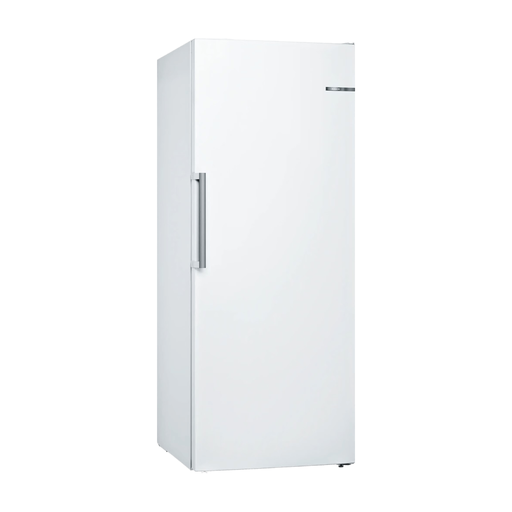
An upright freezer to consider if you’re freezing lots of slices at once or need space for larger packs.
The stated capacity is 328 litres and the freezing capacity is 23 kg per 24 hours. This model has NoFrost, an energy rating of C and a Big Box drawer.
The stated external dimensions are 176 × 70 × 78 cm; check that you have enough space for it.
 No image available
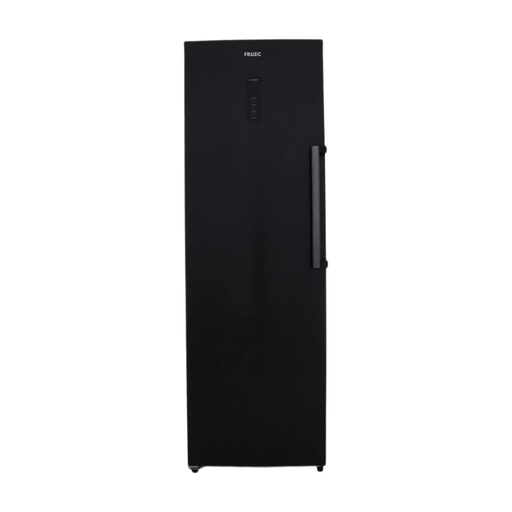
An upright freezer to consider if you want to store several packaged slices in a cabinet-style model and minimise manual defrosting.
The stated capacity is 274 litres and the freezing capacity is 17 kg per 24 hours. This model is listed as having No Frost and an energy rating of C.
 No image available
A chest freezer to consider for larger or unusually shaped packs, with a removable basket for smaller items.
The stated capacity is 95 litres. According to the product description, this model can be used as either a fridge or a freezer; its annual energy consumption is listed as 165 kWh.
Check in advance that the size and top-opening lid will work in your chosen space.
 No image available
The larger capacity may be useful if you want to store lots of slices or extra supplies and have floor space for a chest freezer.
The stated capacity is 291 litres and annual energy consumption is 226 kWh. The product description lists a removable basket and LED lighting.
Check that the external dimensions of 1100 × 597 × 872 mm will fit in your chosen space.
 No image available
A chest freezer to compare if you want to store packaged slices in a top-opening model and would find a basket useful for smaller items.
The product name lists a capacity of 140 litres and a storage basket. The description mentions a counterbalanced lid and adjustable temperature control.
Check the space required and make sure the lid can open fully.
It depends on the type of bake. The Voedingscentrum recommends three months in the freezer for opened plain cake and one month for opened cream cake; quality may deteriorate after that. For a sealed shop-bought product, follow the packaging instructions, and look up the relevant storage advice for other fillings.
Wrap cake to prevent it from drying out and freeze the slices in small portions. The Voedingscentrum advises setting the freezer to at least -18 °C; for products that need to defrost under chilled conditions, the recommended approach is to defrost them covered in the fridge. Allow enough time and follow the advice for the bake you’re serving.
Not without checking the specifications for the exact model. Consumentenbond warns that not every appliance is suitable for temperatures below 10 °C. Check the manufacturer’s guidance on permitted ambient temperatures and installation.
Yes. The Dutch government lists freezers among the appliances that must have an energy label. Use the rating and stated annual consumption in kWh to compare models with enough space for your packs.
According to the NVWA, food safety rules apply when food is sold at markets and events, including by private individuals. When selling unpackaged food, the required allergen information must be available to consumers. Informally sharing food for free is not automatically treated in the same way as selling it.