
Housemates sharing portions
You want everyone’s sealed, dated curry portions to be easy to find. So look at the drawer layout and make sure there’s room for everyone’s containers.


Start with the space available and the number of curry portions your housemates want to freeze at the same time. A table-top freezer with drawers can help keep portions separate, while a mini freezer offers less storage space and a chest freezer is better suited to larger shared batches. Check that the freezer can be set to −18 °C, compare the annual energy consumption of models that meet your space requirements, and agree how everyone will seal, date and store their containers.
You want everyone’s sealed, dated curry portions to be easy to find. So look at the drawer layout and make sure there’s room for everyone’s containers.
You want to store a few portions without having to fit in a large appliance. Measure the space and compare the usable capacity of mini and table-top models.
You regularly freeze lots of portions at once. In that case, capacity and the stated freezing capacity are worth considering, provided the appliance also fits the space available.
First compare the layout, dimensions and capacity that suit your portions. The EU energy label shows details including annual energy consumption and capacity, so you can compare suitable models on a like-for-like basis.
| What to consider | What to look for | Who should pay particular attention? |
|---|---|---|
| Finding portions | Check the number of drawers or baskets and measure your containers; leave space for a name and freezing date. | I want to find everyone’s sealed portions quickly in a shared freezer. Around 36% of consumers say staying organised is their main purchasing concern. |
| Fitting in the kitchen | Measure the external dimensions and the space needed to open the door; allow for the ventilation clearance specified in the manual. | If the kitchen has little free space, I want to know where the appliance can fit and whether its door can open. Around 29% of consumers prioritise finding a model with suitable dimensions. |
| Shared batches | Compare the capacity in litres and the stated freezing capacity in kg per 24 hours with the amount you add in each cooking session. | When we make lots of portions together, I want to know how much space there is and how much the appliance is specified to freeze per day. Around 21% of consumers prioritise batch capacity. |
| Energy consumption | Compare the annual consumption in kWh of models that offer enough space; calculate any costs using your own electricity tariff. | I want to be able to factor in annual energy consumption when we share the bills. Around 14% of consumers say energy consumption is their main purchasing concern. |
According to the Netherlands Nutrition Centre, freezer compartments with these ratings cannot be set to −18 °C.
Check that the appliance you choose can be set to −18 °C. Let the curry cool, divide it into portions in well-sealed containers, then refrigerate or freeze it within 2 hours of cooking, as advised by the Netherlands Nutrition Centre.
Drawers and baskets offer a different layout from a chest freezer. This can make it harder to find everyone’s portions in a shared kitchen.
Measure your own containers and check that they fit in the drawers or baskets. Also agree how everyone will label their portions with a name and date.
A compact size alone doesn’t tell you how much electricity a model uses each year. The EU energy label lists this separately from the capacity.
Compare the annual kWh consumption of models that all offer enough space for your portions.
NoFrost prevents frost build-up; cooling food promptly and storing it in sealed containers are separate steps.
Let the curry cool, then refrigerate or freeze it in a well-sealed container within 2 hours of cooking. Date the portions, whatever the defrosting function.
The VR550 is a table-top model with drawers, while the VK1122W is a larger chest freezer. They suit different needs; this is not a test result.
The FNe 1404 Pure is a table-top model with NoFrost, worth considering if you want to factor in frost build-up when choosing a model.
The TFM4401W is a compact option to consider if space is limited and you only want to store a few portions.
The GTV15NWEB is a table-top model you can compare with other suitable freezers for dimensions and energy consumption.
This selection at Joybuy includes compact, table-top and freestanding freezers. Compare the space available, the layout you need and the features that matter for your portions.
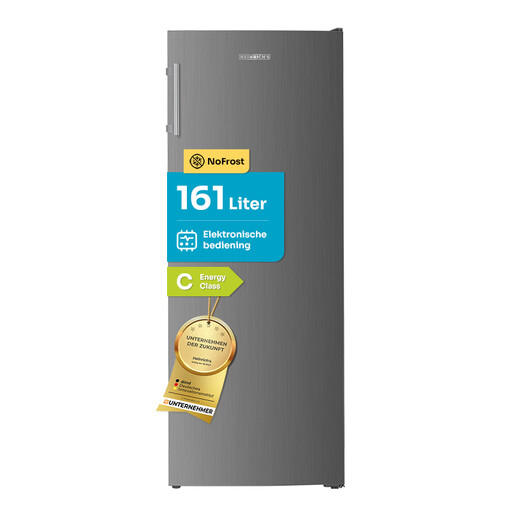 No image available
The three freezer drawers can help keep portions separate; check that your containers fit the layout.
The product name lists a capacity of 161 litres, three freezer drawers, No-Frost, energy rating C and a temperature range of −14 °C to −22 °C. Check that the setting you want is available for your needs.
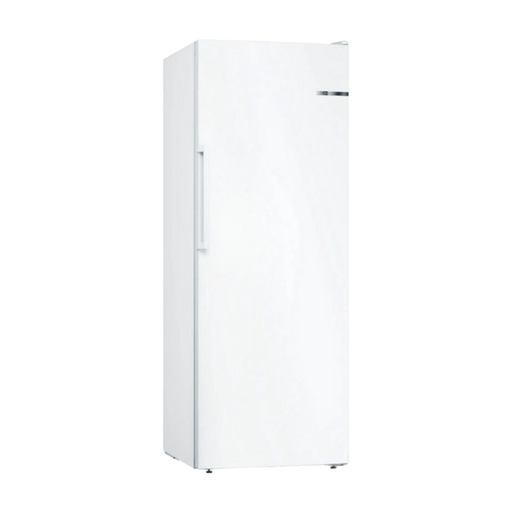 No image available
A freestanding model to consider if you’re looking for a separate appliance; measure the available space and doorway.
The product name describes a white freestanding freezer. Check the capacity and external dimensions of this model before you choose.
 No image available
A table-top model to consider if you’re looking for a smaller setup; check that the space available and drawer layout suit your containers.
The product name lists No-Frost and energy rating D.
 No image available
The freestanding 60-litre model may be worth considering if you measure the available space carefully first.
The product name lists an under-counter freezer with a capacity of 60 litres.
 No image available
The stated capacity can help you compare models for storing several portions; also check that the layout works for shared use.
The product name lists a capacity of 122 litres, a four-star freezer, No-Frost, energy rating E and a convertible fridge mode.
Yes, if you divide the curry into small, well-sealed portions and refrigerate or freeze them within 2 hours of cooking. The Netherlands Nutrition Centre recommends setting the freezer to −18 °C. Date the containers and don’t freeze more at once than the appliance can handle.
It depends on the model. Liebherr describes the FNe 1404 Pure as a NoFrost model; check the manual for other freezers. NoFrost doesn’t remove the need to keep containers and shared storage space clean.
Compare the annual kWh consumption on the EU energy label of models with enough capacity. For a personal cost estimate, multiply this figure by your own rate per kWh. According to the Government of the Netherlands, if there’s a problem with a product you’ve bought, the seller must offer a solution under the statutory guarantee.
The EU energy label shows details including the energy rating, energy consumption and capacity of freezers. For most consumer purchases made at a distance, the Government of the Netherlands says you have a 14-day cooling-off period, although there are exceptions.