
Batch soup cook
Freezes a large amount of cooled soup in one day for a community meal and compares the quantity with the stated freezing capacity.


For a big cooking day, first compare the amount of soup you want to freeze within 24 hours with the stated freezing capacity in kg/24 hours. Storage space in litres doesn’t tell you how much can be frozen in a day. Also check that your sealed portions will fit and that the freezer will fit in your chosen spot. Set it to −18 °C, cool the soup quickly and freeze it in small portions: extra freezer space is no substitute for safe food handling.
Freezes a large amount of cooled soup in one day for a community meal and compares the quantity with the stated freezing capacity.
Wants to find sealed portions easily and weighs up the available space and layout.
Has little room in the kitchen or an existing built-in space, so needs to consider the external dimensions, access route and available clearance.
A good fit when: you have little space and freeze only a few portions at a time, provided the specific model has enough capacity.
Bear in mind: the Consumers’ Association says table-top models have less usable space on average than upright freezers.
A good fit when: you want to organise portions in drawers and have enough floor and ceiling space.
Bear in mind: freezing capacity and storage volume vary by model, so compare them separately. The Consumers’ Association says drawers are easier to access than the contents of a chest freezer.
A good fit when: you want to store lots of packaged soup, have room for the lid to open upwards and can reach the contents from above.
Bear in mind: storage space doesn’t tell you how much can be frozen in 24 hours; portions at the bottom may be harder to reach.
A good fit when: your existing kitchen layout calls for an integrated appliance and the niche dimensions match the model.
Bear in mind: according to Electrolux, the Electrolux LYL3LE82R has a capacity of 101 litres and a freezing capacity of 4.6 kg/24 hours. Consider whether that suits the quantity you plan to freeze in a day.
| What to consider | What should you check? | Who is this important for? |
|---|---|---|
| Freezing capacity | Compare the amount of fresh soup and other food with the stated capacity in kg/24 hours. Also check whether the model can be set to −18 °C. | If I want to freeze a lot of soup in one cooking session, I need to know whether the quantity is within the appliance’s daily capacity. Around 36% of consumers prioritise freezing capacity for a large batch like this. |
| Space for portions | Measure your sealed containers and compare their size and stackability with the available internal space and layout. | If I want to store and find several portions, I look at the usable space and the layout of the drawers or baskets. Around 29% of consumers prioritise space for packaged portions. |
| Location and layout | Measure the space, access route and clearance needed to open the door or lid. For an integrated model, check the niche dimensions; for a cold room, check the permitted ambient temperature range. | With limited kitchen space or a fixed niche, I want to make sure in advance that the appliance will fit and remain easy to access. For around 21% of consumers, fit is their top buying priority. |
| Energy use and maintenance | Compare the annual energy consumption in kWh on the EU energy label for models with a suitable capacity. Check whether the model has No Frost, Low Frost or manual defrosting. | If I’ll keep using the freezer after the meal, I take energy use and defrosting into account when choosing. Around 14% of consumers start by looking at running costs and maintenance. |
A higher capacity in litres doesn’t automatically mean an appliance can freeze much more in 24 hours. Inventum lists a capacity of 293 litres and 14 kg/24 hours for the VK1122W, compared with 204 litres and 13 kg/24 hours for the VR1682W.
Compare both the litres and the kg/24 hours for the exact model with your portions and the amount you want to freeze in one day.
If the amount you need to freeze in a day exceeds the stated freezing capacity, you may need to split the portions across several freezing sessions.
A freezer isn’t a substitute for quickly cooling a large pan of soup. Don’t leave soup unrefrigerated for long, and don’t put hot food in with frozen food without preparing it first.
Cool the soup quickly, divide it into small sealed portions and put them in the fridge or freezer within 2 hours, as advised by the Netherlands Nutrition Centre (Voedingscentrum).
An appliance will continue to use electricity after the community meal. Extra space is only practical if you’ll use it for other food as well.
Compare models that suit your needs by their annual energy consumption in kWh, and consider how much freezer space you’ll need afterwards.
The Bosch models mentioned are freestanding upright freezers; compare the specifications for each model.
The models mentioned include both an upright and a chest freezer, so you can compare the layout and freezing capacity of each.
The Electrolux LYL3LE82R mentioned is an integrated freezer for a suitable kitchen layout.
The FNc 6625 mentioned is a freestanding NoFrost upright freezer; its stated dimensions and capacity can help you assess whether it will fit in your chosen spot.
These models include freestanding upright and chest freezers for freezing and storing portions of soup.
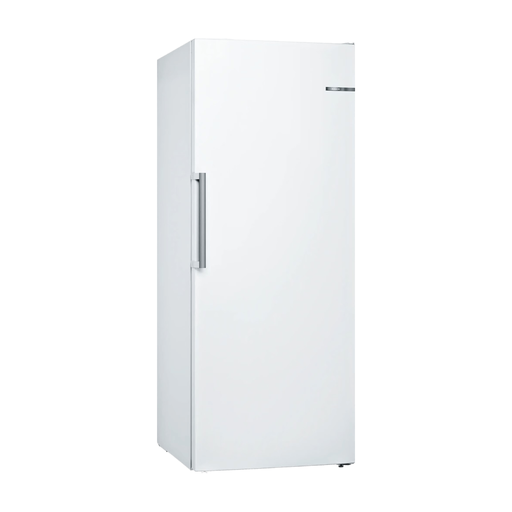 No image available
A freestanding upright freezer to compare if you want to store portions of soup in an upright model; check the capacity against the amount you need to freeze in a day.
The product name lists 328 L and energy class C.
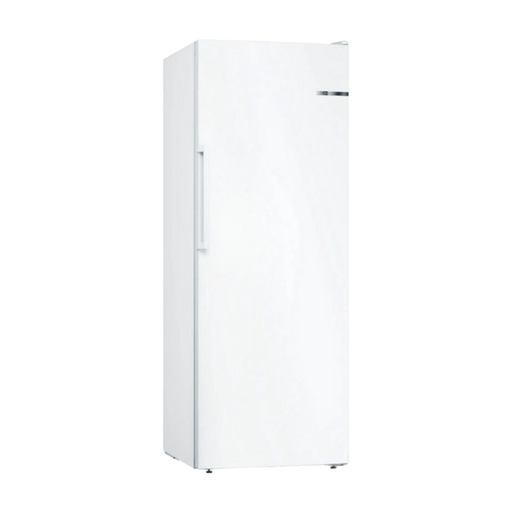 No image available
A freestanding upright model to consider if you want to organise portions of soup in an upright freezer; check the freezing capacity of this model.
The product name lists the model number GSN29VWEV and Serie 4.
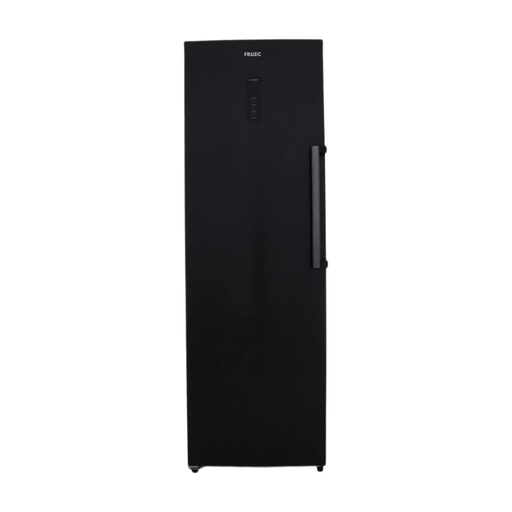 No image available
A freestanding upright freezer to compare if you want to store portions in an upright model; check whether its stated freezing capacity suits your cooking day.
The product name lists 274 litres, energy class C and No-Frost.
 No image available
A chest freezer to consider if an opening lid and chest-style layout suit your chosen spot; check the freezing capacity for the quantity you need to freeze.
The product name lists 95 L and energy class E.
 No image available
A chest freezer to compare if you want to store lots of packaged portions and have room for an opening lid; storage space doesn’t remove the need to check the freezing capacity.
The product name lists 291 L and energy class E.
Compare the amount you want to freeze that day with the freezing capacity of the exact model in kg/24 hours. Also check whether the sealed containers will fit in the remaining space, and freeze the soup in small portions.
Cool the soup quickly, seal the portions well and put them in the fridge or freezer within 2 hours. The Netherlands Nutrition Centre (Voedingscentrum) recommends keeping clear vegetable soup in the fridge for 2 days and in the freezer for 3 months; after that, its quality may deteriorate. Set the freezer to −18 °C.
Ideally, defrost the soup in the fridge; small portions can also be defrosted in the microwave. Don’t leave the soup out of the fridge all day, and heat it thoroughly before serving until piping hot, as advised by the Netherlands Nutrition Centre (Voedingscentrum).
That depends on how the event is organised and whether food is being sold. The NVWA says that anyone who prepares and sells food several times a year must use a food safety plan. It also sets out rules for private sellers at markets and events. The description ‘community meal’ alone doesn’t make it clear whether these rules apply.
For household freezers covered by the relevant EU rules, the energy label includes details such as the efficiency class, annual energy consumption, volume and noise information. The European Commission says the scale has run from A to G since 1 March 2021.