
Vandaag of morgen in huis

Kwaliteit gegarandeerd

Welkomstaanbiedingen ontgrendelen: GRATIS bezorging | Tot 80% korting | Gratis 30 dagen JoyPlus-proefperiode
Download de app
Buying a freezer seems straightforward until you discover how much models differ in size, layout, energy consumption and maintenance. A compact freezer can be useful in a flat, while a large freezer is better suited to a family that likes to stock up. A fridge freezer or chest freezer may also be worth considering, but only if it suits the available space and the way you plan to use it.
The product description does not always tell the whole story either. Pay particular attention to these common pitfalls:
Look at the net capacity in litres and then consider how the space is divided. A table-top freezer or compact freezer of around 30 litres is suitable for ice cream, a few frozen meals or extra supplies for a small household. For a family, several drawers are more practical, as you can sort food by type.
An upright freezer takes up relatively little floor space and often provides a clear layout. A chest freezer usually has one large open compartment, but items at the bottom are less readily accessible. For a small shop, catering premises or household that stores lots of bulk products, it may still be a logical choice.
The European energy label for refrigeration and freezing appliances ranges from A to G. Alongside the energy class, always compare the stated annual consumption in kWh. The actual cost depends on usage and your electricity tariff, but the kWh figure provides a useful starting point.
Also check the ambient temperature range for which the appliance is suitable. A freezer in a cold garage or unheated storage room will not automatically work well in all conditions. Check the climate class in the product specifications before ordering.
A noise level of around 37 to 41 dB can be relevant in an open-plan kitchen or studio flat. A difference of a few decibels is not always easy to assess on paper, but the stated value does make models easier to compare.
According to the product information, a No Frost freezer uses automatic defrosting, meaning you need to remove ice manually less often. Check whether No Frost applies only to the freezer compartment or to both the fridge and freezer. With a fridge freezer such as the Haier HTW5618DNPT, Total No Frost is stated for both compartments.
A reversible door gives you more flexibility when positioning the appliance. This is not the case with every built-in model: the Frilec BERLIN279-E-NF-080E, for example, has a fixed opening direction and a sliding-door system. Measure the recess, depth, ventilation clearance and route into the kitchen in advance.

Why it suits this profile: This model is designed for people with limited space who mainly need an extra freezer compartment for ice cream, snacks or small amounts of food.
The 31-litre capacity makes it clear that this is an additional freezer rather than a family-sized appliance. According to the specifications, the door can be fitted on either the left or right.
31-litre capacity, 41 dB noise level, adjustable feet and stated consumption of 147 kWh per year.
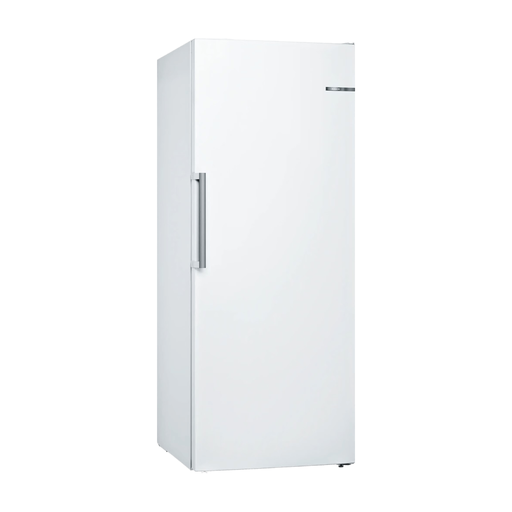
Why it suits this profile: The combination of generous capacity, flexible storage and automatic defrosting is well suited to households that manage substantial food stocks every day.
The 328 litres are divided between drawers and adjustable shelves. No Frost reduces the need for manual defrosting; however, check the required floor space and door clearance beforehand.
Energy label C, 170 kWh per year, 38 dB, freezing capacity of 23 kg per 24 hours and a reversible door.

Why it suits this profile: The large, top-opening compartment is practical for bulk purchases, small catering businesses, garages or households that store large quantities of food at once.
The included removable basket helps keep smaller items within reach. Bear the top-opening lid in mind: do not place the appliance underneath a low worktop.
291-litre capacity, 38 dB, digital temperature control with five levels and the option to switch between cooling and freezing, according to the product information.
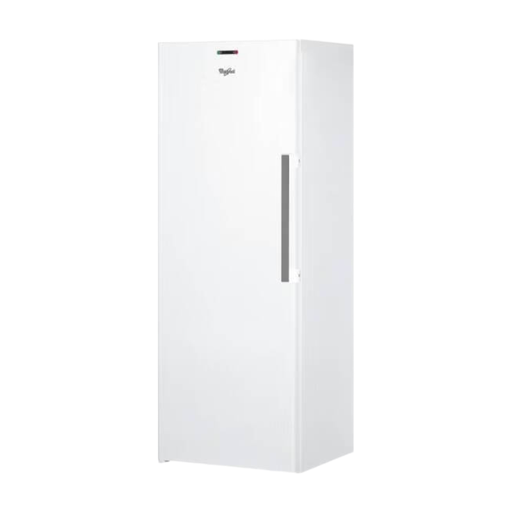
Why it suits this profile: This freestanding freezer is for anyone looking for a well-organised cabinet-style model with enough space for a household, without an XXL footprint.
The product specifications list four drawers and No Frost. This makes the layout more tangible than the total capacity alone; however, check that the drawer height suits your packaging.
228 litres, energy label D, 184 kWh per year, electronic controls and No Frost according to the product details.
We have put together a complete, up-to-date list of products that fully meet these strict selection criteria and the applicable European safety regulations.
Place a freestanding freezer on a level, stable surface and keep the ventilation openings clear. Measure not only the appliance itself, but also the route through doors, hallways and stairways. If the appliance was transported on its side, leave it standing upright as instructed in the manual before plugging it in.
Do not fill drawers and baskets so full that air circulation is blocked. Ideally, distribute newly added food and use the fast-freeze function only when instructed to do so in the manual. Do not refreeze food that has fully thawed, and do not place sealed glass bottles containing liquid in the freezer compartment.
That depends on your stock levels and shopping habits. A compact freezer of around 30 litres is mainly suitable as additional storage. For a family, an upright freezer of approximately 190 to 230 litres is often the more obvious choice. If you store lots of bulk products, you could look at models from 274 to 328 litres or consider a chest freezer.
No Frost can make maintenance easier because, according to the product description, manual defrosting is not required. Whether the extra cost is right for you depends on how often you use the freezer, its capacity and the price difference compared with a model without this feature.
Use the stated annual consumption in kWh and multiply it by your current electricity tariff. A model with lower kWh consumption may prove more economical over long-term use, but always compare the purchase price, capacity and features as well.
