A table-top freezer may suit a few small portions. If you regularly freeze larger batches and want to keep your stock organised, an upright freezer with drawers is worth considering. A chest freezer is a better fit if you want to store a larger stock of food alongside your peas. Compare each model’s freezing capacity in kg/24 hours, dimensions and annual energy consumption, and check that it can be set to −18 °C or colder.
Which type of freezer is right for you?
For cooks who freeze portions ahead
If you want to freeze several portions at once after blanching, compare the stated freezing capacity in kg/24 hours with the amount you’ll be adding in one day. The Netherlands Nutrition Centre advises blanching peas briefly and drying them thoroughly before freezing.
For cooks with limited kitchen space
If you only want to store a few portions, weigh up the dimensions and freezer capacity against the space available. The Consumers’ Association notes that drawers can make the contents easier to reach, so be sure to measure the space where you plan to put it, too.
For anyone stocking up for shared meals
If you’re storing portions for several meals, consider the layout and annual energy consumption. Milieu Centraal recommends choosing a suitable size. Among models with a suitable capacity, compare the stated annual consumption in kWh.
What should you look for when choosing?
A table-top freezer, an upright freezer with drawers and a chest freezer differ mainly in the space they offer, how easily you can reach individual portions, and how well they suit a larger fresh batch. For blanched peas, the Netherlands Nutrition Centre recommends a freezer that can be set to at least −18 °C.
Table-top freezer
Suitable for: limited space and small batches to freeze at a time.
Bear in mind: less space and freezing capacity than the larger models reviewed; check that your fresh batch is within the stated capacity in kg/24 hours.
Upright freezer with drawers
Suitable for: portions for several shared meals that you want to store separately and keep within easy reach.
Bear in mind: an upright freezer needs more height and floor space than a table-top model; a larger capacity doesn’t automatically mean lower energy consumption.
Chest freezer
Suitable for: storing peas alongside a larger stock of food, if you have enough floor space.
Bear in mind: individual portions are generally less easy to reach than in drawers; Low Frost reduces frost build-up, but doesn’t eliminate the need to defrost.
| What to consider |
What to look for when buying |
Who is this important for? |
| Freezing capacity |
Compare the stated capacity in kg/24 hours with the amount you’ll be adding in one day. Divide the peas into small portions. |
If I’m adding a larger amount after blanching, I want to know whether it’s within the stated capacity and won’t unnecessarily warm the food already in the freezer; around 30% of consumers say freezing capacity is their top consideration. |
| Capacity and space |
Measure the space available and compare the dimensions with the usable freezer capacity. |
If space is limited, I want to store enough portions without choosing an appliance that won’t fit in the space available; around 30% of consumers say limited space is their top priority. |
| Energy consumption |
Compare the stated annual consumption in kWh of models with a suitable capacity; check the annual consumption as well as the energy label. |
If the freezer is running all the time, I want to take annual energy consumption into account when choosing a suitable size; around 20% of consumers put energy consumption first. |
| Layout and maintenance |
Check whether drawers or baskets suit the portions you store, and see whether each model has No Frost, Low Frost or neither. |
If I’m storing portions for different meals, I want to find my peas easily and know how much maintenance the freezer needs; around 20% of consumers make organisation and maintenance their top priority. |
Common mistakes when choosing
-
Assuming a large capacity means high freezing capacity
Litres tell you how much the freezer can hold; kg/24 hours tells you how much fresh food the manufacturer says the model can freeze in a day. A large fresh batch can raise the temperature of food that’s already frozen.
Compare both specifications separately with your needs, and divide blanched peas into small portions.
Don’t add more fresh food at once than the stated freezing capacity allows.
-
Confusing Low Frost with No Frost
Inventum describes Low Frost on the VK952W as reducing frost build-up, but the freezer still needs defrosting. According to Inventum, the VR1430W has No Frost, so the features vary by model.
Check the frost-reduction feature on the exact model and choose based on how much maintenance you’re happy to do.
Manual defrosting takes time and needs to be done periodically.
-
Choosing based on the energy label alone
As well as the rating, the energy label shows annual consumption in kWh and the appliance’s capacity. These figures help answer different questions when you’re choosing.
First decide what capacity suits you, then compare the annual consumption of suitable models. Milieu Centraal recommends choosing a suitable size; an unnecessarily large freezer may use more energy than a smaller model that meets your needs.
Brands and models to help you compare
Bosch
The Bosch GTV15NWEB table-top model reviewed is a compact option for smaller portions and limited space.
- Bosch states that the GTV15NWEB has a capacity of 83 l, a freezing capacity of 4,0 kg/24 hours and dimensions of 85 × 56 × 58 cm.
- This model doesn’t have No Frost. The stated capacity isn’t an independent performance measurement and doesn’t apply to all Bosch freezers.
Inventum
The models reviewed include both an upright freezer with drawers and a chest freezer, offering different ways to organise your food.
- Inventum states that the VR1430W has a capacity of 161 l, No Frost and a freezing capacity of 12 kg/24 hours. For the VK952W, the brand lists a capacity of 198 l, Low Frost and 9 kg/24 hours.
- The maintenance features and stated freezing capacity vary by model; Low Frost doesn’t mean you can skip defrosting.
Beko
The Beko FS166020 reviewed is a freestanding table-top freezer for anyone short on space.
- Beko lists a capacity of 65 l and a width of 47,5 cm for the FS166020.
- This model has a static cooling system. If you want to freeze larger fresh batches, check the stated capacity in kg/24 hours for the exact model.
Liebherr
The Liebherr CFd 2085 Plus reviewed is a chest freezer for anyone who wants to store peas alongside a larger stock of food.
- Liebherr lists a capacity of 248 l for this model and FrostProtect for ambient temperatures as low as −15 °C.
- Liebherr describes SmartFrost as reducing frost build-up; it doesn’t eliminate the need to defrost. These features apply to this model.
Freezers at Joybuy
This selection includes compact freezers, a fridge-freezer with freezer drawers and chest freezers. Check that each model can be set to −18 °C or colder for storing your food.
 No image available
Salora 47FRT60WH under-counter freezer
A good fit if you want to store small portions separately and match the stated freezing capacity to a fresh batch.
It has a capacity of 60 l and a stated freezing capacity of 6 kg/24 hours. The model has three drawers and a temperature range of −12 to −20 °C; its stated annual energy consumption is 195 kWh.
View at Joybuy
 No image available
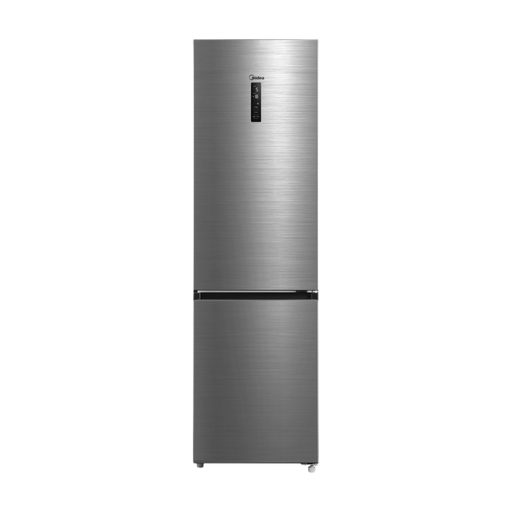
Midea MDRB521MGB02 fridge-freezer
The freezer drawers may suit you if you want to store portions for shared meals separately.
The freezer capacity is listed as 122 l, with three freezer drawers, No Frost and a freezing capacity of 8,5 kg/24 hours. Check that the temperature can be set to −18 °C or colder for your needs.
View at Joybuy
 No image available
CHiQ JR99DWE 99 l chest freezer
A good fit if you want to store a larger stock of food in a chest freezer alongside your peas.
It has a capacity of 99 l and a stated freezing capacity of 4,5 kg/24 hours. The product information recommends a setting of −18 °C and lists a wire basket and annual energy consumption of 169 kWh.
A chest freezer doesn’t offer the same easy access to individual portions as drawers do.
View at Joybuy
 No image available
CHiQ JR122WSD 122 l freezer with convertible fridge mode
The stated capacity may suit you if you want to store a larger stock of food alongside your peas.
The freezer capacity is 122 l and the stated freezing capacity is 5,5 kg/24 hours. The product information lists a setting as low as −18 °C, No Frost and energy class E.
View at Joybuy
 No image available
COMFEE' RCU60WH2(E) 60 l freezer
A good fit if you’re looking for a compact freezer with separate compartments for smaller portions.
It has a capacity of 60 l, three compartments and a stated freezing capacity of up to 6 kg/24 hours. The dimensions are 44,5 × 47,5 × 84,5 cm and, according to the product information, the temperature can be set as low as −24 °C.
The product instructions explain how to defrost it manually when a lot of frost has built up.
View at Joybuy
Frequently asked questions
How should I prepare fresh peas for freezing?
Blanch the peas briefly, then cool them quickly, for example in iced water. The Netherlands Nutrition Centre advises draining and drying the vegetables thoroughly before freezing them in small portions.
How long can I keep frozen peas?
The Netherlands Nutrition Centre says peas that have been blanched shortly before freezing can be kept for one year; their quality may deteriorate after that. For this purpose, keep the freezer at −18 °C or colder.
Can I keep a freezer in an unheated shed?
It depends on the model. The Consumers’ Association notes that not every freezer is suitable for low ambient temperatures; compare the lowest temperature at the intended location with the specifications for the exact model.
Which Dutch rules are relevant when buying or replacing a freezer?
Since 1 March 2021, the EU energy label for household freezers has used the A–G scale, according to the European Commission. The Dutch Government says that when you buy a new household appliance, shops must take away a similar old appliance free of charge, including for online purchases. If a product is faulty, the retailer is your first point of contact for a remedy under your statutory consumer rights.


