
Vandaag of morgen in huis

Kwaliteit gegarandeerd

Welkomstaanbiedingen ontgrendelen: GRATIS bezorging | Tot 80% korting | Gratis 30 dagen JoyPlus-proefperiode
Download de app
Freezer bags might seem straightforward, but the wrong choice can quickly lead to waste. A bag that’s too small can tear when you fill it. A seal that doesn’t close properly can leak moisture or cause freezer burn. And a large pack with a low price per bag isn’t automatically good value if you can only use them once.
For households, families and meal preppers, there are three key pitfalls to watch out for:
Choose the size based on what you actually want to store. For small portions of fruit, herbs or snacks, resealable bags of around 0.4 litres are handy. A 1-litre capacity often suits a portion of leftovers, chopped vegetables or a lunch. For larger quantities, big freezer bags of 1.5 to 4.5 litres are more practical.
As well as litres, pay attention to the dimensions. A bag measuring 20 x 30 cm is different to use than one measuring 28 x 40 cm, even if the capacity isn’t clearly stated on the packaging. Don’t overfill bags: liquids can expand when freezing and put pressure on the seal.
A zip-lock or press-seal closure is useful when you regularly use part of the contents. Press the seal closed along its entire width and check that no food residue is caught between the edges. For soups, sauces and marinades, it’s wise to store them upright, especially if the packaging isn’t explicitly described as leak-proof.
According to the product description for Toppits, the zipper bags are designed as leak-proof bags for freezing and food storage. Always check the instructions on the packaging when using them and close the bag carefully. A resealable bag is also not automatically suitable for the microwave or oven. The g'woon Zip Storage Bag 3L, for example, states that these bags are not intended for microwave or oven use.
Check whether the packaging states that the material is suitable for contact with food and whether the product is suitable for the freezer. Also check the temperature range and any warnings. Not every plastic bag is intended for hot dishes.
Some products are described as reusable or dishwasher-safe in their product description. This applies, for example, to the Toppits Zipper Multifunctional Bag 1L. The actual lifespan depends on usage: sharp bones, fatty foods and intensive cleaning can put strain on the material or the seal. Do not reuse disposable bags if they are damaged or difficult to clean.
Always write the contents and date on the bag when freezing food. This stops portions from getting lost at the back of the freezer. Lay liquid products flat until they are frozen; afterwards you can stack them to save space.
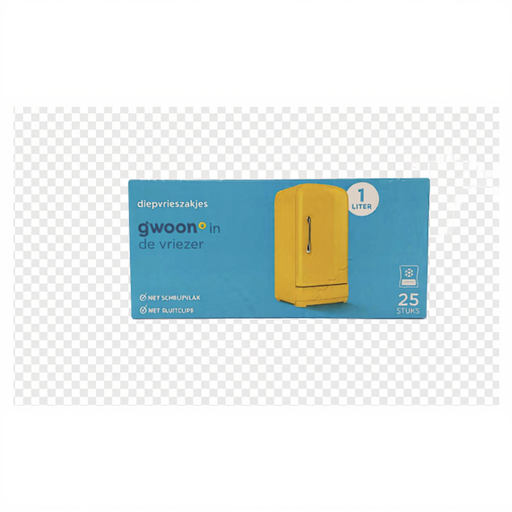
Why this fits the profile: The pack contains 25 bags of 1 litre. That’s a straightforward choice for anyone wanting to freeze portions, leftovers or pre-cut ingredients without buying a large range of sizes straight away.
The capacity and number of bags are clearly stated. This lets you compare the price per bag rather than just relying on the front of the packaging.
25 bags, 1 litre per bag, transparent material according to the product description and suitable for portions such as meat, leftovers and meals.

Why this fits the profile: This 1-litre bag has a sturdy seal according to the product description and is intended for the fridge, freezer, snacks, sauces and marinades.
The product information explicitly mentions use for freezing and storage. That’s clearer than a general bag that only says “storage”.
1-litre capacity, zipper seal, according to the product description reusable and suitable for the dishwasher.
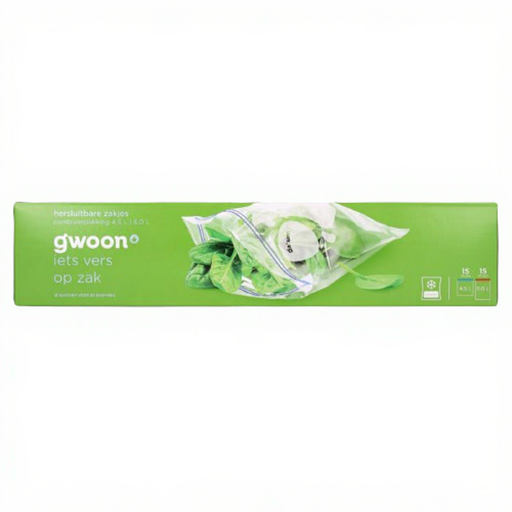
Why this fits the profile: The 4.5-litre capacity offers extra room for large portions, meal prep, leftovers or household organisation.
The large size means you don’t need several small bags for one quantity. Do check the dimensions and don’t fill the bag above the seal.
4.5-litre capacity, transparent material, resealable closure and according to the product description suitable for large quantities and organisation.
We’ve put together a full, up-to-date list of products that fully meet these strict selection criteria and comply with current European safety regulations.
That depends on the material, the seal and the usage instructions. Bags that are described as reusable and dishwasher-safe in the product description may be intended for that purpose. Throw a bag away if it has tears, a poorly closing zip or stubborn food residue. Disposable bags are not automatically suitable for reuse.
For small snacks and portions, 0.4 litres is often enough. Freezer bags of 1 litre are suitable for many everyday portions, leftovers and pre-cut ingredients. Choose large freezer bags of 1.5 litres or more for bulk products and complete meals. Always compare the stated litres with the dimensions.
Zip-lock bags can be suitable for sauce, soup or marinade if the product description says so and the seal is used properly. Leave room for expansion, close the bag carefully and store it upright if possible. Also check whether the bag is specifically intended for the freezer.
