
Vandaag of morgen in huis

Kwaliteit gegarandeerd

Welkomstaanbiedingen ontgrendelen: GRATIS bezorging | Tot 80% korting | Gratis 30 dagen JoyPlus-proefperiode
Download de app
Freezer bags may seem straightforward, but differences in size, closure and material determine how well they work in practice. A bag that’s too small will tear more easily. A closure that doesn’t seal properly can leak moisture or let odours through. And a pack with lots of bags isn’t automatically good value if the bags don’t suit how you use them.
For households, families and meal preppers, there are three main pitfalls to watch out for:
The capacity is a practical starting point:
Also pay attention to the dimensions. A 1-litre bag can have a different shape from another bag with the same nominal capacity. For flat items, such as fish fillets or frozen sauces, a wide model can be more practical than a narrow one.
A zip-lock closure or slider closure makes opening and closing easy. Before use, check that the edges are clean and press the closure fully shut. Don’t overfill bags: leave enough room to close the seal properly and to allow for expansion during freezing.
For food with a high moisture content, leak-proof freezer bags are only reliable when filled, sealed and placed upright according to the usage instructions. It’s best to place a bag containing liquid in a container first until the contents are completely frozen.
Many food storage bags are made of plastic. The product information may state that the material is suitable for the fridge or freezer, but always check the packaging. “Freezer-safe” doesn’t automatically mean it’s suitable for heating.
With reusable storage bags, maintenance is important:
The Maxcook aluminium foil bags in this selection are made from PET, aluminium and PE, according to the product description. They are rated for use between -20 °C and 100 °C, but according to the same information they must not be used in the oven, microwave, boiling water or over an open flame. The stated temperature range is therefore not an indication that the bags are suitable for heating food in them.
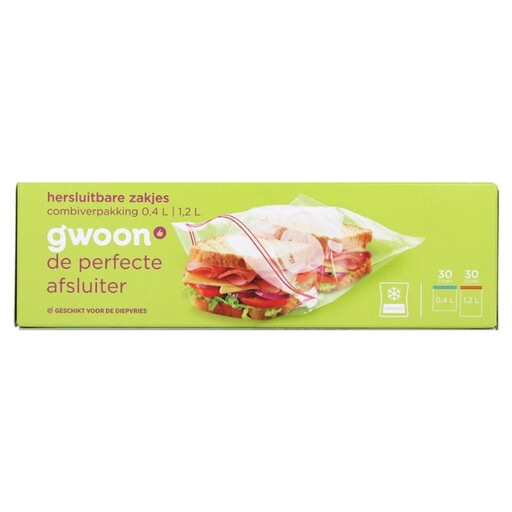
Why this fits the profile: This set combines 30 bags of 0.4 litres with 30 bags of 1.2 litres. That makes it suitable for a household that stores various small portions and leftovers.
The two sizes prevent you from using the same, awkward size for every application. The product information states a safe, transparent and resealable design.
60 bags in two sizes; transparent material; suitable for snacks, leftovers and meal prep according to the product description.
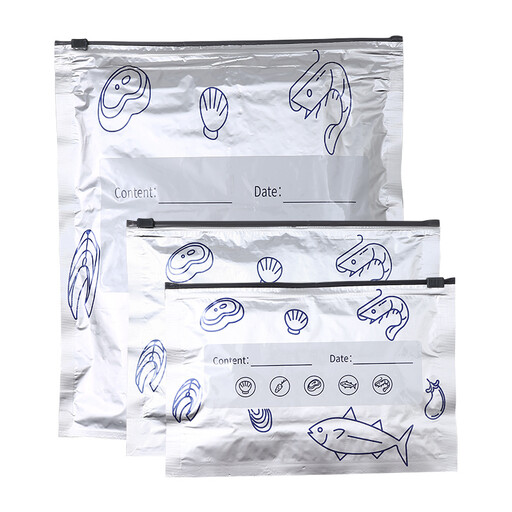
Why this fits the profile: If you store meat, fish and vegetables in different sizes, this set gives you three sizes: 10 bags of 20 × 13 × 5 cm, 10 of 23 × 17 × 5 cm and 10 of 26 × 29 × 7 cm.
The slider closure and write-on panel help with sealing, labelling and dating. At the same time, the product information clearly warns against use in the oven and microwave.
Three sizes; PET, aluminium and PE layers; washable and featuring a write-on panel according to the product description.
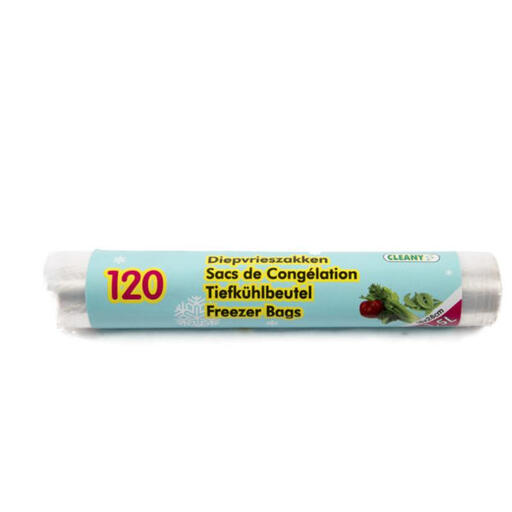
Why this fits the profile: For families and meal preppers who often freeze portions, this pack offers 120 freezer bags of 1.5 litres.
The fixed capacity of 1.5 litres makes portions predictable. The product description mentions leak-resistant plastic, easy sealing and labelling.
120 bags per pack; 1.5 litres per bag; according to the product information, suitable for fruit, vegetables, meat and leftovers.
We’ve put together a full, up-to-date list of products that fully meet these strict selection criteria and comply with current European safety regulations.
Let warm food cool down first before packing it. Remove as much excess air as possible without damaging the bag. Write the contents and date on the bag; with reusable models, the write-on panel can be handy for this. Lay flat bags horizontally in the freezer. They freeze through more quickly and take up less space later.
Store raw meat and fish separately from products that are ready to eat. For each product, check the packaging for information about food contact, temperature, cleaning and any reuse. A product description may mention features, but the specific instructions on the packaging remain the most important.
That depends on the product labelling. 1-litre freezer bags are intended for freezing when the manufacturer states this. Ordinary zip-lock bags for the cupboard or fridge aren’t automatically suitable for long-term storage at low temperatures.
Not without checking the product information. Washable bags can be cleaned with mild washing-up liquid according to the description, but dishwasher use can damage the closure or layers. Allow a bag to dry completely after washing before using it again.
Don’t overfill the bag, remove sharp edges and close the zip-lock fully. Place bags containing liquid upright in a container until they are frozen. Also check before use that the bag has no holes and that the sealing edge is clean.
