
Cook storing small portions
You want to save leftover compote in portions for individual meals and find out whether your existing freezer space is enough or you need a compact tabletop model.


If you’re serving apple compote the same evening, you won’t necessarily need a separate freezer. For a later meal, you can freeze cooled compote in sealed portions. Start by using the freezer space you already have, and only buy an extra appliance if you regularly run short: a tabletop model suits limited space, an upright freezer offers drawers for a varied stock, and a chest freezer takes up more floor space. When buying, also compare the freezing capacity, annual energy consumption and permitted ambient temperature for the exact model.
You want to save leftover compote in portions for individual meals and find out whether your existing freezer space is enough or you need a compact tabletop model.
You also store other dishes and want enough well-organised space without choosing an appliance that’s bigger than you need.
You make larger quantities for shared meals later on and weigh up freezing capacity, floor space and energy consumption.
Choose this if: you’re eating the compote that evening or already have enough freezer space for portions you’ll serve later.
Bear in mind: the space available and the correct storage temperature; you may not need an extra appliance.
Choose this if: you regularly want to store a few tubs and other small portions, but are short on space.
Bear in mind: capacity and freezing performance vary by model.
Choose this if: you regularly want to store other dishes as well as compote in separate drawers.
Bear in mind: the height required and the capacity of the exact model.
Choose this if: you store larger quantities at a time and have room for an appliance with a top-opening lid.
Bear in mind: individual tubs are less accessible than in a freezer with drawers.
Start by asking whether you need extra freezer space. Then compare the capacity, layout and operating conditions of suitable models.
| What to consider | What should you look for? | Who is this for? |
|---|---|---|
| Freezing portions | Compare the stated freezing capacity in kg/24 hours with the quantity you prepare at a time. Divide the compote into sealed portions and set the freezer to −18 °C, in line with the Voedingscentrum’s advice. | If I’m saving compote for several meals, I want to freeze portions promptly and in well-sealed containers. For around 33% of consumers, the main concern is freezing portions safely and promptly. |
| Capacity and layout | Measure the space where you’ll put the appliance and allow room for a door or lid to open. Compare the net capacity and drawer dimensions with your containers. | If I’m also storing other dishes, I want enough room without putting an unnecessarily large appliance in my home. For around 27% of consumers, suitable capacity and ease of access are the main concerns. |
| Energy consumption | Check the energy label and compare the stated consumption in kWh/year for models with a capacity suited to your needs. | If I’m leaving an extra appliance running for a long time, I want to factor in its stated energy consumption before choosing. Energy consumption is the main consideration for around 20% of consumers. |
| Positioning and maintenance | Check the permitted temperature range for the exact model and what the manufacturer says about defrosting. | If the freezer is going in an unheated space, or I want to defrost as little as possible, I want to know in advance what the model allows. Suitable positioning and maintenance are the deciding factors for around 20% of consumers. |
If you’re serving the compote that evening, an extra appliance may be unnecessary. Your existing fridge or freezer space may be enough for anything you want to save for later.
First, think about when you’ll eat the compote and how much will be left over. The Voedingscentrum advises cooling leftovers within 2 hours; after that, store them covered in the fridge or freezer. Only buy extra freezer space if you find you need it regularly.
An extra appliance means an upfront cost and ongoing energy consumption.
Features vary by model. ETNA states that the VV856WIT has no anti-ice technology; Liebherr describes SmartFrost as a way to reduce frost build-up, not as a guarantee that defrosting will never be needed.
Check the features and maintenance instructions for the exact model before basing your choice on them.
Depending on the model, manual defrosting can take time and require space.
For the Beko RFSM200T40WN, the manufacturer’s technical information lists a capacity of 196 l, while the page title says 167 l. Another product listing says No Frost, while the product description states static cooling.
Ask for the capacity and cooling system to be confirmed in a clear product information sheet for the exact model.
The VV856WIT is a tabletop model worth comparing if you’re looking for a compact freezer for a few portions.
The ATS68E7NW is a compact freestanding tabletop model worth comparing if you’re looking for NoFrost.
The GSN29UWEW is a freestanding upright freezer worth comparing if you store larger quantities as well as compote.
The CFc 1875 Plus is a chest freezer worth comparing if you have larger quantities to store and a suitable place to put it.
The RFSM200T40WN is a freestanding upright freezer for which it’s worth carefully checking the specifications for the exact model.
This range includes tabletop freezers, upright freezers and a chest freezer for storing portions of apple compote and other frozen foods.
 No image available
An upright freezer with a capacity of 122 l and No-Frost; the product information states a freezing capacity of 5,5 kg/24 hours.
Energy rating E; stated consumption: 193 kWh/year. The temperature is adjustable and the door is reversible.
 No image available
A chest freezer with a capacity of 99 l and a removable basket for storing portions; the stated freezing capacity is 4,5 kg/24 hours.
Energy rating E; stated consumption: 169 kWh/year. It can be switched between fridge and freezer functions. Due to the layout, individual tubs are less accessible than in a freezer with drawers.
 No image available
A tabletop freezer with a capacity of 87 l and three transparent drawers for storing separate portions; the stated freezing capacity is 4,4 kg/24 hours.
Energy rating B; stated consumption: 84 kWh/year. This model does not have No-Frost; the product information says to defrost it manually if a lot of frost has built up.
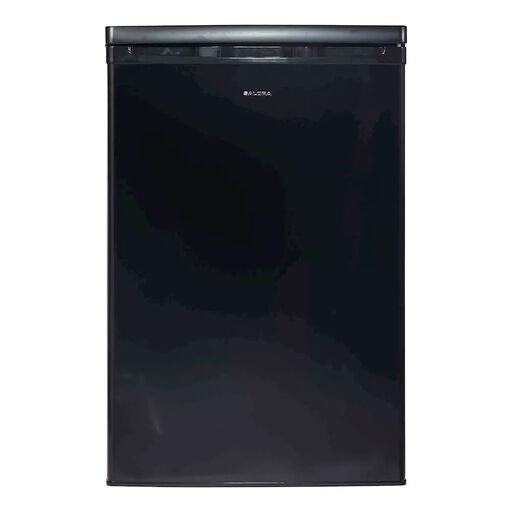 No image available
A freestanding upright freezer with a capacity of 91 l and four drawers for storing portions separately; the stated freezing capacity is 4,4 kg/24 hours.
Energy rating E; stated consumption: 166 kWh/year. This model does not have No-Frost and the door is reversible.
 No image available
A freestanding tabletop freezer with a capacity of 60 l and three compartments for smaller portions; the stated freezing capacity is 6 kg/24 hours.
Energy rating E; stated consumption: 195 kWh/year. The thermostat is adjustable. This model does not have No-Frost.
No, not just because you’re serving it tonight. If you’re saving cooked compote as leftovers, let it cool within 2 hours and store it covered in the fridge or freezer. Choose the freezer if you’re keeping it for a later meal.
Freeze cooled compote in sealed, dated portions and keep the freezer at −18 °C, as advised by the Voedingscentrum. For cooked leftovers, the Voedingscentrum gives a freezer storage time of 3 months; this is not a product-specific shelf-life test for every homemade compote. Ideally, defrost it in the fridge, or use the microwave’s defrost setting for a small portion.
Compare the temperature in that location with the permitted range for the exact model. The Consumentenbond gives a range of 10 to 38 °C for the AEG ATS68E7NW. Liebherr says the CFc 1875 Plus is suitable for lower ambient temperatures with FrostProtect; don’t assume this applies to other models.
When you buy as a consumer, you’re entitled to a legal guarantee. According to the Dutch government, there is no fixed statutory period in the Netherlands, and the retailer is your point of contact if a product is faulty. When you buy a similar new appliance, the retailer must take back the old one free of charge under the old-for-new scheme, including for online purchases. Check separately whether delivery or installation is offered at an extra cost.
Household freezers must have an energy label. As well as comparing the energy rating, compare the stated consumption in kWh/year for models with a suitable capacity; the label alone can’t predict exactly how much electricity your usage will require.