
Weekend baker making one cake
Looking for a suitable cake tin and oven setting for a fruit cake, without prioritising features for baking on multiple shelves.


For a single spiced pear cake, choosing the right oven setting and making sure there’s enough room for your tin matter more than the oven’s capacity in litres. Cakes are baked using conventional top-and-bottom heat; fan-assisted cooking isn’t automatically the better choice. A freestanding model doesn’t need a built-in housing, while with a built-in oven you’ll need to check the housing, installation and connection.
Looking for a suitable cake tin and oven setting for a fruit cake, without prioritising features for baking on multiple shelves.
Looking for a freestanding oven and wants to check in advance that the tin and appliance will fit in the available space.
Wants to bake on other shelves as well as making a cake, so pays attention to air circulation and the usable shelf positions.
A good fit if: you don’t have a suitable built-in housing and mainly bake one cake at a time.
Bear in mind: check the space available for the appliance as well as its internal dimensions; the capacity in litres won’t tell you whether your cake tin will fit.
A good fit if: you have a suitable housing or want to prepare several dishes too.
Bear in mind: measure the housing and check the installation and connection requirements for each model. Having more shelf positions doesn’t guarantee that a cake will bake evenly at every level.
When choosing an oven for a single spiced pear cake, the oven setting and fit are often the first things to consider. Then look at baking several dishes at once and how easy the oven is to clean.
| What to consider | What to look for | Who should pay particular attention? |
|---|---|---|
| Setting for baking one cake | Check whether conventional top-and-bottom heat and fan-assisted cooking are available; follow the recipe and the model’s instruction manual. | I usually bake one cake and want to match the setting to the recipe. Around 36% of consumers place the greatest importance on choosing the right oven setting. |
| Cake tin and positioning | Measure your cake tin and compare it with the internal dimensions; for a built-in oven, also check the housing and connection dimensions. | I want to be sure my tin fits in the oven and that the appliance will fit in my kitchen. Around 29% of consumers focus most on fit and positioning. |
| Preparing several dishes | Check the usable shelf positions and which settings are available for them; having several shelf positions doesn’t mean every dish will turn out the same. | I sometimes want to cook more than one dish at a time and want to know whether the oven is suitable. Around 21% of consumers prioritise cooking several dishes at once. |
| Use and maintenance | Compare the energy use per cycle if an applicable energy label is available for the appliance; also check the cleaning method and installation requirements. | I want to know in advance how much maintenance and aftercare the appliance will need. Around 14% of consumers focus most on use and aftercare. |
The usable space may be smaller than the stated oven capacity. Your cake tin needs to fit inside the oven.
Measure the tin and compare it with the stated internal dimensions, not just the capacity in litres.
Consumentenbond recommends conventional top-and-bottom heat for cakes. Bosch warns that food can dry out more quickly when cooked with circulating air.
Choose a setting based on the recipe and the specific model’s manual, not just because it says ‘fan-assisted’.
Housing dimensions, connections and the parts supplied can vary between models. For example, IKEA states that the MATÄLSKARE is supplied without a plug.
Check the installation instructions, electrical connection and which parts are included in advance.
A built-in oven may need to be installed or its connection adapted; check what’s required in your home.
These models illustrate different types of oven. The features listed apply to the model named and are not a general assessment of the entire brand.
The OV457B is an example of a freestanding oven.
The HBA534BS3 is an example of a built-in oven with several heating settings.
The NBU5A10CK is an example of a built-in oven with fan-assisted and conventional heat.
The MATÄLSKARE is an example of a built-in oven with fan-assisted cooking and conventional top-and-bottom heat.
The WOI118FPT2SSMA is an example of a built-in oven with additional baking and cleaning features.
The products below include built-in ovens and freestanding mini ovens. Check that each model’s settings and dimensions suit your needs; for an appliance covered by the applicable regulations, also check for the required CE marking and product documentation.
 Image unavailable
For anyone looking for an oven with a stated 3D Hotair function; compare the available settings with your recipe.
The product title lists a 71-litre capacity, 3D Hotair and a stainless steel finish.
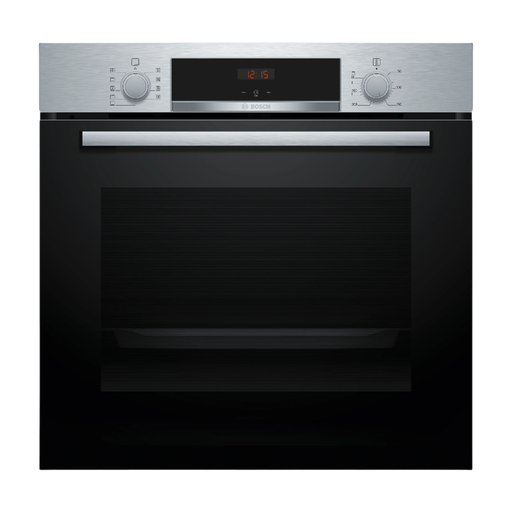 Image unavailable
For anyone looking for a built-in oven with a fan-assisted function; check whether the available settings suit your cake recipe.
The product title lists a 71-litre capacity, Turbo Hotair, hydrolytic cleaning, touch controls and a maximum temperature of 275 °C.
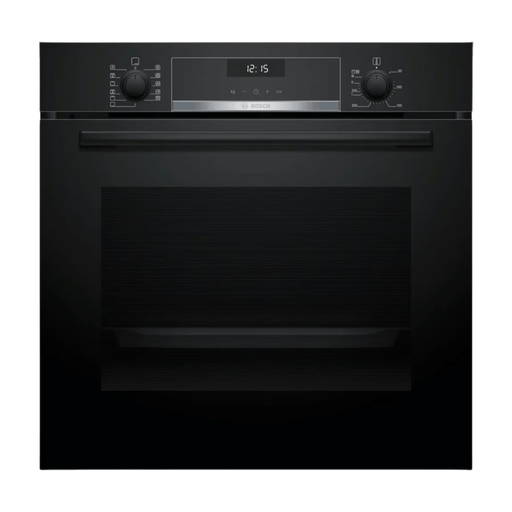 Image unavailable
For anyone considering cooking other dishes as well as a cake; compare the features listed with what you’ll actually use.
The product title lists a 60 cm width, 71-litre capacity, Air Fry, EcoClean Direct, an A+ energy rating and a black finish. Check that it has the settings your recipe needs.
 Image unavailable
For anyone looking for a freestanding mini oven; check the available oven settings and allow enough space for safe use.
The product title lists a power rating of 2000 W, a 45-litre capacity and a white finish.
 Image unavailable
For anyone considering a freestanding mini oven; check that your cake tin fits and that the available settings suit the recipe.
No. Consumentenbond recommends conventional top-and-bottom heat for cakes; fan-assisted cooking can be useful, for example, when preparing several dishes. Follow the recipe and the model’s manual, and check that the cake is cooked through.
For a built-in oven, measure the housing and follow the installation instructions for the specific model. Clean it according to the manual; a cleaning function or coating won’t necessarily eliminate all manual cleaning.
No. ACM ConsuWijzer explains that statutory consumer rights apply alongside the manufacturer’s warranty: a product must meet what you can reasonably expect from it under normal use. If a product is faulty, the seller is responsible for providing an appropriate solution.
The Netherlands Food and Consumer Product Safety Authority states that CE marking is compulsory for electrical products covered by the applicable EU rules. EUR-Lex sets out the low-voltage rules for equipment with a rated AC voltage of 50 to 1,000 V. Check the CE marking and product documentation for the specific appliance; CE marking is not independent proof of baking performance.
No. The European Commission lists small and portable ovens as being outside the scope of the relevant energy labelling rules. So only compare an energy label rating when it applies to the specific appliance.