
Vandaag of morgen in huis

Kwaliteit gegarandeerd

Welkomstaanbiedingen ontgrendelen: GRATIS bezorging | Tot 80% korting | Gratis 30 dagen JoyPlus-proefperiode
Download de app
A new freestanding fridge-freezer is a major investment. It's an appliance you'll use every day, and it needs to last for years. However, it's easy to fall for clever marketing or unclear specifications. Before you make a decision, it's crucial to know what to look for to avoid buyer's remorse.
Many people focus on price or appearance, but the real pitfalls are hidden deeper. These are the three most common problems:
To sidestep these pitfalls, it's important to understand a few core specifications. These determine how practical, economical, and pleasant the fridge is to use day-to-day.
The required capacity depends on the size of your household. A good rule of thumb is:
Don't just look at the total litres, but also at the split between the fridge and freezer compartments. Do you eat a lot of fresh produce or mostly frozen meals? A flexible layout with adjustable shelves and spacious door bins makes it easier to store your groceries in an organised way.
Since 2021, a new energy label has been in effect, running from A (most efficient) to G (least efficient). An energy-efficient fridge with a good label (for example, D or E) might be slightly more expensive to buy, but it will save you significantly on your energy bills over the appliance's lifespan. An old model with an A+ label is often less efficient than a new model with an E label. The annual consumption in kilowatt-hours (kWh) on the label provides the clearest indication of the costs.
A No Frost fridge-freezer is worth the extra cost for most households. This technology prevents ice build-up in the freezer compartment, meaning you never have to defrost it manually. This ensures a more stable temperature, better food preservation, and lower energy consumption. Some models offer "Low Frost," which reduces ice formation but doesn't prevent it completely.
Also, pay attention to the noise level, expressed in decibels (dB). A quiet fridge-freezer produces less than 40 dB. For comparison:
Based on these objective criteria, we have selected several models that are a great fit for various types of households.
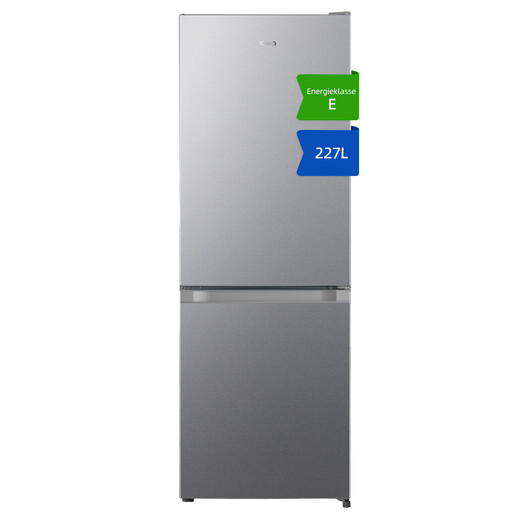
Why This Fits Their Persona: With a width of just 54 cm, this model fits perfectly into the more compact kitchens of first-time buyers or small apartments. The 227-litre capacity is more than enough for a one or two-person household.
The Low Frost technology significantly reduces ice build-up, meaning you'll have to defrost less often. At 39 dB, it is relatively quiet and won't be a disturbance in a small living space.
Compact size without compromising on practical features. The reversible door offers extra flexibility in placement.

Why This Fits Their Persona: With a total capacity of 330 litres, this model offers more than enough space for the weekly groceries of a family of 3 to 4. A practical all-rounder for daily use.
Full No Frost technology makes manual defrosting obsolete. With a noise level of just 35 dB, this is an exceptionally quiet fridge-freezer, ideal for open-plan kitchens.
The combination of a very low noise level and the full No Frost feature offers great comfort and convenience for a busy household.
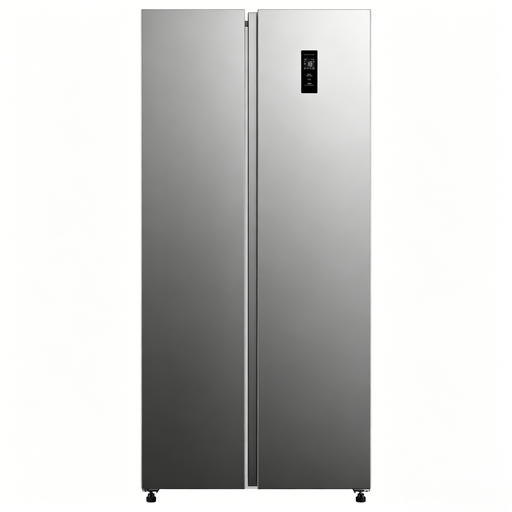
Why This Fits Their Persona: This American-style (side-by-side) model offers a massive capacity of 444 litres. Ideal for large families or for those who like to buy in bulk and need a lot of freezer space.
Total No Frost in both the fridge and freezer sections completely prevents ice build-up. Despite its size, the noise level is very acceptable at 40 dB. Energy class E is reasonable for an appliance of this scale.
Enormous storage capacity and a clear, organised layout. The Total No Frost technology ensures maximum ease of use.
We have compiled a complete, up-to-date list of products that fully meet these strict selection criteria and local regulations.
A fridge-freezer lasts for 10 to 15 years on average. The actual lifespan depends on the brand, build quality, and maintenance. You can extend the lifespan and efficiency of the appliance by cleaning the dust from the condenser coils at the back annually and keeping the door seals clean.
For proper operation, a fridge needs to be able to dissipate heat. Always consult the manual, but as a general rule, leave 5 to 10 cm of space at the back and on the sides. More clearance is often needed at the top. Sufficient ventilation is crucial for efficient operation and lower energy consumption.
For most households, yes. It saves you the time and hassle of manual defrosting, which is required several times a year for models without this feature. Moreover, the constant air circulation ensures a more stable temperature, keeping food fresh for longer and reducing energy consumption.
