
Vandaag of morgen in huis

Kwaliteit gegarandeerd

Welkomstaanbiedingen ontgrendelen: GRATIS bezorging | Tot 80% korting | Gratis 30 dagen JoyPlus-proefperiode
Download de app
Choosing a new freestanding fridge-freezer can be a daunting task. Perhaps your old one is too loud, consumes too much power, or you simply need more space for your weekly groceries. The market is filled with models, each promising unique features. So, how do you know which appliance is truly right for your needs?
As a Joybuy Product Recommendation Officer, I'm here to help you navigate the specifications. In this article, we'll provide practical tips and highlight several popular choices, enabling you to make a well-informed decision without getting lost in marketing jargon.
Before we dive into the models, here are a few key points to make your choice easier.
An energy-efficient fridge-freezer is not only better for the environment but also for your wallet. Pay close attention to the energy label. Since 2021, the scale runs from A (most efficient) to G (least efficient). A model with a D or E rating can already offer significant savings compared to an older appliance.
Additionally, a fridge-freezer with No-Frost technology is worth considering. This feature prevents ice build-up in the freezer section, meaning you'll never have to manually defrost it again. This saves time and ensures the freezer continues to operate efficiently. An alternative is Low-Frost, which significantly reduces ice formation.
How much space do you need? A fridge's capacity is measured in litres. A household of 1-2 people often finds 150-200 litres sufficient, while a family might need 300 litres or more. Carefully measure the available space in your kitchen before making a choice. Freestanding models offer flexibility, but the dimensions must fit.
Aesthetics matter, too. A black fridge-freezer or one in dark stainless steel can give your kitchen a modern and sleek look. Also, consider practical design elements like a reversible door, which can be very convenient in a smaller kitchen.
No one wants a fridge that's constantly humming, especially in an open-plan kitchen. The noise level is expressed in decibels (dB). A quiet fridge-freezer has a rating of 39 dB or lower. For comparison, 40 dB is similar to the sound level in a library. Anything below that is considered very quiet.
Based on specifications and features, we have selected three different freestanding fridge-freezers that cater to various needs.
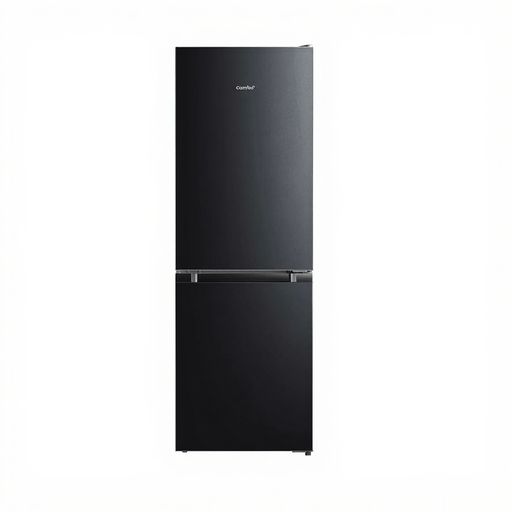
Why This Model Stands Out This compact model from Comfee' is a practical solution for smaller spaces. With a total capacity of 174 litres (115L fridge, 59L freezer), it's a smart choice. The Low-Frost technology significantly reduces ice build-up, making maintenance simple.
Pros
Who is this model for? Ideal for students, first-time buyers, single-person households, or as an extra fridge with a freezer compartment in a utility room or garage.

Why This Model Stands Out The Exquisit KGC250 combines a stylish black freestanding fridge with modern features. Its key advantage is the No-Frost technology in the freezer section, which makes manual defrosting a thing of the past. With a total capacity of 247 litres, this is an excellent mid-range option.
Pros
Who is this model for? Perfect for couples and small families looking for the convenience of No-Frost and a modern design at an accessible price point.
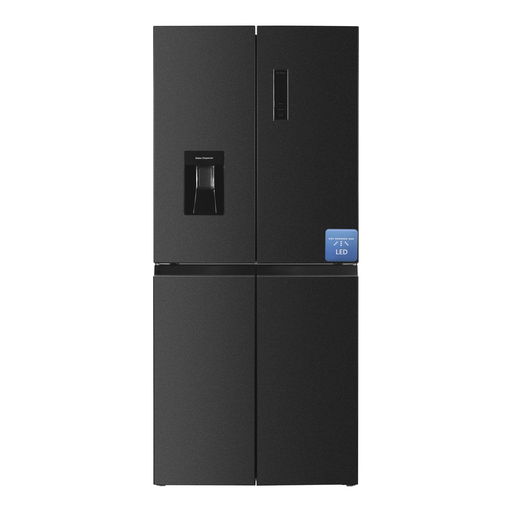
Why This Model Stands Out For those who need serious space, this Frilec model is a strong contender. With an impressive net capacity of 419 litres (269L fridge, 150L freezer) and a width of 79 cm, this is a powerhouse. The Total No-Frost technology keeps both the fridge and freezer sections ice-free.
Pros
Who is this model for? Large families and households that require a lot of freezer space (thanks to the 6 freezer drawers) and want a modern appliance with digital controls.
Is a black fridge-freezer exactly what you're looking for, but you want to compare more options? Or are you curious about other sizes and brands? Check out our full collection for more choices.
? Discover more models in the Black Freezer category
No-Frost completely prevents ice build-up by circulating cold, dry air through the freezer section. This means you never have to defrost it. Low-Frost significantly reduces ice formation, but manual defrosting is still required over time (usually once a year). Low-Frost systems are often slightly more energy-efficient and quieter than first-generation No-Frost systems.
A model is considered quiet at a noise level of 39 dB or lower. Appliances around 35-37 dB are virtually inaudible in a normal home environment. A 41 dB model is still relatively quiet, comparable to a soft whisper.
The energy label indicates how efficiently an appliance uses energy. The scale runs from A (most efficient) to G (least efficient). The label also lists the annual energy consumption in kilowatt-hours (kWh), the total capacity of the fridge and freezer compartments, and the noise level in dB. A model with a better rating can lead to significant long-term savings on energy costs.
