
Vandaag of morgen in huis

Kwaliteit gegarandeerd

Welkomstaanbiedingen ontgrendelen: GRATIS bezorging | Tot 80% korting | Gratis 30 dagen JoyPlus-proefperiode
Download de app
A freestanding cooktop is a lifesaver. Whether you're in a dorm room, have a temporary kitchen during a renovation, need an extra burner for a camping trip, or simply want a flexible solution for your small apartment. But the market is flooded with models that look good on the surface but disappoint in practice. Before you make a choice, it's wise to know what to look for to avoid a costly mistake.
Many buyers fall into a few common pitfalls:
This guide will help you sidestep these problems and find a portable cooktop that truly fits your needs.
Don't focus on marketing jargon; concentrate on the specifications that matter in practice. For a freestanding cooktop, these are the three most important considerations.
The technology determines how you cook, what pans you need, and how high your energy bill will be.
How many cooking zones do you really need?
A standard household outlet typically supplies power via a single phase and is usually protected by a 16-amp breaker. This means a maximum power output of about 3680 Watts (16A x 230V). Most 1- and 2-burner cooktops stay well below this limit and can be plugged in without any issues. However, a powerful freestanding 4-burner induction model with a power rating of 7200 Watts requires a special 2- or 3-phase high-power outlet. Always check this before purchasing to avoid problems with your electrical system.
Below are some popular choices, matched with specific user profiles.
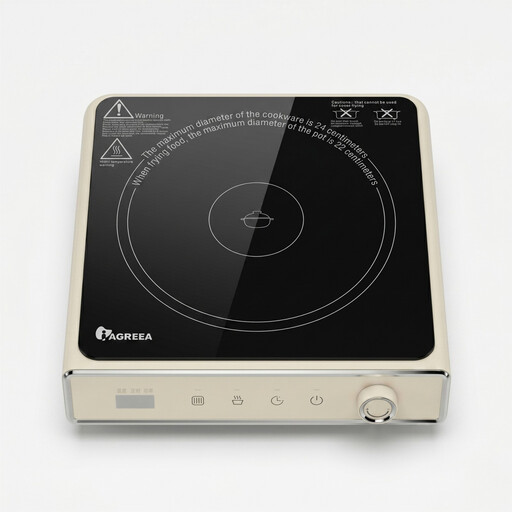
Why This Fits Their Persona: Compact, lightweight, and affordable. Ideal for those who need a simple, reliable, and hassle-free cooking solution. Perfect for a small dorm room or for taking along in a caravan.
As a ceramic cooktop, this model works with all types of pans. You won't need to purchase a new set of cookware. The smooth glass plate prevents the cleaning frustration associated with traditional electric burners.
The large rotary knob control is intuitive and robust. The 2000W power output is more than sufficient for daily use and works on a standard household outlet.
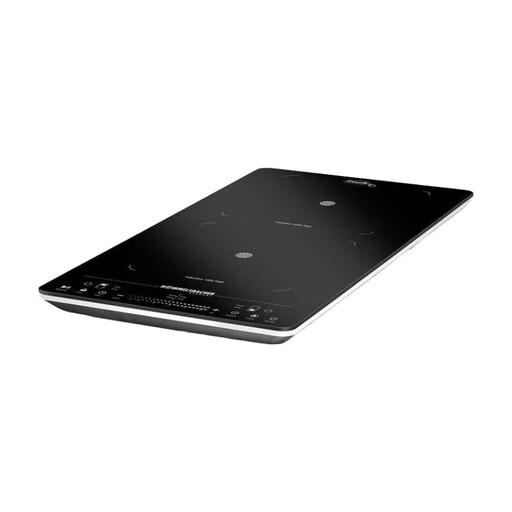
Why This Fits Their Persona: For those who cook daily in a small kitchen and value design, speed, and efficiency. This 2-burner induction plate combines performance with a space-saving design.
The total power of 3400W is carefully calibrated for a standard single-phase outlet, ensuring you won't have issues with a tripped breaker. Furthermore, its induction technology is highly energy-efficient.
The vertical 'domino' design saves precious countertop space. The control via a slide touch sensor is modern and allows for precise temperature regulation.
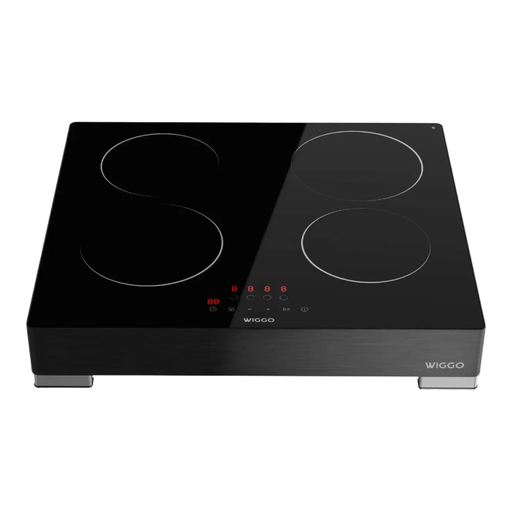
Why This Fits Their Persona: A full-fledged, temporary cooking solution for those who don't want to compromise on cooking capacity. Ideal for families during a kitchen renovation or as the primary cooktop in a rental property.
This model comes with a clear power specification (7200W). The product information emphasizes the need for a correct electrical connection, helping you avoid the "tripped breaker" pitfall of excessive power draw.
Offers the full functionality of a built-in cooktop, including four cooking zones, a boost function, and a timer for each zone. The glass-ceramic surface is durable and easy to clean.
We have compiled a complete, up-to-date list of products that meet these strict selection criteria and safety regulations.
Induction is significantly more energy-efficient. According to various studies, with induction, about 80-90% of the energy is transferred directly to the pan. For a ceramic cooktop, this is only 60-70%. The rest of the energy is lost as heat to the surroundings. In the long run, cooking with induction can therefore save you money on your energy bill.
Yes, freestanding cooktops are designed to be placed on a countertop or another stable, flat, and heat-resistant surface. It is important to ensure there is sufficient ventilation space around the appliance, as specified in the manufacturer's manual. Do not place the cooktop on a combustible surface like a wooden table without protection.
The lifespan heavily depends on the build quality and the intensity of use. A model from a reputable brand with a glass-ceramic top and a sturdy housing typically lasts 5 to 10 years with normal use. Cheaper models with many plastic components and less robust electronics often have a shorter lifespan, sometimes only 2 to 3 years with intensive use. Regular cleaning and careful handling will significantly extend the lifespan.
