
Baking large batches
Want to roast lots of squash cubes without piling them up? Focus on the usable baking tray area and the space available on each shelf level. 24Kitchen recommends spreading the cubes across the tray with space between them.


First, choose an oven that lets you spread the squash cubes out across the baking trays, leaving space between them. Then check that the appliance will fit in your kitchen and, for a built-in oven, that the cavity is the right size. A freestanding model can be a good choice if you don’t have a suitable built-in cavity, while a built-in oven with several shelf levels may be worth considering if you want to use multiple trays at once. A large capacity or fan function alone doesn’t prove that a full load will brown evenly.
Want to roast lots of squash cubes without piling them up? Focus on the usable baking tray area and the space available on each shelf level. 24Kitchen recommends spreading the cubes across the tray with space between them.
If your oven needs to be freestanding, measure not only the available space but also the baking tray. Inventum lists a net capacity of 60 litres for its freestanding OV607B; that doesn’t tell you how many cubes will fit on the tray with space between them.
If you want to assess how well each batch is cooked and browned, leave space between the cubes and check the results on each tray. The Consumentenbond looks at differences in browning between shelf levels when testing built-in ovens; this isn’t a test using your squash recipe.
Suitable if: you don’t have a suitable built-in cavity and have space for a freestanding appliance.
Keep in mind: the capacity in litres doesn’t tell you how many squash cubes will fit on the supplied baking tray with space between them.
Suitable if: you have a suitable cavity and want to be able to use several trays at once. Bosch Nederland lists 3D Hotair on up to three shelf levels for the HBA534BS3.
Keep in mind: the stated shelf levels don’t prove that squash will brown evenly across several full trays.
| What to consider | What should you check? | Who is this important for? |
|---|---|---|
| Baking tray area | Measure the tray and work out how many cubes you can spread out with space between them; check which trays are included. | If you want to roast a large batch, you need to know how many cubes will fit on each tray without piling them up. Around 36% of consumers rank having enough baking tray space as their top purchasing priority. |
| Kitchen space | Compare the appliance dimensions with the available space and, for a built-in model, check the cavity dimensions and installation instructions. | If you don’t have a suitable built-in cavity, you’ll need to check whether there’s enough room for a freestanding appliance. Around 29% of consumers make sure an oven will fit in their available kitchen space their top priority. |
| Cooking and browning | Check which oven settings are available; spread out the cubes with space between them and check how they’re cooking as they bake. | If you want to assess the browning of each batch, pay attention to how you cook the squash and check the results on each tray. Around 21% of consumers say control over cooking and browning is their main consideration. |
| Use and cleaning | Check which accessories are included and read the cleaning instructions; check energy label information only where applicable. | After several batches, you’ll want to know which accessories you can use and how to clean the oven. For around 14% of consumers, running costs and cleaning come first. |
A spacious oven doesn’t tell you how many separate squash cubes will fit on one tray. 24Kitchen recommends spreading the pieces out with space between them.
Measure the baking tray and work out how many cubes you can roast in each batch without piling them up.
A smaller usable tray may mean you need to bake extra batches.
An oven’s functions don’t tell you whether it will fit in your kitchen. The dimensions of the exact model and the cavity it requires are important.
Compare those measurements and the installation instructions with your kitchen before choosing a model.
The wrong size could mean installation adjustments are needed.
When testing built-in ovens, the Consumentenbond examines differences in browning between two shelf levels. A manufacturer’s specification for multiple levels isn’t a test of your squash on full trays.
Check the results on each tray and adjust the cooking method if needed.
A product listing for the Severin TO 2073 states 18 litres and 2000 W in the title, but 60 litres and 2200 W in the description. Severin lists the model as having a 60-litre capacity and 2200 W.
Ask for confirmation of the full specifications of the version on offer before comparing it with a manufacturer’s model.
Otherwise, you could buy a version with a different capacity or power rating than you expected.
The OV607B is a freestanding fan oven for anyone who doesn’t want a built-in model.
The HBA534BS3 is a built-in option for a suitable cavity and cooking on several shelf levels.
The HB734G1B1 is a built-in option with 3D Hotair, plus additional controls and oven settings.
The BS7700B is a built-in option for anyone looking for steam support and pyrolytic cleaning as well as fan cooking.
According to Severin, the TO 2073 is a freestanding oven with a fan function and a baking tray.
This selection includes freestanding and built-in ovens with fan or convection cooking. Compare the listed trays, shelf levels and dimensions with the amount of squash you want to cook in each batch.
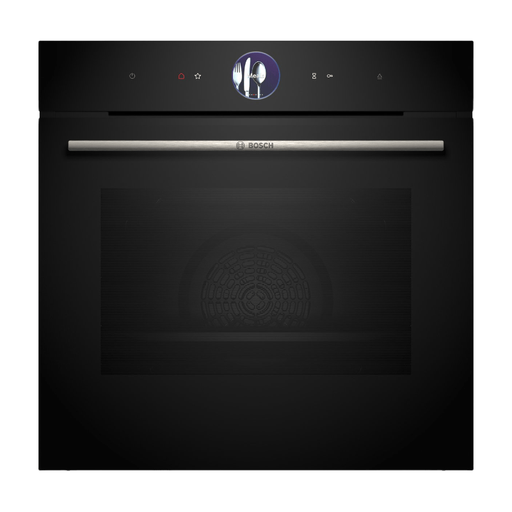 No image available
The listed hot air function, baking tray and shelf levels are all worth considering if you’re planning to cook several batches.
Capacity: 71 litres. The description lists 21 heating functions, hot air, five shelf levels and an enamelled baking tray.
 No image available
This freestanding oven is worth considering if you’re looking for a fan function and a multi-level baking rack.
Capacity: 35 litres. The description lists a built-in thermometer and LED display; the title mentions a four-level baking rack.
 No image available
The described 3D fan function on several levels is worth considering if you want to see whether you can use multiple trays at once.
The description lists baking and roasting on up to three levels at once, as well as Cleaning Assistance.
 No image available
The listed shelf levels may be useful if you want to use several trays; check the results on each tray as you roast.
The description lists 3D fan cooking on three levels, temperature control from 50 °C to 275 °C, an LED display and EcoClean Direct.
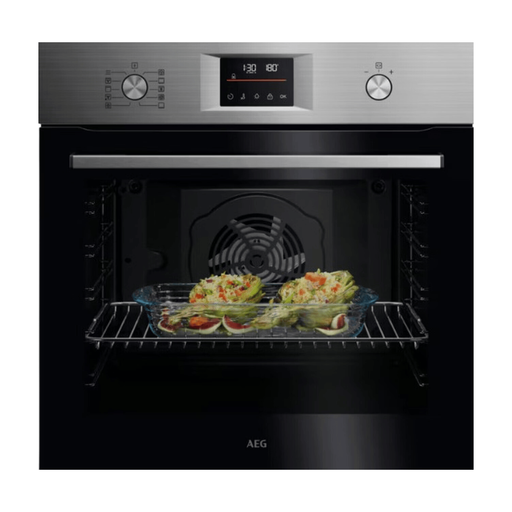 No image available
This built-in oven is worth comparing if convection cooking and several shelf levels suit your baking plans.
The description lists five shelf levels, 45 cooking programmes and pyrolytic cleaning.
No. 24Kitchen recommends spreading the squash pieces across the baking tray rather than piling them up. If necessary, plan to use more trays or cook in batches, and check that the squash is cooked through with a fork.
According to the NVWA’s step-by-step guide, you don’t need to register if you sell food once a year; if you sell it several times a year, registration is required. The guide also says that a food safety plan is required for multiple sales per year. Even for a one-off sale, you must prepare, sell and store food safely and hygienically.
The NVWA requires allergen information for unpackaged food on offer. Make sure customers can find this information where you’re selling the products, and check all the ingredients you use. Additional conditions apply if you provide the information verbally.
The NVWA requires food at markets and events to be prepared, sold and stored safely. For perishable food, the NVWA advises storing it below 7 °C and checking the temperature with a digital probe thermometer. Use the full recipe and serving method to determine the right way to store it.
No. Small and portable ovens are excluded from the specific EU energy labelling rules for domestic ovens. So don’t assume that every compact model is covered by the same labelling rules.