
If you mainly make soup in one pan
You’ll want to turn the heat down to a manageable level once the soup has come to the boil. The Consumentenbond advises continuing to cook it on a low setting; performance varies between hobs.


For a single pan of soup, a freestanding hob may be a good fit if your pan has a suitable base. A built-in hob is more practical if you use several pans at once, provided the connection and installation are suitable. Don’t choose based only on the number of settings or whether there’s a timer: check how the specific model simmers on a low setting. A traditional electric hotplate may be an alternative if you want to keep using your existing pan without an induction-compatible base.
You’ll want to turn the heat down to a manageable level once the soup has come to the boil. The Consumentenbond advises continuing to cook it on a low setting; performance varies between hobs.
You may want a freestanding cooking spot that doesn’t require a cut-out in the worktop. Remember to leave room for the pan and the ventilation clearance specified in the manual for your chosen model.
Weigh up the extra cooking zones against the available connection and any installation requirements. The Consumentenbond advises comparing the connection rating of the specific model with your home’s electrical connection.
Start with your soup pan and the electrical connection available. Then decide whether you’ll want to use other pans at the same time as the soup.
| What to consider | What should you check? | Who should pay particular attention? |
|---|---|---|
| Gentle simmering | Look for an assessment of the low setting on the exact model. A timer or a large number of settings doesn’t prove that it provides even heat. | If I want to simmer soup gently after it comes to the boil, I want to know how the model performs on a low setting. Around 33% of consumers prioritise even simmering. |
| Connection and positioning | Check the connection rating, plug, available circuit, recess and installation requirements for the exact model. | If you want to connect the hob where your existing cooker is, check in advance that the space and connection are suitable. Around 27% of consumers give connection and positioning top priority. |
| Pan and cooking zone | Check whether the pan is suitable for induction and compare the diameter of its base with the specified cooking zone. | If I want to keep using my own soup pan, I’ll first check that it works with the hob I’ve chosen and fits the cooking zone properly. Around 20% of consumers prioritise whether their existing pan is suitable. |
| Ease of use and aftercare | Check the operating and cleaning instructions, and keep your proof of purchase in case you need to report a fault. | If you’re mainly looking for a hob that’s easy to use and clean, you can also check who to contact if it develops a fault. Around 20% of consumers give ease of use and aftercare top priority. |
A hob may behave differently on its lowest setting than it does on higher settings. ETNA Service explains that induction zones may briefly switch the power on and off at low settings.
Look for an assessment of the specific model on a low setting, and bear in mind the type of pan you’re using and how much soup is in it.
Freestanding hobs can have different requirements for the socket, circuit and electrical connection. The Consumentenbond advises checking the connection details for the exact model.
Check the connection rating, plug and available circuit before ordering. Changing the connection may require extra installation work.
An induction hob only works with a suitable pan. The size of the pan base also needs to match the cooking zone.
Check the pan base and compare its diameter with the specifications for your chosen model. If the pan isn’t suitable, you may need a different one.
An induction hob may have a glass-ceramic surface, but it heats pans differently from a hob with heating elements beneath the glass.
Check the stated hob type rather than relying on the surface material alone.
The KI120T is a freestanding, single-zone induction hob for anyone who doesn’t want a cut-out in the worktop.
The KP 1091 is a freestanding electric hotplate with a cast-iron cooking zone.
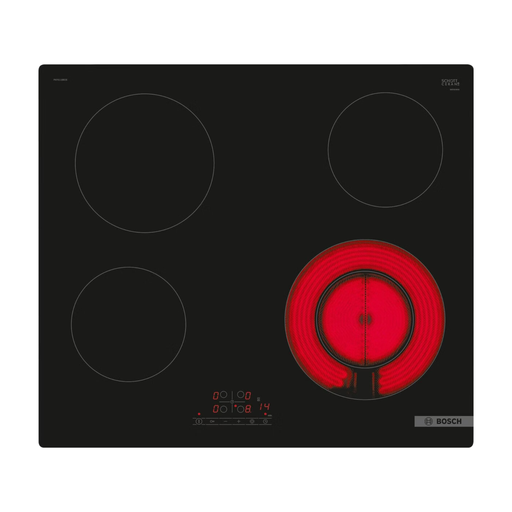
The PIE695HC1E is a built-in induction hob with four zones, for anyone who also cooks other dishes alongside their soup.
The VILSTA 905.577.25 is a built-in hob with four zones.
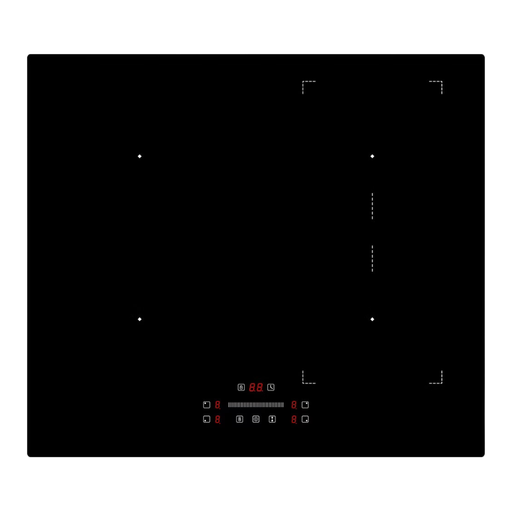
The KI2160ZT is a built-in hob with four zones, for anyone who wants to use several pans at once.
This selection includes freestanding induction hobs and built-in hobs with induction or ceramic heating. Before buying, check that the pan, connection and installation are suitable for the exact model, and verify that the model complies with product safety requirements and CE regulations.
 No image available
A built-in option if you want to use several pans alongside your soup.
Four cooking zones and 17 power settings. Requires a 2-phase, 5-pin Perilex connection and professional installation; cable and plug aren’t included.
 No image available
A portable option if you want to prepare soup and a second dish at the same time.
Two independently controlled zones and five temperature settings; the product description mentions a smaller zone for simmering or keeping food warm. Use pans that are suitable for induction.
 No image available
A freestanding cooking spot for one pan; the product title also mentions use when camping and in motorhomes.
1000 W and five settings. Induction cooking requires a pan that’s suitable for induction.
 No image available
A portable single-zone cooking spot if you mainly use one pan at a time.
The product description mentions multiple power settings and cooking functions. Use a pan that’s suitable for induction.
 No image available
A built-in option if you want to use several pans alongside your soup.
Four cooking zones, nine settings, a timer and a bridge function for two zones. The product description states that it can be connected to one or two phases; the cable is supplied without a plug. Use pans that are suitable for induction.
Turn the hob down to a low setting and use a lid where appropriate. The Consumentenbond notes that hobs can vary in how steadily they maintain the temperature on their lowest setting; a timer doesn’t make up for this difference in performance.
Many freestanding models can be plugged into a standard socket, provided the required earthed socket and available circuit are suitable. This doesn’t apply to every freestanding hob: check the connection details for the exact model, as powerful models may require a Perilex and two-phase connection.
Follow the manual for the exact model. The manual for the Inventum KI120T requires a flat, heat-resistant surface and at least 10 cm of ventilation space at the sides and rear. For the VILSTA, IKEA recommends using a damp cloth with a mild cleaning product and avoiding abrasive materials.
No. According to ACM ConsuWijzer, you have statutory guarantee rights alongside any manufacturer’s or seller’s guarantee. If a product breaks down sooner than you could reasonably expect under normal use, the seller is responsible for providing a suitable solution free of charge. In the Netherlands, there’s no standard, fixed two-year period for this.
The European Low Voltage Directive applies to electrical equipment with a rated AC voltage of 50 to 1,000 V and sets requirements for safety and CE marking. This rule doesn’t automatically confirm that a specific model being sold complies with the requirements; check the exact product.