
Vandaag of morgen in huis

Kwaliteit gegarandeerd

Welkomstaanbiedingen ontgrendelen: GRATIS bezorging | Tot 80% korting | Gratis 30 dagen JoyPlus-proefperiode
Download de app
A four-wheeled electric vehicle can be a practical choice for short trips to the supermarket, GP, family or station. Four wheels provide a stable platform, while the electric motor runs quietly. However, not every model is automatically suitable for use on public roads in the Netherlands.
The most common buying mistakes usually stem from three misconceptions:
So if you’re looking for an electric mobility vehicle, it’s worth checking the technical and legal essentials first.
A four-wheeled electric vehicle may be treated differently under the law from a mobility scooter or an electrically assisted bicycle. According to the product information, the Chunlai CL-30ZR-60 is classified as an L6e-A light quadricycle under Regulation (EU) No 168/2013. Type-approval number e9168/201311215*08 is also listed.
That’s useful to know, but check before buying that the version supplied matches these details. For a vehicle used on public roads, the VIN, technical specifications and Certificate of Conformity (CoC) are among the important details.
Also check:
You can’t automatically use a model with a top speed of 25 km/u on the pavement or in pedestrian areas.
According to the product description, the CL-30ZR-60 has a 1000W electric motor, or 1.0 kW, and a certified maximum design speed of 25 km/u. This makes it suitable for relaxed, short trips rather than fast-moving traffic.
Motor power shouldn’t be considered in isolation. A more powerful motor can be useful on hills and when pulling away, but it won’t automatically improve the range or change the vehicle’s legal classification. Avoid modifying the motor, controller or speed limiter, too. Such changes may affect type approval, insurance and registration.
This electric vehicle with a lithium battery uses a 60V 20Ah lithium battery. According to the product information, the battery is removable, which can be useful if you can’t park near a charging point.
Bear in mind the difference between theoretical and certified range. No fixed distance is given for this version; the product information refers to the CoC for the range of the specific approved version. So before buying, check:
A lithium battery can be practical because it weighs less than some other battery types. However, storage temperature, charging procedure and frequency of use can all affect its lifespan.
According to the product information provided, an L6e-A electric vehicle must first be correctly registered with the RDW before it can be used on public roads. You’ll then need a Dutch vehicle registration certificate and a suitable number plate.
You must also have third-party liability insurance before taking the vehicle onto public roads. The insurance must be linked to the vehicle’s Dutch registration details.
A valid driving licence is generally required for this type of vehicle. If it’s registered as a moped car, an AM driving licence may be required. A valid Dutch A or B driving licence normally also includes AM entitlement, but always check your own licence and the final registration classification.
The minimum age and any helmet requirement depend on the vehicle category on record and the current traffic rules. Don’t use the vehicle on public roads until the registration, insurance, number plate and driving licence requirements have all been sorted.
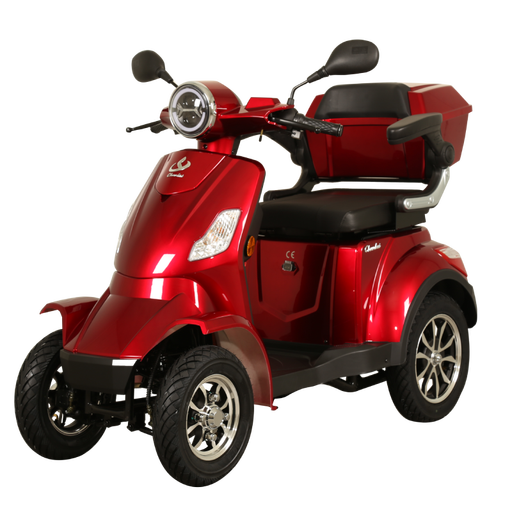
Why it suits this user: This model is designed for short trips and everyday use. It has a single seat, reverse function and a supportive seat with a backrest and armrests.
The product information lists EU type approval, an L6e-A classification and a CoC. Do check that these documents relate to the vehicle supplied to you.
Removable 60V 20Ah lithium battery, 1.0 kW motor, four wheels and a maximum design speed of 25 km/u.
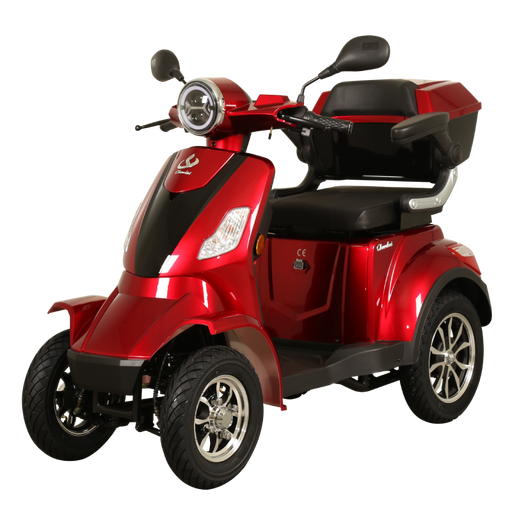
Why it suits this user: It combines the same technical foundations with a comfortable seating position, suspension and reverse function for manoeuvring in tight spaces.
The stated vehicle category helps distinguish it from an unregistered mobility aid. Ask for the CoC and VIN details before use.
EU type approval according to the product description, suspension, armrests, lights and a removable 60V 20Ah lithium battery.
Why it suits this user: For anyone travelling the same short route every day, the four-wheel base, suspension and quiet electric motor are practical features.
The range isn’t presented as a fixed distance without supporting information. Check the range in the CoC and plan charging stops for your route.
1.0 kW electric motor, reverse function, supportive seat and a four-wheel chassis for everyday manoeuvring.
We’ve put together a complete, up-to-date list of products that meet these strict selection criteria and the applicable European safety requirements.
Usually, yes. An AM driving licence may be required for an L6e-A vehicle. An A or B driving licence normally also includes AM entitlement, but check the details on your licence and the final vehicle category shown on the Dutch registration certificate.
That depends on charging frequency, storage, temperature, load and maintenance. Ask about the charging procedure, replacement costs and warranty terms. A stated range also doesn’t indicate the battery’s fixed lifespan.
Electricity costs depend on energy consumption and your local electricity tariff. You’ll also need to allow for third-party liability insurance, registration, maintenance, tyres, brake parts and possibly a replacement battery. Check these costs before deciding to buy.
