
Photographers focusing on nib details
You want to show engravings, the nib and the texture of the materials clearly, so you’ll first need to choose the required magnification and a suitable lens.


To photograph a whole fountain pen, you can start with the camera or phone you already own, a fixed set-up and controlled lighting; Canon Netherlands and Adobe recommend similar approaches for product photography. If you want to capture a nib or engraving in close-up, compare the maximum magnification of the exact lens and check that it’s compatible with the camera body. A camera body alone isn’t a complete macro set-up.
You want to show engravings, the nib and the texture of the materials clearly, so you’ll first need to choose the required magnification and a suitable lens.
You photograph several pens in the same home studio and want to keep the lighting, framing and focus consistent from shot to shot.
You want a clear photo of a whole pen without immediately buying a new camera set-up. First, see what you can achieve with your existing equipment and a simple set-up.
| What to consider | What should you check? | Who is this important for? |
|---|---|---|
| Magnification for details | Compare the maximum magnification of the exact lens and, if possible, take a test shot of a nib or engraving. | If you want to capture small details clearly, your lens’s magnification is crucial; around 33% of consumers say this is their main concern when buying. |
| Lighting and reflections | Test the lighting on the shiny pen itself and check whether you have room for a fixed set-up and adjustable light direction. | If you want to capture gloss and colour accurately, assess your lighting set-up using test shots; around 25% of consumers give this their top priority. |
| Keeping the whole pen in focus | Check whether a single plane of focus is enough and whether the exact camera model has a suitable focus stacking feature. | If you photograph a pen at an angle and want several parts to be in focus, the focusing method and a stable set-up both matter; around 25% of consumers focus mainly on depth of field. |
| What’s included in the set | Check whether you’re buying a body, a kit or a complete camera, and which lens is actually included. | To avoid buying more than you need or ending up with a body without a suitable lens, check everything included in the set; around 17% of consumers prioritise what’s included and the cost of the set. |
According to Canon Netherlands, the Canon EOS R50 body is supplied without a lens. The maximum magnifications quoted apply to specific Canon lenses, not to every body or kit.
Check the exact box contents, mount and lens as one complete combination.
A photo of the whole pen and a close-up of the nib call for different approaches to framing and lighting. Reflections on the surface can also affect the result.
Take test shots of both compositions and check for shadows and reflections in your own set-up.
Focus stacking involves taking several shots at different focus positions. OM SYSTEM lists the feature for the OM-5 Mark II; Nikon describes combining separate shots taken at different focus points using software.
Check the features of the exact model and make sure your set-up is stable enough for multiple shots.
This technique may require extra shots and post-processing.
Canon offers RF lenses with different magnifications; the EOS R50 is also available as a body only.
The NIKKOR Z MC 105mm f/2.8 VR S is a macro lens for a compatible Z body.
The Sony α6700 is an APS-C body with an E-mount; the FE 90mm F2.8 Macro G OSS is a separate compatible lens.
The TG-7 is a compact camera with a fixed lens and macro mode; the OM-5 Mark II is a system camera with a Focus Stacking feature listed by the manufacturer.
These cameras and camera kit are options to compare with the equipment you already own. For close-ups of fountain pens, check that the lens and magnification are suitable for the shots you want to take.
 No image available
Consider this camera only if its listed features suit the fountain pen photos you want to take; the title doesn’t specify macro magnification.
1″ CMOS sensor and 3-axis stabilisation.
The title lists 4K/240 fps, 2× lossless zoom and 107 GB of built-in storage.
 No image available
Compare this digital camera with the composition you want and check separately whether it captures enough detail in close-ups.
The title lists 80 MP UHD, 18× zoom and a point-and-shoot design.
 No image available
Take a test shot to check whether the zoom and framing are suitable for the fountain pen details you want to show.
The title lists 12× optical zoom, 4K video and 64 MP.
 No image available
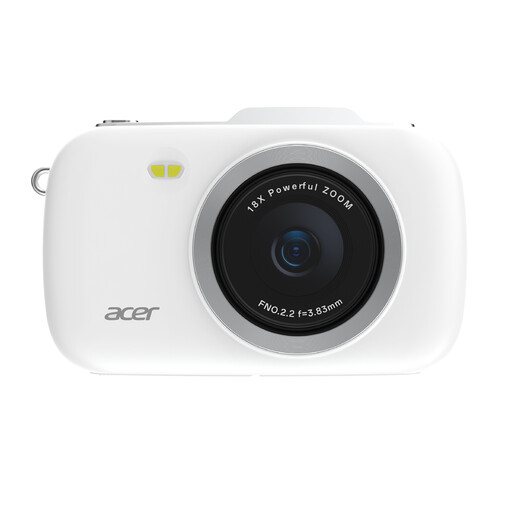
Consider whether this camera suits your preferred composition; the title doesn’t specify macro magnification for nib photos.
The title lists 80 MP UHD and 18× zoom.
 No image available
The listed zoom lens makes this a camera kit worth comparing; check whether the lens offers the magnification you need for close-ups.
The title lists a 16–50mm zoom lens.
According to the product description, a compatible SD card and adapter/charger aren’t included.
No. Start with the camera or phone you already own and a fixed set-up. Then check separately whether it captures small details at a large enough size and in sharp focus.
A tripod helps you keep the composition and background consistent between shots. Also check the lighting and reflections for each pen.
No. For the black EOS R50 body reviewed, Canon Netherlands doesn’t list a lens among the box contents. Check the contents of any other kit separately.
According to the Dutch government, the seller must provide a solution if a product is faulty; a manufacturer’s guarantee is in addition to your statutory rights. Many distance purchases also come with a 14-day cooling-off period, but check whether it applies to your purchase.
Don’t assume you can: the KVK explains that photos may be automatically protected by copyright, and using them without permission may infringe those rights. Use your own photos or obtain the necessary permission.