What should you look for in a TV for watching football with guests?
Choose a TV to suit the seating, on-screen movement and lighting in the room; a high figure on the packaging won’t answer those questions by itself.
| What to consider |
What should you check? |
Who should pay particular attention? |
| Visibility from every seat |
Measure the viewing distance and available width, and assess the picture from the side too. The Consumentenbond suggests around 2.4 times the screen diagonal as a starting point for viewing distance, not a fixed rule for every room. |
If I’m hosting guests in different parts of the room, I want the furthest and most angled seats to have a usable view too. Around 29% of consumers say visibility for the whole group is their top purchase priority. |
| Motion handling |
Compare the motion handling of the exact model and look out for possible picture artefacts caused by interpolated frames; a higher panel figure alone doesn’t tell you what football will look like. |
I want the action to remain easy to follow during fast passes and camera pans. Around 23% of consumers put motion handling at the top of their purchase priorities. |
| Contrast in dim lighting |
Compare OLED and LCD TVs in similar lighting conditions. The Consumentenbond describes OLED as typically offering deeper blacks; assess the specific model and reflections separately. |
If I dim the room for the match, I especially want to know what the picture and dark scenes look like. Around 18% of consumers give contrast in dim lighting their top priority. |
| Reflections with the lights on |
Check where the lights are positioned and look for model-specific information about reflections and brightness; brightness is no substitute for checking for glare. |
With the lights on, I want to be able to see the pitch without light sources reflecting distractingly on the screen. Around 18% of consumers prioritise visibility with the lights on. |
| Reception, sound and usability |
For the specific final, check which channel or service, app or receiver you’ll need, along with the audio connections. Also compare the energy label and product information for how you plan to use the TV. |
If I mainly want to make sure I can watch the match and hear the commentary clearly, I’ll check reception and sound in my room first. Around 12% of consumers give these practical requirements and additional costs top priority. |
Joybuy TVs for a football night
This selection includes OLED TVs and a mini-LED TV to help you weigh up screen size and technology for a football night. Check the viewing angle, reflections and motion handling of each model in relation to your room.
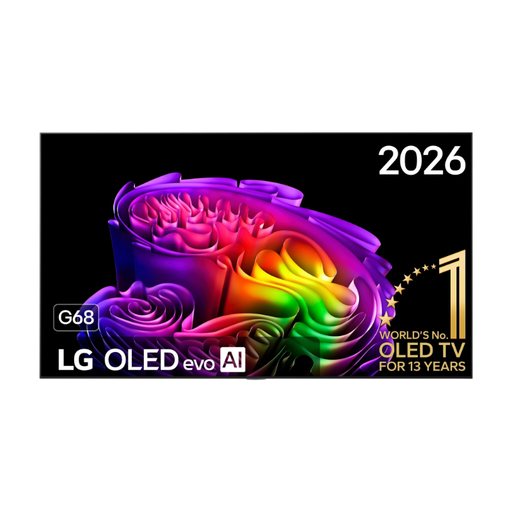 Image unavailable
OLED77G68LW
This OLED model is worth considering when comparing TVs for dim evening lighting; also check how the specific screen looks with the lights on.
The product name identifies this OLED version as OLED77G68LW.
View at Joybuy
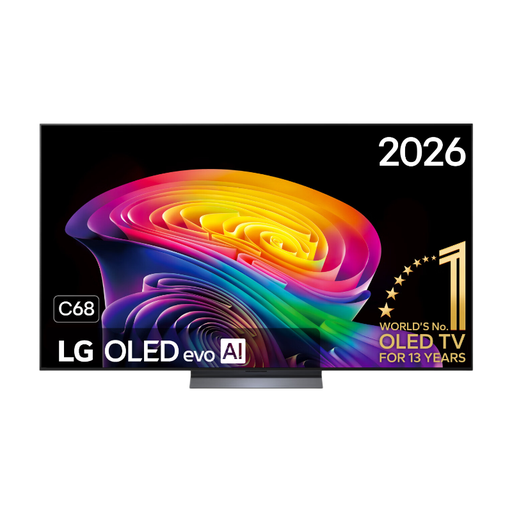 Image unavailable
LG OLED65C68LA, 65-inch 4K OLED evo AI C6 TV, 120 Hz, VRR up to 165 Hz
This OLED version is worth comparing if you’re weighing up screen size and seating as well as performance in dim lighting.
The product name lists 65 inches, 4K, 120 Hz and VRR up to 165 Hz. These figures aren’t an independent test of sports performance.
View at Joybuy
Image unavailable
LG OLED55C68LA, 55-inch 4K OLED evo AI C6 TV, 120 Hz native, VRR up to 165 Hz
The 55-inch size gives you a specific measurement to compare with your viewing distance and available space.
The product name lists 4K OLED, 120 Hz native and VRR up to 165 Hz; these specifications don’t predict what sports footage will look like on their own.
View at Joybuy
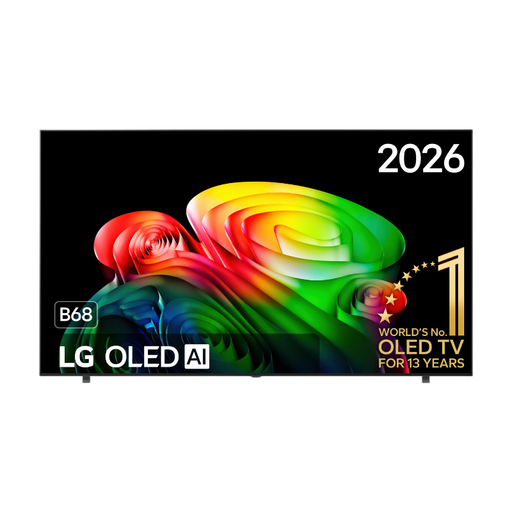 Image unavailable
LG OLED77B68LA, 77-inch 4K OLED TV, 120 Hz, VRR 144 Hz
This larger screen size is worth comparing with the furthest seat and the space you have available.
The product name lists 77 inches, 4K OLED, 120 Hz and VRR 144 Hz. The panel specifications don’t guarantee flawless handling of fast action.
View at Joybuy
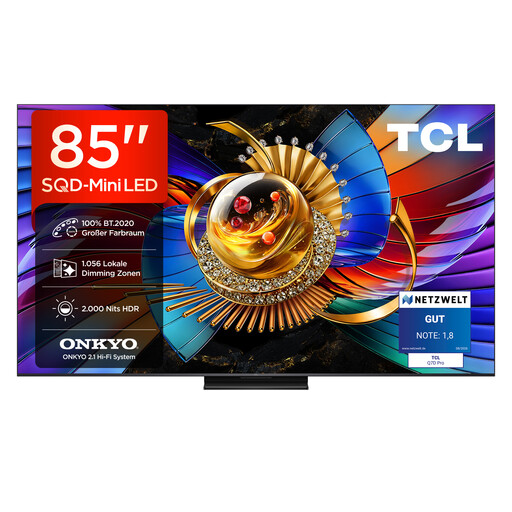 Image unavailable
TCL 85Q7D PRO, 85-inch 4K SQD mini-LED TV, 144 Hz
A mini-LED model to compare with OLED if you watch with the lights on; also assess the viewing angle of this version from the side.
The product name lists 85 inches, 4K, 144 Hz and Anti-Reflection. That reflection specification isn’t an independent measurement; check for reflections in your lighting setup.
View at Joybuy
Frequently asked questions
How do I choose a screen size when guests will be sitting in different places?
Measure the distance from each viewing spot to the screen and check the available width of your furniture or wall too. The Consumentenbond suggests around 2.4 times the screen diagonal as a starting point based on its own research, not a mandatory measurement; when choosing for a group, also consider the furthest and most angled seat.
Do I need a 120 Hz or 4K TV and an HDMI 2.1 cable for football?
Not just for a football night. A higher panel figure doesn’t guarantee flawless handling of fast action, and a 4K screen only displays original 4K detail if the pictures it receives contain it. Check which connection your receiver needs.
How can I make sure I can watch the specific final on my new TV?
For that final, check which channel or service is showing it and whether you can access it through a TV app or external receiver. The options you need will depend on the match and how you receive TV.
What should I check about placement and picture settings before football night?
Check the view from every seat, see whether lights reflect on the screen and try a live sports broadcast. Compare the motion settings: the Consumentenbond explains that extra interpolated frames can cause picture artefacts during unpredictable action.
Who can help if the TV turns out to be faulty?
If a product is faulty, the seller must provide a solution. According to the Dutch Government, there is no fixed statutory warranty period for all products in the Netherlands; any manufacturer’s warranty is in addition to your statutory rights.


