
Vandaag of morgen in huis

Kwaliteit gegarandeerd

Welkomstaanbiedingen ontgrendelen: GRATIS bezorging | Tot 80% korting | Gratis 30 dagen JoyPlus-proefperiode
Download de app
A food processor can take care of a lot of the preparation for you: slicing vegetables, grating cheese, chopping ingredients, mixing sauces and sometimes even kneading dough or mincing meat. But a long list of accessories doesn’t automatically make it the right choice for your kitchen. If you focus only on wattage or the number of functions, you could end up with a bulky appliance that’s difficult to clean, or accessories you hardly ever use.
This buying guide will help you choose a food processor based on verifiable specifications, the space you have available and your cooking routine.
A 1,300-watt motor sounds impressive, but power alone doesn’t tell you how well an appliance will perform. The shape of the bowl, blades, speed settings, accessories and maximum operating time all matter too. A food processor designed for dough also needs a different set-up from one with a blender for smoothies.
So look at the combination of power, capacity and functions. A compact 650-watt food processor may be enough for chopping, grating and slicing, while a stand mixer with a large bowl may be a better choice if you regularly knead dough or prepare larger quantities.
A food processor with grating and slicing discs, a blender, a chopper and a meat mincer can be versatile, but you’ll need somewhere to store every part. Check that the accessories are easy to fit and clean too. Parts that are difficult to reach are more likely to go unused.
The stated bowl capacity doesn’t always match the amount you can safely process. Liquids, dough and hard ingredients often have different limits. Follow the maximum quantities in the manual and, for heavier preparations, work in batches if necessary.
Also consider the dimensions. A model with a 5.5-litre bowl takes up more permanent space than an appliance that fits in a kitchen cupboard or deep drawer.
For everyday chopping, slicing and grating, functions and ease of use are just as important as wattage. A pulse function delivers short bursts of power, for example, to coarsely chop onions without turning them straight into purée. Multiple settings are useful if you also want to mix, whisk or knead.
A powerful food processor is particularly useful for heavy mixtures and larger quantities. Compare the nominal or stated motor power, and check which accessories are actually included. According to its product specifications, the Kenwood MultiPro Go FDP22 has a 650-watt motor, a 1.3-litre bowl and manual controls with a slider and pulse function.
A bowl of around 1.3 to 2.1 litres may be practical for one or two people. Families and home cooks who prepare larger quantities may be better suited to a stand mixer with a 4 to 5.5-litre bowl. Bear in mind that a larger bowl usually means a larger, heavier appliance too.
Before buying, measure the space available, including the height if the machine will sit beneath kitchen cupboards. Check that you can also remove the bowl and accessories without too much effort.
Check whether the parts are BPA-free if this is stated in the product specifications. BPA-free doesn’t mean that every part is indestructible, so check the material of the bowl, blender jug and blades too.
Removable, dishwasher-safe parts can make cleaning easier. The motor unit must not be submerged in water. Blades and slicing discs are sharp, so unplug the appliance before assembly, disassembly and cleaning.
A visible CE mark is a relevant product detail, but you should also check the manual, maximum quantities and instructions for use. For electrical appliances sold in the Netherlands, the correct voltage and a suitable plug are also important.
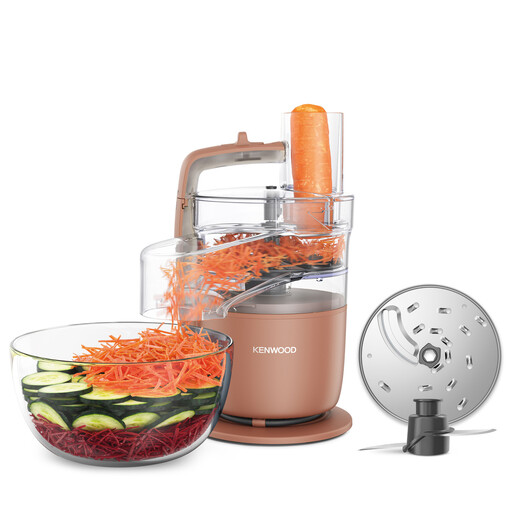
Why it suits this profile: This compact model focuses on everyday essentials such as chopping, grating and slicing. Its 1.3-litre bowl and weight of 1.94 kg make it a good fit for smaller households or kitchens with limited storage space.
Its functions are clearly specified, and it has a slider control and pulse function. There’s no long list of extra accessories that may go unused.
650 watts, a 1.3-litre bowl, two blades and two grating and slicing discs; several parts are dishwasher-safe.
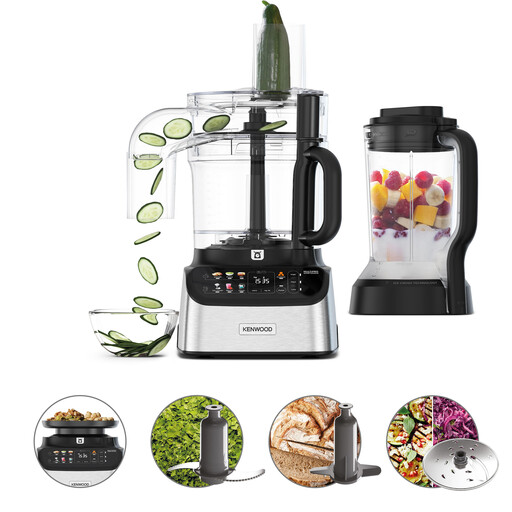
Why it suits this profile: If you want one appliance for a wide range of tasks, this food processor comes with a blender, dough tool, grating and slicing disc, and integrated scales.
Each extra function comes with a specific attachment: a 1.5-litre blender, a micro-serrated blade, a dough hook and a 2-in-1 disc.
1,000 watts, six pre-set programmes, digital scales and a stated bowl capacity of 3 litres, according to the product information.
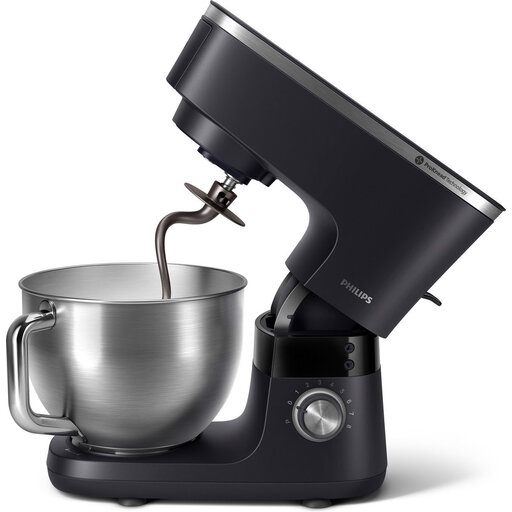
Why it suits this profile: This model is designed for larger preparations and regular baking. The stand mixer has a 5.5-litre bowl, eight speeds, a blender attachment and a meat mincer.
Its large capacity and separate attachments make it clear that this isn’t a small chopper. Be sure to check the worktop and storage space available beforehand.
1,000 watts, a 5.5-litre bowl, a 1.5-litre glass blender and a meat mincer; the product specifications also list a timer with automatic shut-off.
We’ve put together a complete, up-to-date list of products that meet these strict selection criteria and the applicable European safety regulations.
Before you check out, make sure you’ve considered the following:
A stand mixer with a blender can save space if you want to replace several separate appliances. For small quantities, a compact food processor is usually more practical; for bread dough, large family portions or regular mincing, a larger model with the right accessories makes more sense.
A food processor is usually designed for chopping, slicing, grating and mixing with blades and discs. A stand mixer often has a mixing bowl, whisk, beater and dough hook. Some models combine both systems and add a blender or food processor attachment.
Its lifespan depends on how often you use it, how well you maintain it, how hard you work it and the materials it’s made from. Stay within the maximum quantities in the manual, let the motor cool after heavy use, and check the blades and discs regularly for damage. A statutory warranty period isn’t a guarantee of the appliance’s total lifespan.
Electricity use depends on the motor’s power and how long you run the appliance. A 1,000-watt appliance theoretically uses 1 kilowatt-hour if it runs continuously for an hour, but food processors are usually used for short periods. The actual cost therefore depends on the number of minutes you use it for and your energy tariff.
